8 min read
Disclosure: As an Amazon Associate and eBay Partner Network publisher, we earn from qualifying purchases. This doesn’t affect what we recommend or how we describe it.
Struggling to achieve lush, healthy plant growth or battling persistent algae in your freshwater tank? A reliable CO2 injection system is often the missing link, but with so many setups and components on the market, it’s easy to waste money or end up with gear that doesn’t fit your needs. This guide breaks down exactly what matters for planted tanks, explains the real-world pros and cons of different CO2 systems, and shows you how to choose the best fit for your aquarium—without blowing your budget or your patience. For more detail, see CO2 addition in planted aquariums.
Why CO2 Injection Transforms Planted Tanks
CO2 is the main nutrient limiting plant growth in most home aquariums. Even with good lighting and fertilizers, without additional CO2, many popular aquascaping plants (like Monte Carlo, Rotala, and Glossostigma) simply won’t thrive. Once you inject CO2, you’ll see denser growth, fewer algae problems, and vibrant colors. But effective CO2 injection isn’t about picking the most expensive kit—it’s about matching your system to your tank’s size, plant load, and your willingness to maintain it.
How to Size a CO2 System for Your Tank
CO2 injection isn’t one-size-fits-all. The main factors that decide what you need are:
- Tank volume: Under 40L (10 gal) can use small disposable setups, but 60L-200L (15-50 gal) is ideal for refillable cylinders. Over 200L (50 gal) will need large cylinders and high-output regulators.
- Light intensity: High light (over 0.5W/L or 2W/gal with LEDs/T5s) demands more CO2—expect to inject 1-2 bubbles/sec or more.
- Plant density: Heavily planted tanks use CO2 faster and need stable injection.
Always choose a system that can deliver a bit more CO2 than you think you’ll need. Running gear at the top of its capacity is a recipe for inconsistent results and frustration.
CO2 Injection System Components Explained
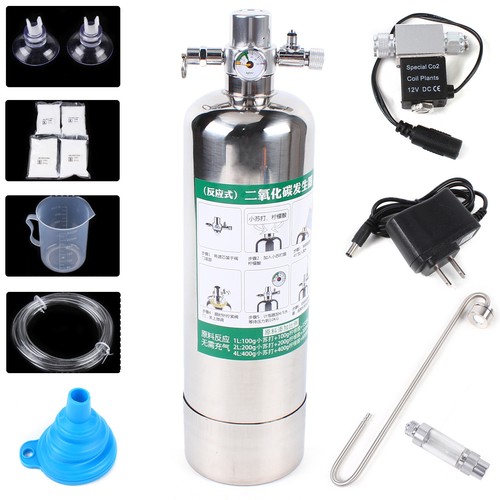
There are four essential parts to every pressurized CO2 system:
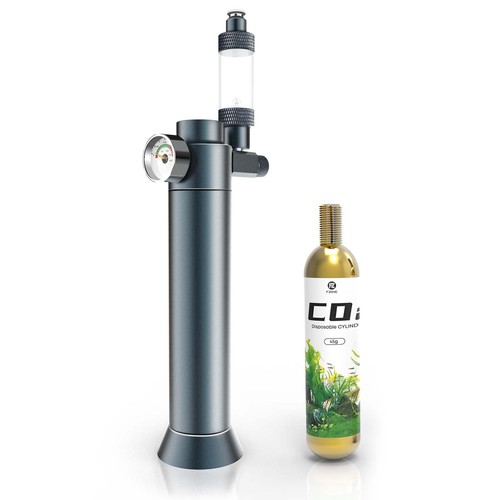
- CO2 cylinder: Refillable (most common: 2kg/5lb, 5kg/10lb) or disposable (typically 500g or less).
- Regulator: Controls gas pressure. Dual-stage regulators prevent end-of-tank dumps—a common risk with single-stage models as the cylinder empties.
- Needle valve: Fine-tunes CO2 flow, measured in bubbles per second.
- Diffuser/reactor: Dissolves CO2 into water. Options include ceramic discs, inline reactors, and atomizers, each with pros and cons for different tank sizes.
Optional but highly recommended: a solenoid (for automatic on/off with your lights), bubble counter, and a check valve to prevent water backflow.
Comparison of Main CO2 Injection System Types
| System Type | Cylinder Size | Regulator Type | Diffuser/Delivery | Ideal Tank Size | Ease of Use | Maintenance | Price |
|---|---|---|---|---|---|---|---|
| Disposable Cartridge Kit | 500g or less | Basic single-stage, fixed output | Small ceramic diffuser | Up to 40L (10 gal) | Very easy | Replace cartridge every 2-4 weeks | $ |
| Mini Refillable System | 500g–1kg | Single-stage with needle valve | Ceramic or glass diffuser | 10–60L (2.5–15 gal) | Easy | Refill every 1–2 months | $$ |
| Standard Refillable System | 2kg (5lb) or 5kg (10lb) | Dual-stage with solenoid | Inline reactor or atomizer | 60–200L (15–50 gal) | Moderate | Refill every 3–6 months | $$ |
| High-Capacity System | 5kg (10lb) or larger | Dual-stage, precision needle valve, solenoid | Inline reactor, multiple diffusers | 200L+ (50+ gal) | Intermediate | Refill every 6–12 months | $$$ |
| DIY Yeast-Based System | N/A | None (manual release) | Simple diffuser or ladder | Up to 40L (10 gal) | Challenging | Mix new batch weekly | $ |
Note on pricing: the $ symbols are relative tiers within this comparison — $ is the cheapest of the bunch, $$$ the priciest. Live listings (and exact prices) appear further on.
See today’s dealsReal-World Pros and Cons of Each Option
Researching aquascaping community feedback and technical specifications, here’s what actually matters for each CO2 system type:
- Disposable Cartridge Kits: These are entry-level, low-commitment options. They’re nearly silent and take up little space, but cartridges are expensive over time—especially for tanks over 30L. You’ll pay more per gram of CO2, and fine control is often lacking. Good for low-tech setups or shrimp tanks, but frustrating if you want precision.
- Mini Refillable Systems: These hit a sweet spot for small tanks, especially between 20–60L. The refillable bottle saves money long-term. Look for a kit with a metal needle valve (not plastic), and make sure your local shop can refill the cylinder. A solenoid is rare at this size, so you may need to manually turn the system on/off.
- Standard Refillable Systems: The workhorse for most aquascapes. A 2kg or 5kg bottle lasts months on a 100L tank running 1 bubble/sec. Dual-stage regulators (with a solenoid) are crucial here—they prevent “end-of-tank dump” and allow safe overnight shutoff. Inline reactors maximize CO2 dissolution but require a canister filter; atomizers are a good choice for hang-on-back setups.
- High-Capacity Systems: For 200L+ or heavily planted, high-tech tanks. Precision matters—a quality dual-stage regulator and reliable solenoid are non-negotiable. Inline reactors or multiple diffusers distribute CO2 evenly. These setups cost more upfront but deliver the most stable results for demanding aquascapes.
- DIY Yeast-Based: Cheap but inconsistent. CO2 output surges and drops unpredictably, which stresses plants and fish. Weekly maintenance is a hassle, and output is too low for tanks over 30L. Fine for experimenting on a shoestring, but not recommended for serious aquascaping.
Which Regulator Features Actually Matter?
Not all regulators are created equal, and this is the part most first-time buyers get wrong. Here’s what to look for:
- Dual-stage design: Essential for tanks over 40L. Prevents dangerous CO2 spikes as the cylinder empties. Single-stage regulators are common on budget kits, but dual-stage is worth the investment—especially if you’re running a tank unsupervised for days at a time.
- Solenoid valve: Lets you automate CO2 on/off with your light timer. This saves gas and prevents nighttime pH swings. Solenoids should be rated for continuous use (at least 8–10 hours/day) and run cool to the touch.
- Needle valve quality: You want smooth, precise control—look for a metal, fine-thread valve. On a 100L tank, you’ll typically dial in 1–2 bubbles per second, so a wobbly or loose valve is a nightmare.
- Bubble counter and check valve: These are simple but essential add-ons. The bubble counter lets you monitor flow, and the check valve prevents water from siphoning into your regulator.
CO2 Diffusers: Matching to Your Setup
Diffuser choice affects both efficiency and aesthetics. Here’s what works best for real-world tanks:
- Ceramic disc diffusers: Common in tanks under 100L. Look for discs 20–30mm diameter for nano tanks, 40–50mm for 60–120L tanks. Clean monthly to avoid clogging.
- Inline reactors: Best for tanks over 80L with a canister filter. These dissolve nearly 100% of injected CO2 and reduce visible bubbles in the tank. Choose a reactor rated for your filter’s flow rate (typically 400–1200 L/h).
- Atomizers: Produce ultra-fine mist and are easy to hide. Good for mid-sized tanks (40–150L). They require higher working pressure (often 30–40 psi), so make sure your regulator can handle this.
Frequently Asked Questions
How long does a 2kg CO2 cylinder last on a 100L (25 gal) planted tank?
With typical use (1 bubble/sec, 8 hours/day), a 2kg cylinder will last 3 to 4 months before needing a refill. Higher light or more bubbles per second will shorten this.
Is a solenoid valve necessary for CO2 systems?
While not essential, a solenoid lets you automate CO2 to run only when your lights are on. This saves gas, prevents nighttime pH drops, and makes daily operation much easier. Highly recommended for tanks over 40L or if you want to “set and forget.”
What’s the difference between single-stage and dual-stage CO2 regulators?
Single-stage regulators can release a sudden surge of CO2 (“end-of-tank dump”) as the cylinder empties, risking fish and plant health. Dual-stage regulators maintain stable output pressure until the cylinder is nearly empty, making them safer and more reliable for aquariums.
How do I know if my CO2 diffuser is working efficiently?
Look for a steady stream of fine bubbles, and check that your drop checker (using 4 dKH solution) turns green after a few hours of injection. If you see large bubbles or little change in the drop checker, clean your diffuser or check for leaks.
Can I use a paintball CO2 cylinder for my aquarium?
Yes, for tanks up to about 60L, paintball cylinders can be a compact, affordable option—provided you use a compatible regulator with the correct thread adapter. Refilling may be less convenient depending on your local resources.
How much working pressure should my CO2 regulator deliver?
Most aquarium diffusers work well at 20–30 psi. Atomizers often need 30–40 psi to create fine bubbles. Always check your diffuser’s requirements and make sure your regulator can deliver steady pressure in the required range.
What maintenance is required for a CO2 system?
Regular maintenance includes checking for leaks, cleaning the diffuser monthly, and refilling or replacing the cylinder as needed. Inspect tubing and connections every few months to prevent unexpected failures. Always monitor your drop checker to ensure consistent CO2 levels.
Can a CO2 system harm my fish?
If CO2 is injected too quickly or without proper monitoring, it can lower pH rapidly and stress or harm fish. Using a drop checker and starting with a low bubble rate reduces the risk. Dual-stage regulators and solenoids add an extra layer of safety for stable dosing.
How do I refill a CO2 cylinder safely?
Take your cylinder to a professional gas supplier or aquarium store that offers CO2 refills. Never attempt to refill cylinders yourself unless you are trained and have the proper equipment. Always check the cylinder’s hydrostatic test date before refilling to ensure safety.
Final Thoughts: Choosing the Right CO2 Injection System
Your best CO2 injection system depends on tank size, your aquascaping goals, and how much maintenance you’re willing to do. For most home setups between 60–200L, a standard refillable cylinder with a dual-stage regulator, solenoid, and quality diffuser or reactor is the most reliable, cost-effective route. Nano tanks can get by with mini refillable kits, while high-tech, large tanks need premium components for stable results. Skip DIY yeast unless you’re experimenting on a tight budget. Don’t cut corners on the regulator or solenoid—these are the heart of a safe, headache-free CO2 system.
View what’s availableLast updated: May 2026 · How we put guides together
Related Guides
- Our guide to Sponge Filters That Actually Work: Honest Reviews and Recommendations
- Freshwater Aquarium Hardscape Ideas for Stunning Aquascapes
- Our guide to How Often Should You Vacuum Aquarium Substrate?
- Our guide to Aquarium Plant Scissors That Actually Work: A Practical Buyer’s Guide
- Our guide to Aquarium Wave Makers Reviewed: What’s Worth Buying for Your Tank?
- Browse all CO2 Equipment →