8 min read
Your lush stem plants keep dropping leaves, algae is popping up despite good lighting, and debris collects in the corners—yet your filter seems to be working. At this point, most aquascapers start searching for why water circulation matters so much in planted tanks. This guide digs into the nuts and bolts of circulation: why it’s critical, how much flow is enough, what gear really works, and how to avoid the most common pitfalls when setting up your freshwater aquarium for healthy, even movement.
Why circulation makes or breaks a planted aquarium
Water movement isn’t just about keeping the tank looking clean. In a planted tank, circulation drives several key processes: delivering nutrients and CO2 to plant leaves, preventing dead spots where debris and algae thrive, and ensuring stable temperature and water quality throughout the tank. Stagnant areas often lead to unhealthy plant growth and can stress fish, especially in tanks over 60 liters (around 16 gallons).
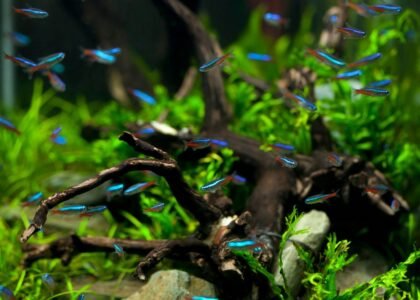
Across a wide range of hobbyist reports—covering everything from 20L nanos to 180L community setups—tanks with poor circulation consistently develop patchy plant growth (especially carpeting species), persistent mulm build-up, and fish crowding in certain areas. In contrast, setups with well-tuned flow show even plant growth, minimal debris, and fish using the whole space. These improvements are often visible within a week of optimizing circulation patterns.
What most buying guides get wrong about “enough” flow
Many beginners rely solely on their filter’s rated turnover (liters per hour or gallons per hour, LPH/GPH) as their measure of water movement. Most manufacturers recommend a turnover of 4-10x tank volume per hour, but this number doesn’t tell the whole story. The distribution of flow—how water actually moves throughout the tank—is far more important than raw filter output.
For example, a 100L tank with a filter rated at 700 LPH (7x turnover) might still have dead spots if the outlet is poorly positioned or obstructed by hardscape. Conversely, two small powerheads with a combined output of just 500 LPH can create perfect, even circulation if placed strategically. The key metric isn’t just total flow, but how well that flow is spread across your aquascape.
For CO2-injected tanks, consistent gentle flow is crucial to keep dissolved gas levels stable and to avoid “CO2 starvation” at the substrate or under dense plantings. In low-tech tanks, circulation still matters for oxygenation and nutrient distribution, but you can get away with less aggressive movement—often 4-6x turnover is plenty if the flow path is unobstructed.
Comparison: main approaches to water circulation in home planted tanks
| Approach | Typical Use Case | Flow Rate Range | Placement Flexibility | Noise Level |
|---|---|---|---|---|
| Filter-only (internal or HOB) | Small tanks & simple layouts | 200–800 LPH | Low (fixed outlet) | Low–Medium |
| Canister filter with spray bar | Mid/large tanks, planted setups | 600–1800 LPH | Medium (bar can be angled) | Low |
| Dedicated circulation pump | High-tech or densely planted | 500–2000 LPH | High (anywhere in tank) | Medium |
| Powerhead with sponge prefilter | Budget boost for dead spots | 300–1200 LPH | Medium (suction cup mount) | Medium–High |
| Wavemaker (adjustable flow) | Large, complex aquascapes | 1000–4000 LPH | High (magnet mount) | Medium–High |
Related Guides
- Our guide to Aquarium Circulation Pumps That Are Actually Worth Buying
- Digital Water Quality Testers: A No-Nonsense Guide for Aquariums
- Digital Water Hardness Testers for Aquariums, Reviewed
- Our guide to Booster Pump vs Circulation Pump: What’s the Difference?
- Wave Maker vs Circulation Pump: Which Is Right for Your Aquarium?
- Water Change Systems for Aquariums That Actually Work
- Browse all Filtration Systems →
The spec almost nobody talks about: flow pattern vs. flow rate
Even experienced hobbyists overlook how the shape and direction of flow affect plant and fish health. A high flow rate blasting straight across the tank can uproot delicate plants or stress small fish, while a gentle, circular pattern at half the rate will promote healthy growth and keep debris suspended for filtration. The goal is to create a “gyre” effect—a slow, rolling movement where water travels along the glass, down the sides, and back across the substrate. This can be achieved by angling spray bars along the back wall, placing a small circulation pump low on the opposite end, or using a wavemaker set to pulse mode.
For planted tanks under 120L, research and hobbyist consensus suggest a spray bar delivering 600–900 LPH, angled slightly upward and toward the front glass, works well for coverage. For tanks over 150L, a combination of a canister filter (with spray bar) plus a 1000 LPH wavemaker on the opposite side is often recommended for even movement. Always monitor plant movement: the goal is gentle swaying, not thrashing.
Positioning matters more than maximum flow. For example, a 60L tank with a 500 LPH filter placed in one back corner often benefits from a small 300 LPH powerhead on the opposite front corner to eliminate dead zones. Adjust placement and watch for areas where debris settles or plants stagnate.
How to size and place circulation gear for your tank
Start by calculating your tank’s volume and aiming for a combined flow rate of 5–10x per hour. For a 100L tank, target 500–1000 LPH total. If your filter alone doesn’t provide this, supplement with a circulation pump or powerhead. For tanks densely planted or with hardscape blocking flow, lean toward the higher end of that range.
- Spray bars: Run along the back or side glass, angled up for surface agitation or down for deeper flow. Don’t block with tall plants or rocks.
- Circulation pumps: Place low and opposite the filter outlet to create a rolling flow. Avoid aiming directly at delicate stems or carpeting plants.
- Wavemakers: Mount with magnet brackets for easy repositioning. Use pulse mode to mimic natural water movement and avoid continuous jets.
Check for “dead spots” weekly—places where debris collects or plants don’t sway. Adjust flow direction or add a small pump if needed. For tanks stocked with slow-swimming fish (like bettas or gouramis), shield high-flow outlets with plants or hardscape to create calmer zones.
View what’s available
Common mistakes to avoid
- Over-relying on filter specs: Many buyers assume a filter rated for 1000 LPH will deliver that in real use. In reality, prefilters, media, and head height can drop actual output by 20–40%.
- Ignoring flow pattern: A single strong outlet can leave half the tank stagnant, leading to algae and poor plant growth. Always check how water moves, not just how much.
- Choosing oversized wavemakers: Excessive flow can uproot plants and stress livestock. For tanks under 60L, pumps over 1000 LPH are usually too much unless heavily stocked or scaped.
- Neglecting maintenance: Circulation pumps and powerheads quickly clog with plant debris or mulm. Monthly cleaning keeps flow rates consistent and prevents overheating.
- Placing outlets near sensitive fish or shrimp: Direct flow can push small fish or shrimp into corners. Use deflectors or plant barriers to create gentle zones.
Fine-tuning flow for aquascaping success
Once your gear is running, observe how plants and fish respond. Healthy plants will gently sway, with no visible debris collecting on leaves or substrate. Fish should swim comfortably throughout the tank, not cluster in “dead” areas. Adjust spray bar angles, relocate circulation pumps, or swap to a lower-output nozzle if necessary.
For CO2-injected setups, ensure mist or bubbles stay suspended and circulate through the plant mass. This increases efficiency and reduces waste. In low-tech tanks, focus on surface agitation to maintain oxygen levels, especially at night when plants respire.
Don’t be afraid to experiment. Even small changes in outlet position or pump orientation can transform your tank’s health and appearance. Most aquascapers adjust their flow setup several times before finding the sweet spot.
See today’s deals
FAQ: real-world questions about water circulation in planted tanks
How many liters per hour of flow do I actually need for a 100L planted tank?
Aim for a total flow rate of 500–1000 LPH, depending on plant density and hardscape. Always check for dead spots—if debris settles in corners, add or reposition a circulation pump.
Is a wavemaker better than a powerhead for planted aquariums?
Wavemakers offer broader, gentler flow and are ideal for large or complex scapes. Powerheads are good for targeting specific dead zones in smaller tanks. For most home setups under 150L, a well-placed powerhead or spray bar is usually sufficient and more affordable.
How can I reduce noise from circulation pumps?
Check for vibration against tank glass or lids—use rubber suction cups or magnetic mounts to dampen sound. Clean pumps monthly to prevent buildup, which increases noise. Some pumps run quieter at lower settings, so adjustable models can help.
Will strong flow harm shrimp or small fish?
Yes, direct jets can stress or injure small species. Shield high-flow outlets with mesh, plants, or hardscape, and aim for gentle, distributed movement. Most shrimp thrive in moderate, not turbulent, flow.
How often should I clean my circulation equipment?
Clean powerheads and pumps every 4–6 weeks, or sooner if you notice reduced output. Filters should be checked monthly. Debris buildup can cut flow by 30% or more and may cause overheating or equipment failure.
What’s the return policy if my pump doesn’t fit or is too strong?
Most reputable aquarium suppliers offer 14–30 day returns if the item is unused and in original packaging. Always check compatibility with your tank size before purchase to avoid disappointment and extra shipping costs.
Can I use multiple small pumps instead of one large one?
Yes, using two or three small pumps (for example, 2x 300 LPH units in a 100L tank) often gives better coverage and fewer dead spots than a single high-output pump. This approach allows for more flexible placement and finer control over flow direction.
How do I know if circulation is too strong for my plants?
Signs of excessive flow include plants bending flat, leaves breaking off, or stem plants failing to root. If you observe these symptoms, reduce pump output or redirect flow away from sensitive areas until you see gentle leaf movement rather than violent swaying.
Further reading and trusted resources
For a deeper dive into water movement and its impact on planted aquariums, see this overview from Practical Fishkeeping. For research-backed information on aquatic plant care, the Royal Horticultural Society provides a solid foundation on plant health and water quality in aquatic environments.
Related Guides
- Our guide to Aquarium Circulation Pumps That Are Actually Worth Buying
- Digital Water Quality Testers: A No-Nonsense Guide for Aquariums
- Digital Water Hardness Testers for Aquariums, Reviewed
- Our guide to Booster Pump vs Circulation Pump: What’s the Difference?
- Wave Maker vs Circulation Pump: Which Is Right for Your Aquarium?
- Water Change Systems for Aquariums That Actually Work
- Browse all Filtration Systems →
Last updated: July 2026 · How we put guides together