10 min read
Disclosure: As an Amazon Associate and eBay Partner Network publisher, we earn from qualifying purchases. This doesn’t affect what we recommend or how we describe it.
Most aquarium guides treat substrate like a simple, one-size-fits-all decision—just pick any “plant substrate” and you’re set. In reality, the best aquarium substrate for planted tanks depends on your tank’s size, the plants you want to grow, and what you want to spend. Some substrates are nutrient-rich but messy to handle, others are simple but may limit your plant selection. Picking the right one from the start saves you hassle, money, and hours of replanting down the line.
Top picks at a glance
- CaribSea Eco-Complete Planted Aquarium Substrate 10 lbs Black — the most popular all-in-one substrate
- Fluval Plant & Shrimp Stratum Aquarium Substrate 8.8 lbs — the best for shrimp and delicate plants
- LANDEN Aqua Soil Substrate 5L — the premium aquascaping choice
- Aqueon Plant and Shrimp Aquarium Substrate 5 lbs — the beginner-friendly option
How the top planted tank substrates compare

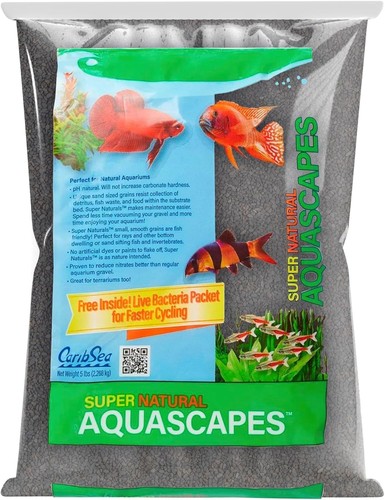
Pictured: Eco-Complete 10 lbs
| Product | Condition | Price | Best For | Size/Volume | Key Feature |
|---|---|---|---|---|---|
| CaribSea Eco-Complete Planted Aquarium Substrate 10 lbs Black |
New | $$ | Most popular all-in-one substrate | 10 lbs | Ready-to-use, no rinsing |
 Fluval Plant & Shrimp Stratum Aquarium Substrate 8.8 lbs Fluval Plant & Shrimp Stratum Aquarium Substrate 8.8 lbs |
New | $ | Best for shrimp and delicate plants | 8.8 lbs | Lightweight, pH buffering |
 LANDEN Aqua Soil Substrate 5L LANDEN Aqua Soil Substrate 5L |
New | $$$ | Premium aquascaping choice | 5L (~11 lbs) | High nutrient content |
 Aqueon Plant and Shrimp Aquarium Substrate 5 lbs Aqueon Plant and Shrimp Aquarium Substrate 5 lbs |
New | $ | Beginner-friendly option | 5 lbs | Porous clay granules |
 ISTA Premium Aquarium Plant Substrate Soil 8L ISTA Premium Aquarium Plant Substrate Soil 8L |
New | $$ | Alternative for advanced setups | 8L (~17 lbs) | Long-term fertility |
$ / $$ / $$$ indicates budget / mid-range / premium relative to the picks above. Check live listings further down for current prices.
What matters most when choosing substrate for planted tanks
Substrate does much more than anchor your plants. It determines how well roots develop, how nutrients are delivered, and even what species you can keep. The right substrate supports robust growth for carpeting plants, stem plants, and root feeders. The wrong choice can stunt growth or require expensive supplements just to maintain your aquascape. Below you’ll find the real differences between the top options on the current market—and why they matter.
Eco-Complete 10 lbs: The set-and-forget substrate for most tanks
CaribSea Eco-Complete Planted Aquarium Substrate 10 lbs Black remains the most widely used all-in-one substrate for a reason. It comes pre-charged with iron, potassium, and other micronutrients, targeting the needs of common rooted aquarium plants. Because it’s a volcanic basalt with a porous structure, roots spread quickly and beneficial bacteria colonize easily.
By spec, Eco-Complete 10 lbs is ready to use straight out of the bag—no rinsing or layering required. The granule size (typically 2–5 mm) is ideal for most stem and rosette plants, and it won’t compact over time. While it doesn’t actively buffer pH, it’s inert enough for most tap water setups, making it a safe default for community tanks. If you want a substrate that handles most plants decently with minimal fuss, Eco-Complete 10 lbs is still the all-rounder to beat.
Fluval Stratum: Best for shrimp, nano tanks, and sensitive roots
For aquarists keeping dwarf shrimp or delicate carpeting plants, Fluval Plant & Shrimp Stratum Aquarium Substrate 8.8 lbs stands out. Its volcanic soil granules (1–3 mm) are lightweight, making it easy for tiny roots to penetrate and for shrimp to sift through while foraging. Fluval Stratum also buffers water to a gentle acidic pH (around 6.5–6.8), which is ideal for Caridina and Neocaridina shrimp species.
Cost per pound is lower than most soil-based substrates, making it attractive for nano tanks or larger setups on a budget. The downside: it’s not as nutrient-packed as premium soils, so heavy root feeders (like swords or crypts) may eventually need root tabs. For shrimp breeding tanks or tanks with fine-rooted plants, Fluval Stratum offers an excellent balance of price, plant support, and water chemistry control.
Landen Aqua Soil: For high-tech planted and aquascape showpieces
LANDEN Aqua Soil Substrate 5L is positioned as the premium choice for aquascapers who want the best growth and the most vibrant plant colors. Formulated as a true aquasoil, it provides a rich supply of nitrogen, phosphorus, and micronutrients directly to plant roots. This makes it ideal for demanding carpeting plants (like Hemianthus or Glossostigma) and “Dutch style” tanks packed with stems.
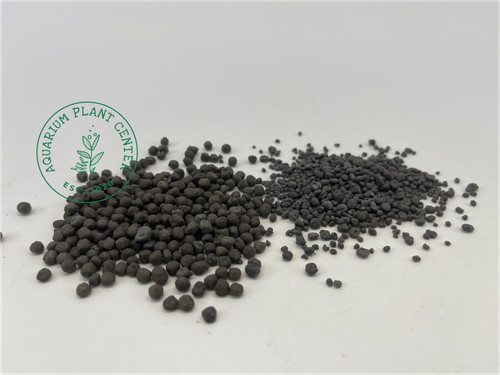
The 5L bag is slightly larger than many competitors (about 11 lbs), and the granule size (1–4 mm) is optimal for root development. Landen Aqua Soil also gently lowers pH and softens water, which is important for certain South American or Southeast Asian plant species. The trade-off: it’s the priciest substrate on this list, and it can cloud water if disturbed during setup. If you’re aiming for a competition-level aquascape or a high-tech CO₂-injected tank, this is the substrate you want to budget for.
Aqueon Plant Substrate: Simple, clean, and ideal for first-timers
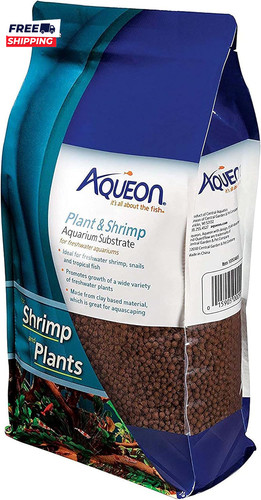
With Aqueon Plant and Shrimp Aquarium Substrate 5 lbs, ease of use is the main selling point. This substrate uses baked clay granules (2–4 mm), which are inert and won’t alter your water chemistry. The granules are larger and heavier than most aquasoils, making it less likely to cloud the water during planting or maintenance—a big plus for beginners.
Because it doesn’t supply nutrients on its own, Aqueon Plant Substrate pairs best with easy plants (like Anubias, Java Fern, or mosses), or as a base topped with root tabs. For tanks under 20 gallons or for those just learning planted tank basics, it’s a safe, affordable starting point. If you want a “plug and play” option that won’t surprise you with swings in pH or ammonia, this is the substrate to try first.
ISTA Plant Substrate: A smart alternative for larger or advanced setups
ISTA Premium Aquarium Plant Substrate Soil 8L is a lesser-known but feature-rich option, especially for aquarists scaling up. The 8L bag (about 17 lbs) covers more area for larger tanks or deeper substrate beds. ISTA Plant Substrate is a true soil-based medium, providing slow-release nutrients for long-term plant health. Its granule size (1–3 mm) is designed for dense root growth and stable carpet formation.
It does buffer water slightly acidic, which is a plus for many aquatic plants but something to factor in if your tap water is already soft. Compared to Landen Aqua Soil, ISTA Plant Substrate is more budget-friendly per volume, making it a strong alternative if you want a nutrient-rich soil without the highest price tag. For intermediate to advanced aquascapers, it’s a compelling middle ground between basic clay and premium aquasoils.
Related Guides
- Aquarium CO2 Regulators, Reviewed for Planted Tanks
- The Best Aquarium Substrates for Planted Tanks: What Actually Works
- High Tech vs Low Tech Planted Tanks: Which Setup Is Right for You?
- Our guide to Liquid Fertilizer vs Root Tabs: Which Is Better for Planted Tanks?
- Sand vs Gravel Substrate: Which Is Best for Your Aquarium?
- How to Set Up a CO2 Reactor: A Step-by-Step Guide for Planted Tanks
- Browse all Aquarium Lighting →
Beginner’s pre-purchase checklist
- Measure your aquarium’s length and width in inches or centimeters to calculate substrate volume—aim for at least 1–1.5 inches depth for rooted plants.
- Check your tap water pH and hardness—some substrates buffer water, which may not be needed for all setups.
- List the plant species you want to keep—heavy root feeders need nutrient-rich soils, while epiphytes can thrive on inert substrates.
- Decide if you’ll keep shrimp or sensitive invertebrates—choose a substrate that won’t leach harmful compounds or spike ammonia.
- Factor in maintenance: soil-based substrates can cloud water if disturbed, while clay and gravel types are easier to vacuum.
- Estimate your total budget, including the cost to cover your tank’s footprint to the desired depth.
- Consider if you’ll add root tabs or fertilizers—some substrates require supplements for long-term plant health.
How these made the shortlist: selection criteria explained
For this guide, the focus was on substrates marketed specifically for planted freshwater tanks, with a track record of use by hobbyists. Core criteria included nutrient content (does it support root feeders without constant dosing?), granule size (critical for rooting and plant stability), water chemistry impact (pH and hardness buffering), and ease of setup (does it cloud, need rinsing, or have special handling needs?). Bag size and price-per-volume were also compared for real-world value.
Each product was evaluated based on manufacturer specs, listed features, and how it positions itself in the hobby. Options that lacked clear data on nutrient content, granule size, or water chemistry effects were excluded. Unbranded listings and multi-product bundles were also left out, as these often obscure what you’re actually getting. This list prioritizes products with reliable, published specs and clear use-cases for planted tanks.
Note: If you’re setting up a tank for fish that dig extensively (like large cichlids or goldfish), or if you only plan to use floating or epiphytic plants, a specialized plant substrate may not be necessary. In those cases, an inert gravel or sand can be a better fit.
FAQ: Choosing and using planted tank substrates
How much substrate do I need for a planted tank?
Aim for 1–1.5 inches (2.5–4 cm) of substrate depth for low to medium planting, and up to 2–3 inches (5–7.5 cm) for heavily planted aquascapes or carpeting plants. For a standard 20-gallon long (30″ x 12″), this means roughly 20–30 lbs of substrate. Always check the bag’s coverage guide, as density varies between brands.
Is Eco-Complete 10 lbs better than Fluval Stratum for beginner tanks?
Eco-Complete 10 lbs is more forgiving in most community tank setups—it doesn’t alter pH and is ready to use with minimal prep. Fluval Stratum offers better support for shrimp and fine-rooted plants, but may require more frequent nutrient supplementation. For absolute beginners, Eco-Complete is usually the safer bet unless you’re keeping shrimp or softwater species.
Will Landen Aqua Soil or ISTA Plant Substrate cloud my water?
Both Landen Aqua Soil and ISTA Plant Substrate can cause initial cloudiness if not handled carefully during setup. It’s best to fill the tank slowly and avoid disturbing the substrate once plants are in place. Most clouding settles within 24–48 hours, but using a pre-filter or water clarifier can help speed up the process.
Can I mix different substrates in one tank?
Mixing substrates is possible, but it’s best to layer them rather than fully blend. For example, you can use a nutrient-rich soil base (like Landen Aqua Soil) with an inert top layer (like Aqueon Plant Substrate) to reduce mess and control water chemistry. Mixing granule sizes may lead to compaction or uneven rooting, so plan your layers with plant needs in mind.
How long do these substrates last before needing replacement?
Nutrient-rich aquasoils (like Landen Aqua Soil or ISTA Plant Substrate) typically provide strong plant support for 1–2 years before their fertility drops. Inert substrates like Eco-Complete 10 lbs or Aqueon Plant Substrate last indefinitely, but may need root tabs or liquid fertilizers added over time. Monitor plant growth and root health to determine when to supplement or refresh substrate.
Are these substrates safe for all aquarium fish and plants?
Most of the products listed are safe for common freshwater fish and plants, but always check compatibility for sensitive species. Substrates that buffer pH (like Fluval Stratum, Landen Aqua Soil, or ISTA Plant Substrate) may not suit hardwater fish or African cichlids. Always research your livestock’s needs and acclimate them to any water chemistry changes gradually.
The bottom line: which substrate is right for your planted tank?
The best aquarium substrate for planted tanks depends on your goals, budget, and livestock. Eco-Complete 10 lbs is the most versatile option for most home aquariums, balancing ease of use and plant growth. Fluval Stratum is ideal for shrimp tanks and fine-rooted plants, while Landen Aqua Soil excels in high-tech or showpiece aquascapes. Aqueon Plant Substrate is best for beginners or tanks with low-maintenance plants, and ISTA Plant Substrate offers a strong value for advanced setups needing long-term fertility. Always match your substrate to your plant list, livestock, and maintenance style for the healthiest, most rewarding planted tank experience.
For more in-depth substrate chemistry and aquascaping advice, the Planted Tank community is an excellent resource for both beginners and advanced hobbyists.
Ready to upgrade your substrate or start a new planted tank? Browse more aquarium substrate options here.

Last updated: July 2026 · Our editorial process