
9 min read
Disclosure: As an Amazon Associate and eBay Partner Network publisher, we earn from qualifying purchases. This doesn’t affect what we recommend or how we describe it.
Heat is often the silent enemy of planted tanks—especially in summer or if you keep your aquarium in a room that’s prone to temperature swings. For most hobbyists, a full chiller is overkill (and over-budget). That’s where aquarium cooling fans come in: simple, lower-cost, and effective for dropping water temperature by two to four degrees Celsius in most home tanks. But not all fans are created equal. The best aquarium cooling fan for your setup depends on your tank size, noise tolerance, mounting style, and whether you want digital temperature control or just a reliable, fuss-free breeze. For more detail, see Aquarium cooling and temperature control basics.
Top picks at a glance
- Zoo Med Aqua Cool Aquarium Multi-Directional Precise Air Flow Focus Cooling Fan — the most reputable brand option
- USB Powered Aquarium Cooling Fan — the most affordable choice
- Aquarium Chiller Fan with Temperature Probe LCD — best for temperature monitoring
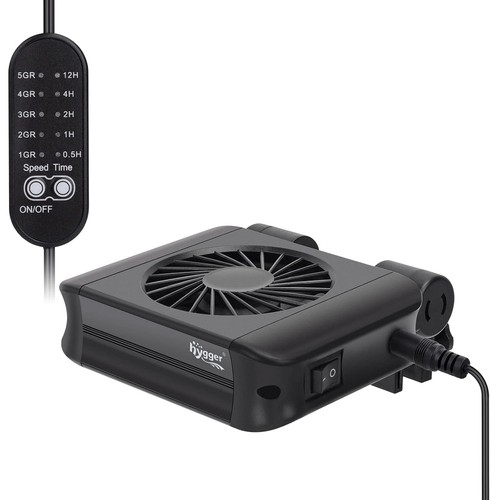
- WW-F3 Mountable Aquarium Chiller Fish Tank Fan — the best mountable option
Quick Comparison: Top Aquarium Cooling Fans for 2024
| Product | Condition | Price | Best For | Mounting Style | Special Feature |
|---|---|---|---|---|---|
| Zoo Med Aqua Cool Aquarium Multi-Directional Precise Air Flow Focus Cooling Fan | New | $$$ | Reputable brand | Adjustable/multi-directional | Brand reliability |
| USB Powered Aquarium Cooling Fan | New | $ | Most affordable | Clip-on/portable | USB-powered |
| Aquarium Chiller Fan with Temperature Probe LCD | New | $$$ | Temperature monitoring | Clip-on | Digital temp display |
| WW-F3 Mountable Aquarium Chiller Fish Tank Fan | New | $$ | Best mountable | Fixed mount | Stable installation |
| Aquasmith Aquarium Fan Ultra-Quiet Fish Tank Cooler | Used | $ | Quietest option | Clip-on | Low noise |
| Carefree Fish Aquarium Cooling Fan | New | $$ | Beginner-friendly | Clip-on | Simple setup |
Pricing key: $ marks the budget tier, $$ the mid-range, $$$ the premium picks. Tiers are relative to the products in this comparison; actual prices update live below. For more detail, see Aquarium equipment and cooling fans overview.
Why Cooling Fans Matter for Planted Tanks
Most aquatic plants and tropical fish thrive between 22°C and 27°C (72°F–80°F). When water temperatures rise above this range, oxygen levels drop, plant growth can stall, and some fish become stressed or prone to disease. Cooling fans work by increasing the rate of evaporation at the water’s surface, which can lower tank temperature by 2–4°C (3–7°F) in most setups. For tanks under 100 liters (about 25 gallons), a single fan is usually enough; larger tanks may need two or more, or a more powerful model.
How the Top Cooling Fans Differ
While all six fans on this list are designed for aquarium use, they differ in noise output, mounting hardware, feature set, and price. Here’s what sets each apart:
- Zoo Med Aqua Cool Aquarium Multi-Directional Precise Air Flow Focus Cooling Fan is from one of the most trusted names in aquarium hardware. Its main selling point is the ability to fine-tune the airflow direction, which helps avoid splashing and lets you target high-evaporation zones. If reliability and brand reputation are non-negotiable for you, this is the premium choice, but you’ll pay a bit more for the badge.
- USB Powered Aquarium Cooling Fan is the clear budget pick. It’s powered by any USB port or adapter, making it versatile for desktop tanks or setups where you don’t want to run more mains cables. The trade-off is usually a smaller fan diameter (often in the 8–10 cm range) and basic mounting, but for nano tanks or shrimp bowls, it’s all you need.
- Aquarium Chiller Fan with Temperature Probe LCD stands out for its integrated digital temperature probe and LCD display. This lets you monitor water temperature directly at the tank, rather than guessing or relying on a separate thermometer. It’s a premium option, but if you want automated control or peace of mind during heatwaves, the extra cost can be justified.
- WW-F3 Mountable Aquarium Chiller Fish Tank Fan is built for secure, semi-permanent installation. Its mount is sturdier than most clip-ons and is less likely to slip or drift over time—a big plus for rimless tanks or setups where you want a tidy, cable-managed look.
- Aquasmith Aquarium Fan Ultra-Quiet Fish Tank Cooler (offered used) is marketed as ultra-quiet, making it ideal for bedrooms or offices where noise is a dealbreaker. Most aquarium fans produce 30–50 dB; this model claims a lower profile, but always check listing details for actual decibel ratings.
- Carefree Fish Aquarium Cooling Fan is the simplest, most beginner-friendly option. Basic clip-on design, straightforward controls, and no extra electronics make it a solid choice if you just want to set and forget.
Choosing the Right Cooling Fan for Your Tank
Start by matching the fan to your tank’s size and your noise tolerance. For a typical 40–60 liter (10–15 gallon) planted tank, any of these fans will make a noticeable difference. If your tank is rimless or has a thick trim, check mounting compatibility—clip-ons may not fit tanks with rims over 15 mm thick. If you need to cool a larger tank (over 100 liters), look for models that support daisy-chaining or can be installed in pairs, or consider a fan with a higher airflow spec (measured in CFM or m³/h where listed).
Noise is the second biggest factor. Fans marketed as “ultra-quiet” often run at 20–30 dB, compared to 40–50 dB for generic models. If your tank is in a living room or bedroom, it’s worth spending a bit more for a quieter fan like the Aquasmith Aquarium Fan Ultra-Quiet Fish Tank Cooler.
Related Guides
- The Best Aquarium CO2 Regulators, Reviewed for Planted Tanks
- Root Tabs for Aquarium Plants That Actually Work
- The Best Hang-On-Back Aquarium Filters, Reviewed and Compared
- Inline Aquarium Heaters That Are Worth It: Our Honest Reviews
- How to Clean Aquarium Plants Before Planting: A Step-by-Step Guide
- Browse all Aquarium Lighting →
Feature Spotlight: Digital Temperature Control and Monitoring
If you want more than just a breeze over your tank, a fan with built-in temperature monitoring is worth considering. The Aquarium Chiller Fan with Temperature Probe LCD is the only model on this list with an integrated probe and digital readout. This feature is especially useful if you’re away from home during the day, or if you want to automate cooling: some models will even shut off automatically when the target temperature is reached (always verify this on the product listing, as not all “probe” models are thermostatic).
For most hobbyists, a separate thermometer is fine, but if you want an all-in-one solution and don’t mind the premium price, a fan with digital control reduces guesswork and helps you avoid overcooling.
Mounting Styles: Clip-On vs. Fixed Mount
Clip-on fans, like the USB Powered Aquarium Cooling Fan and Carefree Fish Aquarium Cooling Fan, are the easiest to install and reposition. They work best on tanks with standard glass thickness (up to 12–15 mm) and can be angled to direct airflow where you need it. The downside is that clips can loosen over time, especially if you adjust them frequently.
Fixed-mount fans, such as the WW-F3 Mountable Aquarium Chiller Fish Tank Fan, offer a more secure and tidy installation. If your tank is in a high-traffic area or you want a cleaner look, a mountable fan is less likely to be knocked loose by kids, pets, or clumsy aquascaping sessions. Make sure to check the mounting requirements—some fixed mounts need access to a flat surface or a rimless edge.
Noise Levels and Where It Matters Most
Fan noise is usually listed in decibels (dB), but not all manufacturers provide this number. As a rule of thumb, anything under 30 dB is very quiet (like a whisper), 30–40 dB is noticeable but not intrusive, and 50 dB or more can be distracting in a quiet room. If you’re running a tank in a bedroom or home office, prioritize a quiet model. The Aquasmith Aquarium Fan Ultra-Quiet Fish Tank Cooler is positioned as the quietest on this list, but always check the specific listing details if noise is your main concern.
Value Picks: When to Go Budget and When to Spend More
If you’re just getting started or need to cool a small tank (under 30 liters/8 gallons), the USB Powered Aquarium Cooling Fan or Carefree Fish Aquarium Cooling Fan will handle the job at the lowest cost. For larger tanks, or if you want set-and-forget reliability and better build quality, step up to the Zoo Med Aqua Cool Aquarium Multi-Directional Precise Air Flow Focus Cooling Fan or WW-F3 Mountable Aquarium Chiller Fish Tank Fan.
Digital monitoring is worth the premium only if you want to track temperature closely or automate fan operation. Otherwise, a basic fan paired with a $5 stick-on thermometer is enough for most hobbyists.
Frequently Asked Questions About Aquarium Cooling Fans
How much can an aquarium cooling fan actually drop water temperature?
In most setups, a single fan will lower tank temperature by 2–4°C (3–7°F), depending on room humidity and airflow. Cooling is most effective in dry environments and on open-top tanks. For larger tanks or very hot rooms, multiple fans may be necessary.
Will a cooling fan increase evaporation significantly?
Yes, all surface-cooling fans work by increasing evaporation. Expect to top off your tank more frequently—sometimes as much as 0.5–1 liter per day for a 60-liter (15-gallon) tank. Using a cover will reduce evaporation but also decrease cooling efficiency.
Can I use a USB-powered fan on a large aquarium?
USB-powered fans like the USB Powered Aquarium Cooling Fan are best suited for nano tanks or desktops up to about 30 liters (8 gallons). For tanks above this size, look for larger, higher-output fans or use multiple units in parallel for better results.
Are these fans safe for rimless or extra-thick glass tanks?
Most clip-on fans are designed for glass thickness up to 12–15 mm. For rimless or thicker tanks, check the product’s mounting range in the listing. Fixed-mount options like the WW-F3 Mountable Aquarium Chiller Fish Tank Fan often provide more secure attachment for specialty tanks.
How do I minimize noise from my cooling fan?
Choose a fan marketed as “ultra-quiet” if noise is a concern, and run it at the lowest effective speed. Positioning the fan so it doesn’t vibrate against the tank rim or hood also helps. Used fans like the Aquasmith Aquarium Fan Ultra-Quiet Fish Tank Cooler can be a cost-effective way to reduce noise if you’re shopping on a budget.
Do I need a fan with a built-in temperature probe?
A built-in temperature probe and digital readout, as on the Aquarium Chiller Fan with Temperature Probe LCD, is convenient but not strictly necessary for most hobbyists. It’s most useful if you want to monitor temperature at a glance or automate cooling. For basic setups, a standalone thermometer works just as well.
Final Thoughts: Picking the Best Cooling Fan for Your Aquarium
The ideal aquarium cooling fan balances size, noise, mounting style, and any extra features you value. For brand-backed reliability, the Zoo Med Aqua Cool Aquarium Multi-Directional Precise Air Flow Focus Cooling Fan is the safest bet. For the tightest budgets or nano tanks, the USB Powered Aquarium Cooling Fan or Carefree Fish Aquarium Cooling Fan offer solid performance with minimal fuss. For hands-off temperature monitoring, the Aquarium Chiller Fan with Temperature Probe LCD stands alone. And if silence is golden in your home, keep an eye out for the Aquasmith Aquarium Fan Ultra-Quiet Fish Tank Cooler when available.
Always match your fan to your tank’s needs, and check mounting compatibility before you buy. For most hobbyists, a well-chosen cooling fan is a simple, effective investment that keeps your fish and plants healthy all summer long.
Last updated: May 2026 · About our research