8 min read
Disclosure: As an Amazon Associate and eBay Partner Network publisher, we earn from qualifying purchases. This doesn’t affect what we recommend or how we describe it.
How do you actually make water changes easy enough to stick to them, week after week? For most home aquarists, the right water change system is the difference between a quick, mess-free routine and a dreaded, time-consuming chore. This guide breaks down the real-world trade-offs between the two most widely researched options available today, so you can choose the system that matches your tank size, budget, and priorities—without wasting money or time.
Top picks at a glance
- Python No Spill Clean and Fill 50ft Water Change System — the most established and convenient water change system
- hygger Electric Aquarium Vacuum Cleaner 5-in-1 Gravel Washer & Water Changer Kit — the best electric-powered option
Comparison table: water change systems side-by-side

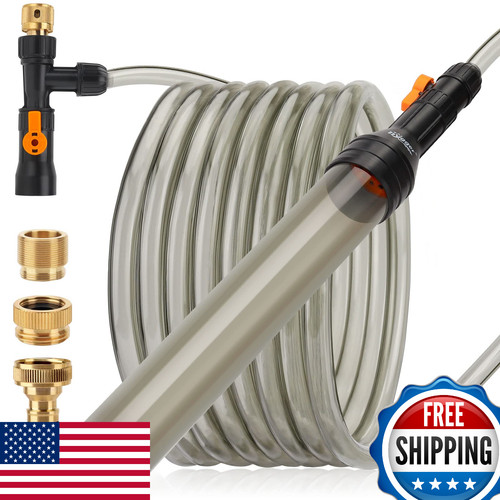
Pictured: Python No Spill 50ft
| Product | Condition | Price | Best For | Water Change Method | Hose Length / Power |
|---|---|---|---|---|---|
| Python No Spill Clean and Fill 50ft Water Change System |
New | $$$ | Most established and convenient | Faucet-driven, gravity siphon | 50 ft hose |
 hygger Electric Aquarium Vacuum Cleaner 5-in-1 Gravel Washer & Water Changer Kit hygger Electric Aquarium Vacuum Cleaner 5-in-1 Gravel Washer & Water Changer Kit |
New | $ | Best electric-powered option | Electric pump | — |
Price: $ = budget, $$ = mid-range, $$$ = premium — relative to the options compared above. Live prices and current stock are below.
Python No Spill 50ft: The workhorse for large tanks and hassle-free changes
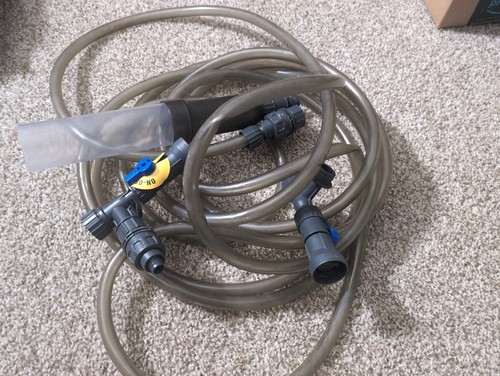
By spec, the Python No Spill Clean and Fill 50ft Water Change System is the most established solution for aquarists who want to avoid buckets and minimize mess. Its 50-foot hose connects directly to a standard faucet, letting you drain and refill tanks up to 200 gallons from across a room—no need to carry or lift heavy containers.
The Python system uses water pressure from your tap to create suction for draining, then reverses to refill. This approach is especially efficient for tanks over 30 gallons, or when you have multiple tanks to service. The system typically comes with standard fittings for US faucets (check your faucet type; some adapters may be needed for non-standard threads), and the hose is flexible enough to reach around furniture or obstacles.
Gravel cleaning is handled with a built-in vacuum tube, allowing you to siphon debris from the substrate during water removal. The Python’s biggest strengths are its speed, reach, and proven reliability—by market positioning, it’s the “set it and forget it” solution for serious hobbyists or anyone with back issues who can’t lug buckets.
However, the initial investment is higher than basic siphons or electric pumps, and you do need a compatible faucet within 50 feet of the tank. If your only tap is in a distant bathroom or you have highly restricted water pressure, setup can be more involved. For most standard home setups, though, this is the system that long-time aquarists settle on for efficiency and convenience.
hygger Electric Vacuum: Budget-friendly and portable for small to mid-sized tanks
The hygger Electric Aquarium Vacuum Cleaner 5-in-1 Gravel Washer & Water Changer Kit stands out as the top electric-powered option at a much lower price point. Instead of using water pressure, this system relies on an electric pump to siphon water and debris out of the tank, making it a good fit for apartments, tanks far from a faucet, or setups where you can’t modify plumbing.
This kit is especially appealing for nano tanks, planted aquascapes, or tanks under 40 gallons. You get a flexible intake tube, gravel cleaning attachments, and a pump that can move water without relying on gravity. This means you can perform water changes even if your tank is below sink level or in a room with no easy faucet access.
Because the hygger Electric Vacuum is powered by household electricity, you aren’t limited by water pressure or faucet type. However, the flow rate is usually less than what you’d get from a full-size faucet-driven system. For larger tanks (over 50 gallons), expect water changes to take longer—especially if you’re doing 30% or more at a time. The kit’s modular attachments are a plus for cleaning tight spaces, but the shorter hose length (compared to the Python’s 50 feet) means you’ll usually be emptying water into a nearby bucket or drain rather than straight to the sink.
This system is ideal for renters, budget-minded hobbyists, or anyone with a modest tank and limited access to plumbing.
Related Guides
- Canister Filter vs Sump Filter: Which Is Better for Your Aquarium?
- Our guide to Fine Gravel vs Coarse Gravel: Which Is Best for Your Aquarium?
- Hang-On-Back Filter vs Canister Filter: Which Is Right for Your Aquarium?
- LED vs Fluorescent Aquarium Lighting: Which Is Better for Your Tank?
- Our guide to Sand vs Gravel Substrate: Which Is Best for Your Aquarium?
- How to Adjust Aquarium Light Intensity: A Practical Guide
- Browse all Filtration Systems →
How these water change systems made the shortlist
For this guide, only fully-featured, currently-available water change systems with a proven track record and clear manufacturer specs were considered. Key criteria included:
- Water change method: Does the system use faucet power, electric pump, or manual siphon? This affects speed, labor, and compatibility.
- Maximum reach or hose length: Systems with longer hoses (like 50 ft) allow water changes from farther away, critical for large rooms or tanks far from a sink.
- Compatibility: Can the system connect to standard faucets, or does it require special adapters or modifications?
- Ease of substrate cleaning: Does the kit include a gravel vacuum function, and is it suitable for fine planted substrates?
- Price tier: Both entry-level and premium options were evaluated to match different budgets.
Excluded from this shortlist: generic or unbranded siphons (often lacking in durability and reliable specs), bundles that combine unrelated accessories, and any system requiring unsafe modifications or DIY electrical work. This guide is not for aquarists who only need a basic manual siphon for rare, small water changes—these two systems are aimed at regular, routine maintenance for tanks of at least 10 gallons.
Quick decision tree
- If your tank is over 30 gallons and your sink is within 50 feet: The Python No Spill 50ft is the fastest, least-messy choice.
- If you need to avoid heavy lifting or buckets due to mobility issues: Go with the Python No Spill 50ft for its faucet-powered draining and filling.
- If you’re on a budget or have a tank under 40 gallons: The hygger Electric Vacuum covers all the basics for less money.
- If your tank is in a room with no nearby faucet access: The hygger Electric Vacuum works anywhere there’s a power outlet.
- If you want the fastest possible water change for multiple tanks: The Python No Spill 50ft’s length and flow rate make bulk changes much more efficient.
FAQ: Water change systems for home aquariums
Is the Python No Spill 50ft worth the price over cheaper water changers?
If you have a tank over 30 gallons, or you value fast, mess-free water changes, the Python No Spill 50ft justifies its premium price with speed, reach, and reliability. For smaller tanks or rare use, a budget option like the hygger Electric Vacuum may be sufficient.
How long does it take to change water with these systems?
With the Python No Spill 50ft, changing 30-50% of a 55-gallon tank typically takes under 30 minutes, depending on your tap’s flow rate. The hygger Electric Vacuum has a slower flow rate, so expect 45-60 minutes for the same volume on larger tanks, but it’s quite efficient for tanks under 20 gallons.
Can I use the hygger Electric Vacuum on a planted tank with fine substrate?
The hygger Electric Vacuum includes attachments designed to prevent fine sand or soil from being siphoned out, but you’ll need to use care and adjust the flow for delicate aquascapes. Always monitor the intake to avoid disturbing plant roots or pulling up substrate.
Which system is better for multiple tanks in different rooms?
The Python No Spill 50ft is best if all tanks are within 50 feet of a faucet, as you can move from one to the next without buckets. If your tanks are spread out or not near sinks, the hygger Electric Vacuum is more flexible, as you only need a power outlet and a drain or bucket nearby.
Are there compatibility issues with unusual faucets or sink types?
The Python No Spill 50ft is designed for standard US faucets, but some modern or non-threaded faucets may require an adapter (often sold separately). Always check your faucet’s threading before purchase. The hygger Electric Vacuum doesn’t connect to sinks, so faucet style isn’t an issue.
What’s the warranty or support like for these systems?
Both Python and hygger are established brands with support channels, but warranty terms can vary by seller. Always check the retailer’s policy and save your proof of purchase. For more on what to expect from aquarium equipment warranties, see the Aquarium Co-Op support section, which covers general industry standards.
The bottom line: which system is right for you?
For larger tanks, frequent water changes, or maximum convenience, the Python No Spill 50ft is the most proven, time-saving system—especially if you can connect to a nearby faucet. For smaller set-ups, tight budgets, or rooms without plumbing access, the hygger Electric Vacuum is the most versatile and affordable option. Neither is a fit if you only keep tiny nano tanks or never do partial water changes; a basic manual siphon is enough in those cases.
Consistent water changes are the foundation of healthy aquariums. The right system makes it simple to stick with the routine, whether you’re keeping a single betta or a full aquascape. For more on water change frequency and best practices, see the Aquarium Advice forum for peer-reviewed hobbyist discussions.
Last updated: June 2026 · How we put guides together