7 min read
Disclosure: As an Amazon Associate and eBay Partner Network publisher, we earn from qualifying purchases. This doesn’t affect what we recommend or how we describe it.
pH meters for home aquariums range from $15 for simple manual kits to $150 for high-end digital devices. The price gap reflects more than just convenience—accuracy, maintenance, and long-term reliability all come into play. Knowing the real differences between manual and digital pH meters is essential if you want stable water for thriving plants and fish, without wasting money on gear that doesn’t fit your setup.
Manual vs Digital pH Meter Comparison Table
| Type | Accuracy | Typical Range | Reading Speed | Calibration Needed | Price |
|---|---|---|---|---|---|
| Manual Liquid Test Kit | ±0.2 pH | 4.0–9.0 | 60–120 sec | Not needed | $ |
| Manual Test Strip | ±0.5 pH | 4.5–9.0 | 15–30 sec | Not needed | $ |
| Basic Digital Pen Meter | ±0.1 pH | 0.00–14.00 | 10–20 sec | Every 2–4 weeks | $$ |
| Digital Probe with Display | ±0.01 pH | 0.00–14.00 | 5–10 sec | Every 2–4 weeks | $$$ |
Price tiers ($/$$/$$$) read across this comparison only — they mark each product’s relative position from cheapest to priciest in the set. Actual prices live below.
What Manual Test Kits Offer for Planted Tanks
Manual pH test kits—liquid or strips—are the classic choice for most beginners. Liquid kits use a reagent you add to a water sample, then match the color to a chart. Test strips are dipped directly into the tank or sample cup and also compared to a color scale.
For planted freshwater tanks, manual kits are often accurate enough. A liquid kit with an accuracy of ±0.2 pH easily tells you if your water is acidic (below 7.0), neutral, or alkaline (above 7.0). Most aquatic plants and fish do fine within a 0.5 pH swing, so for general monitoring, a good liquid kit suffices.
However, strips can be less reliable, especially if stored in humid conditions or handled with wet fingers. Strips degrade quickly—sometimes in as little as 3–6 months after opening. Color matching is also subjective, and can be tough under home lighting. For tanks where CO2 injection is used, or for sensitive species, this margin of error can be frustrating.
Manual kits don’t require calibration. There are no electronics to break, and shelf life is generally 1–2 years for unopened liquid reagents. This makes them a low-fuss option for those testing weekly or less, or anyone on a tight budget. See today’s deals
How Digital pH Meters Change the Game
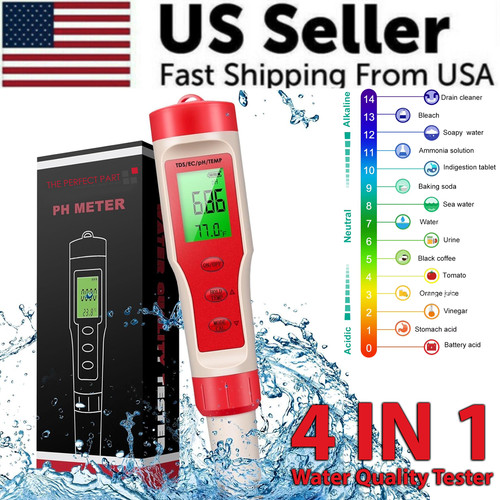
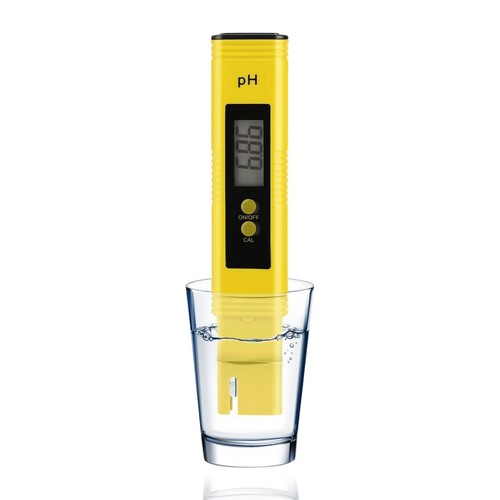
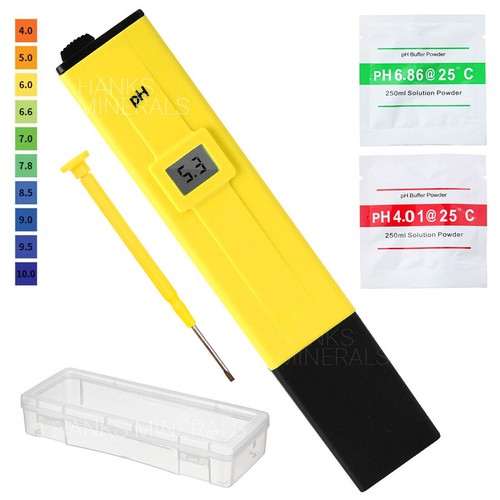
Digital pH meters—ranging from pen-style testers to advanced probes with displays—provide a quick, quantitative readout. Instead of matching colors, you get a direct digital number, often to two decimal places. Entry-level digital pens typically offer ±0.1 pH accuracy, while more advanced probes can reach ±0.01 pH.
Speed is a significant advantage. Most digital meters stabilize within 10–20 seconds. This is a game-changer for tanks with CO2 injection, where pH can fluctuate quickly and precise adjustment is necessary. Digital meters also allow you to track subtle changes over time, which is especially useful for heavily planted or high-tech setups.
However, digital meters require regular calibration—typically every 2–4 weeks, or more often in high-humidity environments. This involves using calibration solutions (often pH 4.0, 7.0, and 10.0) and following a specific procedure outlined in the manual. Forgetting to calibrate leads to drift and unreliable readings. The probes themselves have a finite lifespan, usually 1–2 years for hobby-grade pens, and replacement can approach the cost of the meter itself.
Battery life varies. Basic pen meters often use small button cells (lasting 6–12 months), while higher-end units may use rechargeable batteries or AAAs. Always check what type is needed and if replacements are easily sourced. Compare options
Matching Meter Choice to Your Aquarium Routine
For low-tech or beginner tanks (no CO2, stable tap water, undemanding plants), a reliable manual liquid kit is all you need. Test weekly or biweekly, log your results, and watch for trends. Save your budget for better lighting or filtration.
If you run a high-tech tank—pressurized CO2, sensitive plants, or you breed fish that need tight pH control—a digital meter pays for itself in time and accuracy. The ability to monitor small shifts (0.05–0.1 pH) helps prevent plant melt or fish stress. Just be ready for the maintenance: calibration, probe storage, and eventual replacement.
For tanks in the middle—moderate planting, occasional CO2, or harder tap water—a basic digital pen or a top-tier liquid kit both work. Consider how often you plan to test, and how much you value speed and precision. View what’s available
Related Guides
- Manual vs Digital pH Meters: What’s the Real Difference?
- What Do Check Valves Do in Aquariums? Understanding Their Function
- Our guide to How to Repair an Aquarium Heater: A Step-by-Step Guide
- How to Calibrate pH Probes: A Step-by-Step Guide for Aquarium Owners
- Plant Grow Light Strips That Are Actually Worth It
- Our guide to How to Install an Aquarium Heater: Step-by-Step Guide for Beginners
Red flags in listings to walk past
- No accuracy specification: If the listing doesn’t state accuracy (like ±0.1 pH), assume it’s unreliable. Sellers hiding this detail usually offer cheap, inconsistent meters.
- Missing calibration instructions: Digital meters should specify calibration steps and what solutions to use. If this info is missing, calibration may be difficult or impossible.
- Stock photos only, no real images: Listings that use only generic manufacturer images, especially for digital pens, often hide build quality issues or design changes.
- “No calibration needed” claim for digital meters: All digital pH meters drift over time. Any claim that calibration is never needed is false—and a sign of a low-quality product.
- Test strips without expiration date: Strips degrade fast. If there’s no clear expiration or manufacture date, expect poor accuracy.
Long-term maintenance and reliability
Manual liquid kits last longer unopened—usually 1–2 years—but reagents can go bad if exposed to heat or sunlight. Always check for a use-by date. Test strips have the shortest shelf life; buy only what you’ll use in six months.
Digital meters require more care. Store probes wet (using storage solution, not tap water) to prevent the glass membrane from drying out. Never let a probe tip dry, or accuracy will suffer. Replacement probes are rarely universal; check compatibility before buying. For more on pH measurement standards, see the National Institute of Standards and Technology.
FAQ: Practical Questions About Manual and Digital pH Meters
How often should I test pH in a planted tank?
For low-tech tanks, weekly testing is usually enough. In high-tech setups with CO2 injection, check daily at first, then 2–3 times a week once stable. Sudden changes in livestock behavior or plant health also warrant a spot test.
How long does a digital pH probe typically last?
Most hobby-grade digital pH probes last 12–24 months with proper care and storage. Heavy use, neglecting calibration, or letting the probe dry out shortens lifespan. Always follow the manufacturer’s instructions for storage and cleaning.
Manual liquid test kit vs digital meter—which is better for CO2 injected tanks?
Digital meters are superior for CO2 tanks because they give fast, precise readings—crucial for dialing in injection rates. Manual kits can work, but it’s harder to see small changes quickly, and color matching can be tricky when CO2 is fluctuating.
What does it mean if a digital pH meter drifts over time?
Drift refers to a gradual loss of accuracy, where the meter’s readings slowly become incorrect. Regular calibration (every 2–4 weeks) corrects this. If a meter can’t hold calibration, it may be time to replace the probe.
Are test strips accurate enough for planted aquariums?
Test strips are generally less accurate (±0.5 pH) and more prone to user error than liquid kits or digital meters. They’re fine for rough checks, but not recommended for tanks where stable pH is critical, such as with demanding plants or sensitive fish.
Can I use a digital pH meter for both my aquarium and hydroponics setup?
Yes, as long as the meter’s range covers both applications (typically 0.00–14.00 pH). However, always rinse the probe thoroughly between uses to avoid cross-contamination. Some models come with interchangeable probes for different environments—check before buying.
What warranty or support should I expect with a pH meter?
Most digital meters offer a 6–12 month warranty, but check the details before purchase. Replacement probes may not be covered. Manual kits rarely come with warranties, but some sellers offer satisfaction guarantees. Choose a reputable retailer for better after-sales support.
References and further reading
For a deeper dive into pH measurement science and calibration best practices, visit US Geological Survey for water quality standards and methodology.

Last updated: June 2026 · About our research