8 min read
Disclosure: As an Amazon Associate and eBay Partner Network publisher, we earn from qualifying purchases. This doesn’t affect what we recommend or how we describe it.
Which filter is less likely to suck up shrimp fry? Can you keep a lushly planted tank clear with just a sponge filter, or will an internal filter do better? These are the practical questions that come up when choosing between internal filters and sponge filters for a home freshwater aquarium. The answer depends on your tank size, livestock, planting density, and how much maintenance you’re willing to do. Below, you’ll find an experience-based breakdown of how these filter types stack up for real-world planted tanks—so you can avoid wasted money and frustration.
What most buying guides get wrong about internal vs sponge filters
Most filter comparisons gloss over the day-to-day realities that actually matter in a planted tank. For example, they’ll mention “gentle flow” or “easy maintenance,” but skip the numbers: how many liters per hour of flow does a typical sponge filter provide? How often will you really need to clean an internal filter in a 60-liter aquascape with heavy stem plants? And which filter is less likely to uproot carpeting plants? Let’s dig into the specific strengths, weaknesses, and use-cases for each filter type.
Internal filter vs sponge filter: feature-by-feature comparison
| Category | Filtration Type | Typical Flow Rate | Tank Size Range | Maintenance Frequency | Price |
|---|---|---|---|---|---|
| Standard Sponge Filter | Mechanical/Biological | 80–200 L/hr | 10–80 L | Every 2–4 weeks | $ |
| Dual-Sponge Air-Driven | Mechanical/Biological | 120–320 L/hr | 20–120 L | Every 2–3 weeks | $ |
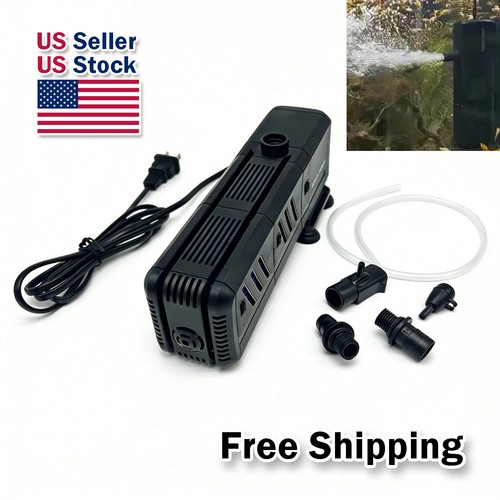
| Compact Internal Power Filter | Mechanical/Chemical/Biological | 200–500 L/hr | 20–100 L | Every 1–2 weeks | $$ |
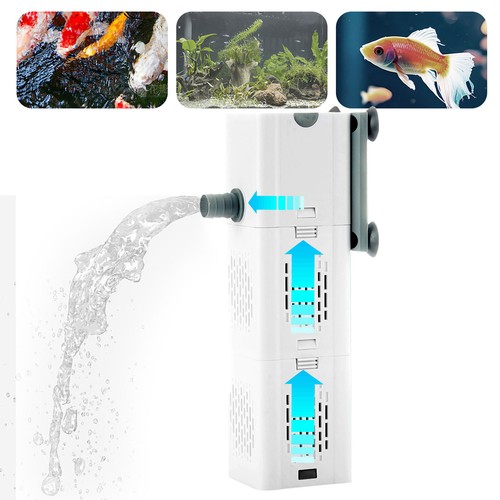
| Multi-Stage Internal Filter | Mechanical/Chemical/Biological | 300–750 L/hr | 40–200 L | Every 1–2 weeks | $$$ |
The price column compares within this guide: $ is the budget end, $$ mid, $$$ premium. For exact, up-to-date prices, see the live listings lower in the article.
The spec almost nobody talks about: flow pattern and plant safety
Flow rate matters, but so does how the filter moves water. Sponge filters, powered by air pumps, create a gentle upward flow. This is ideal for delicate livestock like shrimp fry or betta, and for tanks with carpeting plants that can be uprooted by stronger currents. Air-driven sponge filters rarely exceed 300 L/hr, and the flow is diffuse—perfect for nano tanks (under 40 liters) or breeding setups.
Internal power filters use an impeller to push water sideways or diagonally. Even compact models can produce strong jets that may disturb fine-leaved plants or create dead zones behind hardscape. For a 60-liter aquascape with dense planting, you’ll want to look for an internal filter with an adjustable flow rate, ideally with a range from 200 to 500 L/hr. Some models include spray bars, which help spread out the flow and reduce plant disturbance. Without this, you may see your foreground plants lifting or your shrimp hiding from the current.
Which filter keeps water clearer in a planted tank?
Sponge filters excel at biological filtration, but their mechanical filtration is limited by pore size. Fine debris, green water, or tannins from wood may linger longer in tanks with only sponge filtration. Internal filters, especially multi-stage ones, can hold fine mechanical media and chemical cartridges (such as activated carbon or zeolite). This means they’re better at polishing water and quickly removing visible cloudiness or odors.
For a lightly stocked, heavily planted nano tank, a sponge filter is usually enough. In a 100-liter community tank with messy fish or lots of plant trimmings, you’ll notice the difference a powered internal filter makes. Expect to rinse internal filter sponges or cartridges every 1–2 weeks to maintain strong flow—especially if you have floating plants or fine leaves that clog intakes.
Noise, aesthetics, and livestock safety: real-world pros and cons
Sponge filters are almost silent except for the air pump hum and bubbles. That makes them a favorite for bedroom tanks or offices. However, they are visually bulky and can stand out against aquascapes unless you position them behind hardscape or plants. Internal filters are quieter than hang-on-back types but can still vibrate against glass if not installed snugly. Their compact footprint is a plus for mid-sized tanks, and most are less visually intrusive than a big sponge filter in the same tank.
Fish fry and shrimp are much safer with sponge filters. The fine foam prevents them from being sucked in. Internal filters, unless fitted with a pre-filter sponge (usually 30–45 ppi foam), can pull in small livestock. This is a common cause of unexplained shrimp losses in new setups. If you keep dwarf shrimp or intend to breed fish, this is a critical point: always add a pre-filter sponge to any internal filter intake.
Internal filter vs sponge filter: cost of ownership
The initial cost of a standard sponge filter is minimal (often less than half the price of a small internal filter), but don’t forget you’ll need an air pump, airline, and check valve. Dual-sponge units cost a bit more, but still less than most internal filters. Internal filters require no external air pump, but replacement cartridges and sponges add up over time. Expect to change or rinse sponges every 2–4 weeks, and replace fine filter pads every 2–3 months if you want peak performance. For most hobbyists, the running cost difference over a year is small, but the up-front budget can be a deciding factor.
Check current prices on entry-level sponge and internal filters to compare the latest deals.
Related Guides
- Internal Filter vs Sponge Filter: Which Is Better for Your Aquarium?
- How to Deep Clean a Sponge Filter: Step-by-Step Guide for Aquarists
- Our guide to How to Set Up a Double Sponge Filter: Step-by-Step Guide
- Our guide to Pre-Filter Sponges: What to Look For and What to Avoid
- Our guide to Internal Aquarium Filters That Are Actually Worth Buying
- Sponge Filters That Actually Work: Honest Reviews and Recommendations
Quick decision tree
- If you keep shrimp fry or nano fish: go with a sponge filter—safer and gentler for small livestock.
- If water clarity and debris removal are your top priority: choose a multi-stage internal filter with mechanical and chemical media.
- If your tank is under 40 liters: a standard or dual-sponge filter is usually sufficient and cheaper.
- If your aquascape includes fine carpeting plants: avoid high-powered internal filters; opt for a sponge filter or an internal with an adjustable flow and spray bar.
- If you want minimal visible equipment: pick a compact internal filter that can tuck behind hardscape or dense plants.
FAQ: Internal filter vs sponge filter in planted aquariums
How often should I clean a sponge filter in a planted tank?
For most setups, rinsing the sponge in old tank water every 2–4 weeks is enough. In tanks with heavy bioload (lots of fish or messy eaters), you may need to rinse weekly to maintain flow. Avoid over-cleaning, as this can reduce beneficial bacteria.
Which filter is better for shrimp tanks: internal or sponge?
Sponge filters are the safer choice for shrimp tanks, especially if you keep shrimplets (baby shrimp). The fine foam prevents even the smallest shrimp from being sucked in, and the gentle flow encourages biofilm growth, which shrimp feed on. Internal filters can be used with a pre-filter sponge, but this adds another maintenance step.
How much flow rate do I need for a 60-liter planted aquarium?
A good rule of thumb is to aim for 5–10 times the tank volume per hour. For a 60-liter tank, that means a filter rated for 300–600 L/hr. Internal filters in this range offer stronger mechanical filtration, while dual-sponge filters provide gentler flow at the lower end of that spectrum.
Internal filter vs sponge filter: which lasts longer?
Sponge filters have fewer moving parts and can last several years, with only the sponge itself needing replacement every 6–12 months. Internal filters rely on an impeller and motor, which may need servicing or replacement after 2–4 years, depending on build quality and maintenance frequency.
Can I use both filter types in the same tank?
Yes, combining a sponge filter with an internal filter can offer the best of both worlds—gentle backup biological filtration from the sponge, and strong mechanical/chemical filtration from the internal unit. This is common in breeder or high-bio-load planted tanks.
What should I do if my internal filter is too strong for my plants?
If your internal filter disturbs your plants or livestock, reduce the flow if possible, or add a spray bar to spread out the current. You can also use a pre-filter sponge on the intake, which slows the flow slightly and protects small animals. Rearranging hardscape to break up the current path can help too.
Are sponge filters compatible with CO2 injection?
Sponge filters powered by air pumps introduce surface agitation, which can drive off CO2 and reduce its effectiveness. For high-tech aquascapes with pressurized CO2, a gentle internal filter or a sponge filter with minimal surface disturbance is preferable.
Summary: which filter wins for your aquascape?
For nano tanks, breeding setups, or shrimp colonies, sponge filters offer unbeatable safety and simplicity. For mid-sized community tanks, especially those with high fish loads or a focus on crystal-clear water, internal filters deliver better mechanical and chemical filtration. In densely planted or aquascaped tanks, flow pattern and livestock safety are critical—don’t just buy on flow rate alone. Always factor in maintenance, livestock needs, and your aquascaping style before choosing. See today’s deals on top-rated options, or compare options for your tank size and budget.
For more on aquarium filtration standards and best practices, check out the resources at Ornamental Aquatic Trade Association or the FishBase directory of species-specific care requirements.


Last updated: July 2026 · How we put guides together