7 min read
Disclosure: As an Amazon Associate and eBay Partner Network publisher, we earn from qualifying purchases. This doesn’t affect what we recommend or how we describe it.
Most guides treat liquid fertilizers and root tabs as interchangeable solutions for planted tanks, but the reality is more nuanced. The best choice for your aquarium depends on plant species, substrate type, and the way nutrients move through the water column and substrate. Understanding these details can save you money, prevent algae outbreaks, and help your aquascape thrive.
Liquid Fertilizer and Root Tabs Serve Different Plant Needs
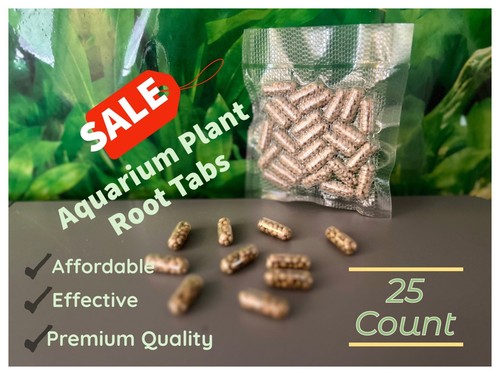
While both liquid fertilizers and root tabs supply essential nutrients, they deliver them in different ways. Liquid fertilizers dissolve in the water column, making nutrients immediately available to plants that feed primarily through their leaves and stems. Root tabs, in contrast, are solid capsules or tablets pushed into the substrate, releasing nutrients directly to plant roots over time.
Which works better depends on what you grow. Stem plants, mosses, and floating species absorb nutrients mainly from the water. These benefit most from regular liquid dosing. Sword plants, crypts, and other heavy root feeders extract nutrients from the substrate, making root tabs a more effective option for them.
Tank setup also matters. Inert substrates like plain gravel or sand provide no nutrients, so root tabs can be essential for rooted plants. Nutrient-rich aquasoils may reduce the need for tabs in the first year, but eventually benefit from supplementation as the soil depletes.
Comparison Table: How Liquid Fertilizer and Root Tabs Stack Up
| Method | Best for Plant Type | Delivery Duration | Typical Dose Rate | Ease of Use | Price |
|---|---|---|---|---|---|
| Liquid Fertilizer | Stem, moss, floating | 1-3 days | 1-5 ml per 10 gal, 2-3x/week | Simple pour or pump | $ |
| Root Tabs | Rooted, heavy feeders | 3-8 weeks | 1 tab per 4-6 in², every 1-2 months | Push into substrate | $$ |
| Combined Approach | Mixed plant types | Varies (see above) | Both as above | Moderate complexity | $$$ |
$ / $$ / $$$ indicates budget / mid-range / premium relative to the picks above. Check live listings further down for current prices.
Why Some Tanks Need Both—And Others Don’t
Many aquascapers assume that using both liquid fertilizer and root tabs is always better. In practice, this isn’t true for every setup. For example, a tank filled with fast-growing stem plants in inert gravel will do well with only liquid dosing. On the other hand, a crypt-dominated scape on sand will struggle without root tabs, no matter how much you dose the water column.
Mixed aquascapes—think a carpet of dwarf hairgrass, a stand of swords, and some floating salvinia—often benefit from a combination approach. You get the best of both worlds: root tabs under heavy feeders, liquid dosing for the rest. This approach does cost more and requires more attention to avoid overdosing, which can fuel algae.
It’s also worth noting that in low-tech tanks with slow-growing plants, you can often get by with root tabs alone, replacing them every 6-8 weeks. High-tech, CO2-injected tanks with demanding stems may require daily or alternate-day liquid dosing for consistent growth.
See today’s dealsHow Nutrient Delivery Affects Plant Health and Algae Risk
Liquid fertilizers release nutrients—especially nitrogen, potassium, and trace elements—directly into the water, where they are accessible to all plants and, unfortunately, to algae as well. Overdosing or inconsistent water changes can lead to excess nutrients in the water column, spurring unwanted algae growth.
Root tabs, by contrast, localize most nutrients in the substrate. This means rooted plants can access them, but algae in the water column cannot. However, root tabs can sometimes “leak” nutrients into the water if disturbed or if the substrate is too coarse, so placement and substrate choice matter.
In practice, I recommend starting with the lowest recommended dose for either method and adjusting only after observing plant growth and any algae response for at least two weeks. For example, if you see pale leaves on rooted swords but healthy stems elsewhere, increase root tab frequency. If you notice green spot algae on glass, consider reducing liquid dosing slightly or increasing water changes.
Compare optionsBeginner’s pre-purchase checklist
- Identify your dominant plant type—root feeders (like crypts, swords) vs. water column feeders (stems, mosses, floaters).
- Check your substrate type—measure depth and confirm if it’s inert (plain gravel/sand) or nutrient-rich (aquasoil, enriched blends).
- Calculate your tank size in gallons or liters—dosing rates and tab quantities scale with water volume and footprint.
- Review your maintenance routine—note how often you do water changes and how much time you can devote to dosing.
- Inspect for livestock sensitivity—some shrimp and snails are sensitive to copper or other trace elements in certain fertilizers.
- Look up compatibility—ensure chosen fertilizers are suitable for your specific plants and do not cloud water or stain substrate.
- Plan for storage—liquid fertilizers can degrade over time; check shelf life and store in a cool, dark place.
Common Mistakes and How to Avoid Them
One of the most frequent errors is using root tabs in tanks with coarse gravel, where nutrients quickly leach into the water column and trigger algae. For these tanks, consider switching to a finer-grained substrate or using only liquid fertilizers for water column feeders.
Another mistake: dosing liquid fertilizers at the maximum label rate from the start. This can result in a nutrient surplus, especially in low-light or low-plant-mass setups. Start low and observe. Only increase if you see clear signs of deficiency, such as yellowing or stunted new growth.
Finally, avoid mixing multiple brands or types of fertilizers without tracking total nutrient input. It’s easy to accidentally double-dose micronutrients, leading to toxicity or imbalances. Stick to one trusted formulation per method and keep a simple dosing log.
For more detailed plant nutrition discussions, see the Planted Tank community—a respected resource among aquascapers.
Related Guides
FAQ: Liquid Fertilizer vs Root Tabs in Home Aquariums
How long does a root tab last in the substrate?
Most root tabs provide nutrients for 4 to 8 weeks, depending on plant demand and substrate type. In tanks with heavy root feeders or high temperatures, tabs may need replacing closer to every 4 weeks for best results.
Can I use both liquid fertilizer and root tabs together?
Yes, using both is common in mixed-plant tanks. Root tabs support heavy feeders like swords and crypts, while liquid dosing covers stem plants and floaters. Monitor for algae and adjust dosing if nutrient levels get too high.
Which method is better for carpeting plants?
Most carpeting plants—such as dwarf hairgrass and Monte Carlo—benefit from root tabs, especially in inert substrates. Liquid dosing helps, but root feeding is critical for dense carpets in aquascapes.
Do root tabs cloud the water or harm fish?
Properly installed root tabs rarely cloud water or harm fish. Problems occur if tabs break the surface or are disturbed, releasing nutrients into the water. Use clean tweezers to insert tabs deep into the substrate to minimize risk.
How do I know if my plants need more fertilizer?
Look for signs like pale new leaves, slow growth, or transparent patches on older leaves. If you see these symptoms, and algae is not a problem, consider gradually increasing dosing. Test water parameters to avoid excess buildup.
Are there compatibility issues with certain livestock?
Some liquid fertilizers contain copper or high iron, which can be harmful to sensitive shrimp and snails. Check the label for copper content below 0.05 mg/L and research livestock sensitivity before use. For more, visit the Aquatic Gardeners Association for plant and livestock compatibility guidelines.
What’s the shelf life of liquid fertilizers?
Unopened liquid fertilizers usually last 1-2 years if stored in a cool, dark place. Once opened, use within 6-12 months for best potency. Always shake well before dosing, as nutrients may settle over time.
Summary: Choose Based on Your Plants and Setup
Liquid fertilizer and root tabs each play a specific role in planted aquariums. The right choice depends on your plants, substrate, and maintenance habits. For stem and floating plants, liquid dosing is essential. For rooted heavy feeders in inert substrates, root tabs are a must. Mixed tanks often benefit from both, but careful dosing is key to avoiding algae. Assess your setup, start with the minimum effective dose, and adjust based on plant growth and water clarity. This approach saves money, avoids frustration, and helps your aquascape reach its full potential.


Last updated: June 2026 · About our research