9 min read
Disclosure: As an Amazon Associate and eBay Partner Network publisher, we earn from qualifying purchases. This doesn’t affect what we recommend or how we describe it.
Choosing the right aquarium gravel vacuum comes down to the size of your tank, how much effort you want to put into maintenance, and your budget. Nano tank keepers need tools that can get into tight corners without stirring up too much debris, while those with larger tanks need something efficient enough to save time on water changes. For many aquarists, reliability and simplicity outweigh fancy features—especially when the job is as routine as cleaning substrate. Here’s how the most established gravel vacuum options stack up, and which is best for your specific setup.
Top picks at a glance
- Aqueon Aquarium Siphon Vacuum Gravel Cleaner With Bulb Large – 10 Inches — the classic manual pick
- Aqueon Aquarium Siphon Vacuum Gravel Cleaner Mini – 5 Inches — the best option for nano tanks
Manual siphon vs. mini vacuum: which fits your tank?
The two leading options for aquarium gravel cleaning are classic manual siphons and compact mini vacuums. Both work by creating a siphon effect to draw water and debris out of the substrate, but the size and design of the vacuum head make a significant difference in how well they suit different tanks.
The Aqueon Aquarium Siphon Vacuum Gravel Cleaner With Bulb Large – 10 Inches is a staple for standard and larger tanks. Its 10-inch length means you cover more area per pass, making water changes and gravel cleaning much faster in tanks above 10 gallons. The integrated squeeze bulb is designed to make starting the siphon straightforward for most users.
For smaller setups, the Aqueon Aquarium Siphon Vacuum Gravel Cleaner Mini – 5 Inches offers a compact solution. The 5-inch vacuum head is ideal for nano tanks (under 10 gallons) or tight aquascapes with dense hardscape and plants. You can target specific spots in the substrate without uprooting plants or disturbing delicate layouts.
Product comparison: specs and best use
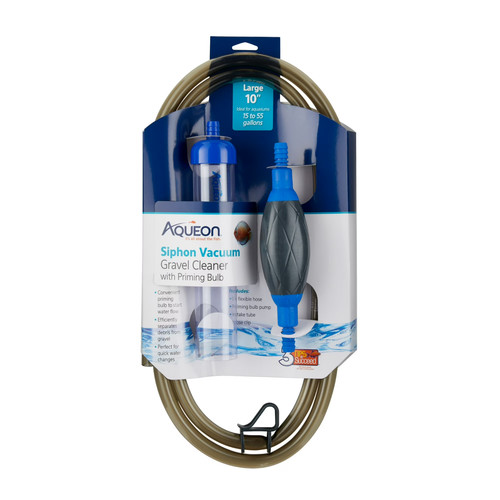
Pictured: Aqueon Siphon Vacuum
| Product | Condition | Price | Best For | Vacuum Head Length | Suitable Tank Size |
|---|---|---|---|---|---|
| Aqueon Aquarium Siphon Vacuum Gravel Cleaner With Bulb Large – 10 Inches |
New | $$$ | Classic manual pick | 10 inches | 10+ gallons |
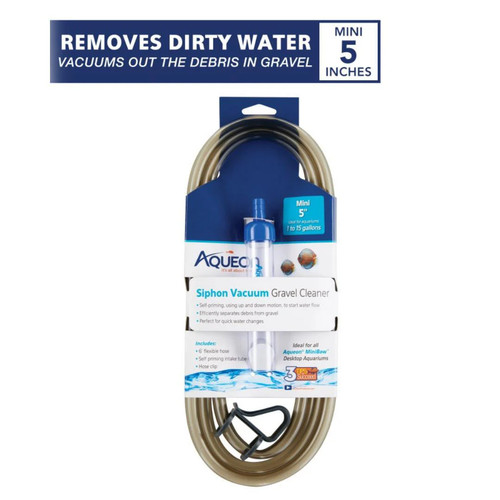 Aqueon Aquarium Siphon Vacuum Gravel Cleaner Mini – 5 Inches Aqueon Aquarium Siphon Vacuum Gravel Cleaner Mini – 5 Inches |
New | $ | Best for nano tanks | 5 inches | Up to 10 gallons |
About the $ symbols: they’re a quick budget/mid/premium read of where each option sits relative to the others in this comparison. See current prices in the live listings below.
Related Guides
- Aquarium Gravel Vacuums for Easy Tank Cleaning
- Our guide to Fine Gravel vs Coarse Gravel: Which Is Best for Your Aquarium?
- Sand vs Gravel Substrate: Which Is Best for Your Aquarium?
- Canister Filter vs Sump Filter: Which Is Better for Your Aquarium?
- Hang-On-Back vs Canister Filters: Which Is Best for Your Aquarium?
- Internal Filter vs Sponge Filter: Which Is Better for Your Aquarium?
- Browse all Aquascaping Tools →
Vacuum head size and tank compatibility
One of the most important factors in choosing a gravel vacuum is matching the head size to your tank. A 10-inch vacuum head, as found on the Aqueon Siphon Vacuum, is efficient for tanks above 10 gallons. You can clean a standard 20-gallon tank in fewer passes, reducing the time your fish and plants are disturbed. This size head is also less likely to get clogged by larger gravel pieces.
For nano tanks or heavily planted aquascapes, the Aqueon Siphon Mini’s 5-inch head offers better precision. The smaller profile lets you reach behind driftwood, between rocks, and around plant stems. In a 5-gallon tank, a larger vacuum head is likely to be unwieldy and can easily uproot delicate carpeting plants. The Mini’s scale is a better fit for targeted spot cleaning and regular maintenance in small volumes.
Ease of use and priming mechanism
Both the Aqueon Siphon Vacuum and the Aqueon Siphon Mini use a manual squeeze bulb to start the siphon. This is a crucial feature for beginners—no need to suck on the tube or fuss with awkward water starts. By squeezing the bulb several times, you get water moving quickly, which helps prevent accidental spills and makes the process less messy.
It’s worth noting that a longer vacuum tube, as provided with the standard Aqueon Siphon Vacuum, can make it easier to reach the bottom of deeper tanks or avoid getting your hands wet. For shallow nano tanks, the shorter length of the Aqueon Siphon Mini’s tube is usually more manageable and less likely to knock over hardscape or decorations.
Flow rate and cleaning efficiency
Flow rate isn’t always listed in gallons per hour for manual siphons, but the size of the vacuum head and tubing has a direct impact. The larger Aqueon Siphon Vacuum moves more water per minute—this is beneficial for routine water changes in medium to large tanks, where you want to remove 25-50% of the water without spending half an hour at the tank. For a 20-gallon tank, expect to change out 5 gallons in just a few minutes.
The Aqueon Siphon Mini, with its narrower tube and smaller head, drains water more slowly. This is intentional: in nano tanks, faster flow risks draining the tank too quickly and stressing livestock. You get more control for spot-cleaning, and less risk of accidentally removing too much water at once.
Build quality and durability
Both Aqueon models are constructed from clear, rigid plastic with flexible tubing. These materials are standard for manual siphons and are generally robust enough for years of typical home use. The squeeze bulb is a known wear point—over time, any rubber bulb will lose elasticity, but replacements are widely available and typically inexpensive. No manual siphon is immune to kinking or cracking if mishandled, so proper storage (coiled loosely, out of direct sunlight) helps extend life.
It’s important to avoid using gravel vacuums with water hotter than 35°C (95°F), as high temperatures can deform plastic parts. For most tropical tanks, this is not an issue, but it’s something to keep in mind for specialty setups.
Total cost of ownership
The initial price of a gravel vacuum is only part of the picture. Here are the most common ongoing or hidden costs you should consider:
- Replacement squeeze bulbs: $3–$7 every 2–3 years, depending on frequency of use and storage conditions.
- Hose replacement: $5–$10 per hose, typically needed every 2–4 years if the tubing becomes brittle or develops leaks.
- Water conditioner: $10–$20 per year, as every water change requires dechlorinator to keep tap water safe for fish and plants.
- Wastewater disposal: If you use the waste water for plants, there’s no cost—otherwise, consider the small increase in water bill for frequent changes (around $5–$15 annually for typical home tanks).
- Accessory adapters: Optional gravel guards or flow restrictors are sometimes purchased separately ($3–$8 each) if your setup requires them.
These add-on expenses are minor compared to the overall cost of tank maintenance, but planning ahead means you won’t be caught off guard by a worn-out bulb or cracked hose midway through a cleaning session.
How we selected gravel vacuums for this guide
For this buying guide, only established, widely available manual gravel vacuums with clear manufacturer specs and market presence were considered. Key factors in selection included vacuum head size (in inches), compatibility with nano versus standard tanks, ease of priming (manual bulb operation), and tube length. These criteria matter because they directly affect cleaning efficiency, risk of disturbing aquascapes, and suitability for tanks of various volumes.
We compared the listed features, build materials, and intended use cases of each product, focusing on models with a proven track record and clear differentiation by tank size. Generic or unbranded siphons, or those lacking clear head dimension specs, were excluded to avoid recommending products with inconsistent quality or unknown fit. Kits bundled with unrelated accessories (nets, food, test strips) were also left out, as these often obscure the core vacuum quality and value.
This guide is best suited for hobbyists maintaining freshwater or planted tanks up to about 40 gallons. If you’re running much larger setups, need integrated water-pump-powered vacuums, or want electric substrate cleaners, these manual models may not provide enough throughput. For saltwater tanks with deep sand beds, specialized vacuums or different maintenance routines are often required—consult resources like Reefkeeping Magazine for saltwater-specific substrate care.
Frequently asked questions about aquarium gravel vacuums
How often should you use a gravel vacuum in a planted tank?
For most home planted tanks, gravel vacuuming is recommended every 2–4 weeks during routine water changes. Heavily planted tanks with carpeting plants might need less frequent deep cleaning—focus on visible debris and leave root zones undisturbed to encourage healthy growth.
Is the Aqueon Siphon Vacuum worth the extra cost over the Mini for a 20-gallon tank?
Yes, the larger vacuum head and longer tube of the Aqueon Siphon Vacuum make it more efficient for tanks 10 gallons and up. You’ll save time and effort compared to the Mini, which is better suited for small tanks where precision matters more than speed.
Can you use the Aqueon Siphon Mini in a 5-gallon shrimp tank without disturbing substrate?
The Aqueon Siphon Mini’s 5-inch head is well-matched to nano tanks, including shrimp setups. Its smaller size allows careful spot cleaning between plants and hardscape, minimizing disturbance to shrimp and substrate compared to larger vacuums.
How long does a manual gravel vacuum last before needing replacement?
With regular home use and proper storage, expect a manual gravel vacuum to last 2–4 years. The squeeze bulb and tubing are the most common parts to wear out, but replacements are inexpensive and extend the product’s usable life.
What’s the difference in setup time between the large and mini gravel vacuums?
Both the Aqueon Siphon Vacuum and the Mini are designed for quick setup, with the squeeze bulb eliminating the need for manual siphon starting. The larger model can take slightly longer to assemble due to its longer tube, but overall setup time is under a minute for either.
Are these gravel vacuums compatible with all gravel types?
Yes, both models handle standard aquarium gravel and most inert substrates. For very fine sand, use slower siphoning and caution to avoid sucking up substrate. Neither is ideal for deep sand beds in marine tanks, where specialized cleaners are preferred.
Can you return or exchange these vacuums if they don’t fit your tank?
Return and exchange policies depend on the retailer. Most major aquarium suppliers offer a 30-day return window for new, unused equipment. Always check the specific seller’s policy before purchase to ensure compatibility with your tank size and layout.
Final take: which gravel vacuum matches your needs?
If you have a standard or larger freshwater tank (10 gallons and up), the Aqueon Siphon Vacuum is the efficient, time-saving choice. Its larger head and tube speed up cleaning, especially useful for tanks with open layouts. For nano tanks or intricate aquascapes, the Aqueon Siphon Mini’s compact design gives you the precision and control needed to maintain delicate setups without risk of uprooting plants. Either model is a solid, low-maintenance choice for routine substrate cleaning, but matching the vacuum head size to your tank volume is the key to hassle-free water changes.
Last updated: July 2026 · About our research