
8 min read
Disclosure: As an Amazon Associate and eBay Partner Network publisher, we earn from qualifying purchases. This doesn’t affect what we recommend or how we describe it.
Which filter type actually works better for your planted aquarium—a hang-on-back filter or a canister filter? The answer depends on your tank size, aquascape layout, maintenance tolerance, and budget. Both filter types have strengths and drawbacks, but making the right choice can save you hours of hassle and hundreds in wasted gear. Let’s break down the real-world experience and numbers that matter so you can buy with confidence.
What aquarists are really asking about hang-on-back vs canister filters
Most people searching for this comparison are home aquarium owners—usually beginners or intermediates—setting up or upgrading a freshwater tank (often 20 to 75 gallons) with live plants. The main questions are: Which filter keeps the water clearer? Which is easier to set up and maintain? Will either disrupt my aquascape or CO2 injection? How much noise and space do I have to deal with? And crucially: Is the extra cost of a canister filter justified for a typical planted tank?
Here’s how the two filter types actually stack up where it counts for real home setups.
Side-by-side comparison: hang-on-back vs canister filters for planted tanks
| Setup Type | Typical Flow Rate | Tank Size Range | Maintenance Frequency | Noise Level | Price |
|---|---|---|---|---|---|
| Hang-on-back filter | 150–400 GPH | 10–55 gal | 2–4 weeks | 40–55 dB | $ |
| Medium canister filter | 200–500 GPH | 20–75 gal | 4–8 weeks | 35–50 dB | $$ |
| Large canister filter | 350–700 GPH | 55–150 gal | 6–10 weeks | 35–48 dB | $$$ |
Hang-on-back filters: practical benefits and limitations
Hang-on-back (HOB) filters are the staple for tanks under 55 gallons. They’re easy to install—just hook over the rim, fill with water, and plug in. Most models offer 150–400 gallons per hour (GPH) of flow, which covers the needs of a 20–40 gallon planted community tank. Maintenance is quick: swap or rinse filter pads every 2–4 weeks. Replacement media is cheap and widely available.
However, HOBs have some real-world drawbacks. The intake and outflow are fixed at the tank rim, which can limit circulation in heavily planted tanks or those with hardscape blocking flow. CO2 loss is higher due to surface agitation, so if you’re injecting CO2, you’ll use more to hit the same levels. Noise is another factor—most HOBs run at 40–55 decibels, which is noticeable in a quiet room. Finally, their design makes them visible, which can spoil the look of a carefully aquascaped tank.
For a 29-gallon planted tank with moderate fish load and no CO2, a mid-sized HOB is often the most cost-effective, low-hassle choice. See today’s deals.
Canister filters: when the upgrade is worth it
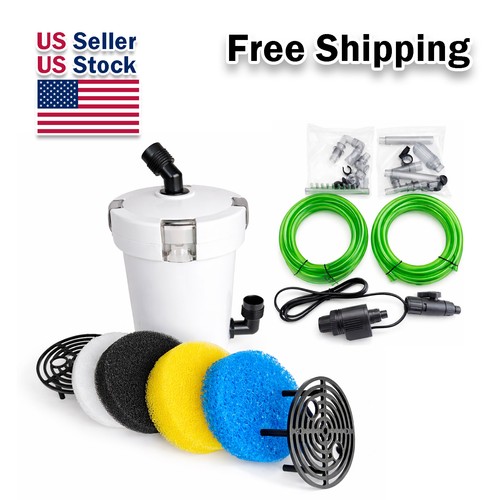
Canister filters sit below or beside the aquarium, moving water through sealed media chambers via hoses. They’re known for strong biological and mechanical filtration—medium units handle 200–500 GPH, while large models can exceed 700 GPH for big tanks. Media volume is a key advantage: a medium canister often holds 2–4 liters of media, compared to 0.5–1 liter in a typical HOB. This means more space for beneficial bacteria and better long-term water clarity, especially in tanks with heavy planting or messy fish.
Maintenance is less frequent (every 4–8 weeks), but takes longer—draining hoses, lifting the canister, and cleaning multiple baskets. Canisters run quieter (35–50 dB) since the motor is external and insulated. They’re also less obtrusive visually; only the intake and outflow pipes are visible in the tank, and many aquascapers swap these for glass or clear acrylic for minimal disruption.
CO2 loss is lower with canisters, especially if you use a spray bar below the waterline. This makes them a favorite for high-tech planted setups. For tanks over 40 gallons, or where you want pristine water with minimal equipment on display, a canister filter is often worth the extra investment. Compare options.
Real-world setup and maintenance: what to expect
Setting up a HOB filter is a five-minute job. Canisters take longer—expect 30–60 minutes for assembly, priming, and hose routing. If your tank is in a living room or bedroom, noise matters. HOBs can “waterfall” if the water level drops, amplifying sound. Canisters, with submerged returns, stay quiet unless air is trapped in the impeller chamber.
Maintenance intervals depend on stocking and plant density. Heavily stocked tanks or those with fine-leafed plants (like Cabomba or Myriophyllum) clog pads faster. For a typical 40-gallon planted community, a HOB needs pad rinsing every 2–3 weeks; a canister stretches this to 6 weeks or more if you pre-filter the intake. Always keep a spare set of media baskets or pads to avoid downtime.
Space is another consideration. HOBs hang off the back, requiring 3–5 inches of clearance. Canisters need cabinet or floor space—medium units are usually 10–15 inches tall and 8–10 inches wide. Make sure your stand can accommodate the canister’s footprint and hose routing.
Related Guides
- Our guide to Hang-On-Back Filter vs Canister Filter: Which Is Right for Your Aquarium?
- The Best Hang-On-Back Aquarium Filters, Reviewed and Compared
- Our guide to Canister Filter vs Sump Filter: Which Is Better for Your Aquarium?
- Our guide to Aquarium Canister Filters That Actually Work: Top Picks for 2026
- Best Pre-Filter Sponges: What to Look For and What to Avoid
- How to Deep Clean a Sponge Filter: Step-by-Step Guide for Aquarists
Quick decision tree
- If your tank is under 30 gallons and budget is tight: Hang-on-back filter is the best fit.
- If you inject CO2 and want to minimize loss: Choose a canister filter with a submerged spray bar.
- If you need the quietest possible setup for a bedroom or office: Canister filter wins for low noise.
- If you want the simplest setup and fastest maintenance: Hang-on-back filter is easier for routine cleaning.
- If your tank is over 55 gallons or heavily stocked: Large canister filter provides better capacity and flow.
What about custom or hybrid filtration setups?
Some advanced aquascapers use both a HOB and a small canister on the same tank, or add internal “polishing” filters for extra clarity. In most home aquariums, though, this is overkill and adds to maintenance. For tanks under 75 gallons, picking a single, well-sized filter is more efficient and cost-effective. Always size your filter for at least 6–8x your tank volume in GPH to ensure good circulation—e.g., a 40-gallon tank should get at least 240–320 GPH combined flow after accounting for media and head height losses.
For more on the science behind aquarium filtration and water quality, see the technical resources at the Aquatic Gardeners Association.
Frequently asked questions: hang-on-back filter vs canister filter
How often should I clean each type of filter?
Hang-on-back filters typically need pad or cartridge cleaning every 2–4 weeks, depending on fish load and plant debris. Canister filters can go 4–8 weeks between cleanings, as their larger media volume clogs less quickly. For tanks with lots of fine plants, check intake strainers weekly to prevent blockages.
Will a canister filter disturb my aquascape or uproot plants?
Not if you set the outflow correctly. Use a spray bar or lily pipe to diffuse flow across the water surface, adjusting direction to avoid blasting delicate plants. You can further reduce disturbance by placing hardscape elements in front of the return flow.
Which filter type is quieter in practice?
Canister filters are generally quieter, running at 35–50 dB. Hang-on-back filters can reach 55 dB, especially if the water level drops and water splashes. For tanks in bedrooms, canisters are the better option for minimal noise.
How much media can each filter hold?
Hang-on-back filters typically hold 0.5–1 liter of media, enough for basic mechanical and biological filtration in small to medium tanks. Medium canister filters hold 2–4 liters, supporting larger bacterial colonies for better biological filtration and longer intervals between cleaning.
Is a canister filter worth the extra cost for a 40-gallon planted tank?
For high-tech or heavily planted tanks, yes—a canister’s higher media volume and reduced CO2 loss justify the cost. For low-tech setups with moderate fish load, a quality HOB can be sufficient and more economical. View what’s available.
What’s the most common failure or issue for each type?
Hang-on-back filters can develop noisy impellers or leaks at the intake seal over time. Canister filters may suffer from air leaks at hose connections or worn-out O-rings, leading to loss of prime. Keeping spare seals and cleaning impellers regularly reduces downtime and extends filter life.
Can I use either filter on a rimless or braceless tank?
Hang-on-back filters may not fit securely on rimless tanks, as their mounting clips are designed for standard rims. Canister filters, with flexible intake/outflow options, are more adaptable for rimless or custom aquariums.
Final thoughts: match your filter to your tank goals
The best filter is the one that fits your tank’s size, aquascape style, budget, and maintenance routine. For most tanks under 40 gallons and low to moderate planting, a hang-on-back filter does the job with minimal fuss. Step up to a canister filter if you want maximum water clarity, quieter operation, and less visible equipment—especially for high-tech or larger planted tanks. Whichever you choose, size your filter for at least 6–8x turnover per hour, and keep up with maintenance for healthy, clear water.
Still comparing? Check current prices on the latest filter options and see what fits your setup best.



Last updated: July 2026 · How we put guides together