7 min read
Disclosure: As an Amazon Associate and eBay Partner Network publisher, we earn from qualifying purchases. This doesn’t affect what we recommend or how we describe it.
Mid-water in your planted tank looks dusty, filter flow seems to drop, and your crystal-clear aquascape is suddenly dull—time to rethink your filter floss. The right filter floss can be the difference between a thriving, showcase aquarium and a constant battle with debris. This guide breaks down which filter flosses actually deliver on clarity, capacity, and value, so you spend less time swapping pads and more time enjoying your tank.
Top picks at a glance
- Aquatic Experts FilterFirst Aquarium Filter Floss Pad 3/4″ – 1″ Thick — the premium option with thick, high-capacity filtration
- Seapora Filter Floss 12″ x 120″ 10 sq ft — the best value for large tanks or frequent changes
Spot the difference between thick and bulk filter floss
Filter floss isn’t just “cotton” by another name. The thickness, density, and roll size all affect how well it traps debris, how often you have to change it, and how much you’ll spend in the long run. Two top contenders currently stand out with very different strengths: the Aquatic Experts FilterFirst Aquarium Filter Floss Pad 3/4" – 1" Thick and the Seapora Filter Floss 12" x 120" 10 sq ft. Here’s how they compare for real-world aquarists.
Choose the right filter floss for your aquarium: Side-by-side comparison
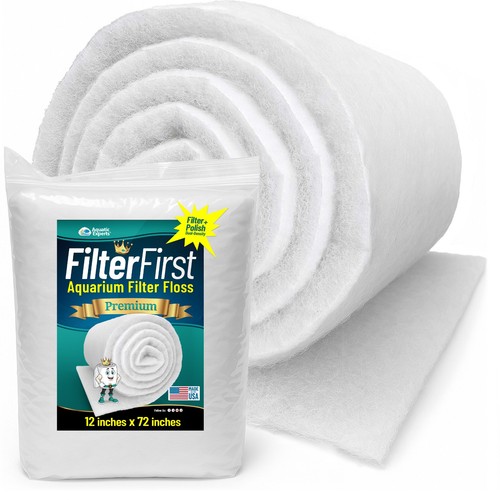
Pictured: Aquatic Experts FilterFirst
| Product | Condition | Price | Best For | Thickness | Sheet/Roll Size |
|---|---|---|---|---|---|
| Aquatic Experts FilterFirst Aquarium Filter Floss Pad 3/4″ – 1″ Thick |
New | $$$ | High-capacity, premium filtration | 0.75–1 inch | Pad |
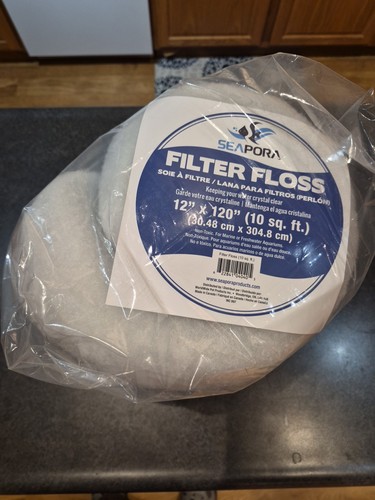 Seapora Filter Floss 12″ x 120″ 10 sq ft Seapora Filter Floss 12″ x 120″ 10 sq ft |
New | $ | Budget, large tanks, frequent changes | — | 12″ x 120″ roll (10 sq ft) |
About the $ symbols: they’re a quick budget/mid/premium read of where each option sits relative to the others in this comparison. See current prices in the live listings below.
Related Guides
- Canister Filter vs Sump Filter: Which Is Better for Your Aquarium?
- Hang-On-Back Filter vs Canister Filter: Which Is Right for Your Aquarium?
- How to Replace Filter Media in Your Aquarium: A Step-by-Step Guide
- Our guide to Should You Leave Your Aquarium Filter On at Night?
- Our guide to Fine Gravel vs Coarse Gravel: Which Is Best for Your Aquarium?
- Our guide to LED vs Fluorescent Aquarium Lighting: Which Is Better for Your Tank?
- Browse all Filtration Systems →
Understand what makes these two filter flosses different
On paper, the Aquatic Experts FilterFirst stands out for its substantial thickness—between 0.75 and 1 inch. This extra depth means it can trap more debris before clogging, which translates to longer intervals between changes. It’s especially useful if you’re running a high-bio-load tank (think goldfish, cichlids, or planted tanks with heavy feeding) or if you want to polish water before it returns to the main display. The pad format makes it easy to cut to fit canister baskets, hang-on-back filters, or sump trays without fuss.
Seapora Filter Floss, by contrast, is all about volume and flexibility. You get 10 square feet in a single 12″ wide roll—plenty to last months, even with frequent replacements. While it isn’t as thick as the FilterFirst (exact thickness isn’t listed, but it’s standard for bulk rolls), you can double it up for extra filtration or use it single-layer for faster flow in heavily planted or lightly stocked tanks. The roll format is ideal for large sumps, DIY filter builds, or anyone who wants to trim custom shapes for odd-sized filter compartments.
Match your filter floss to your tank’s needs
For tanks where water clarity is non-negotiable—think aquascapes, show tanks, or setups with messy fish—the Aquatic Experts FilterFirst is the clear winner. Its 3/4″–1″ thickness traps both fine and coarse debris, and you won’t be swapping it out as often as thinner pads. It’s also a smart pick for aquarists who want maximum particle removal before water hits their bio-media, helping extend the life of more expensive filtration layers.
If you’re running a rack of tanks, a big community setup, or you’re on a budget, the Seapora Filter Floss delivers unbeatable value. Ten square feet means you can change out floss weekly, or even more often, without running up costs. It’s also handy for pond prefilters or as a disposable mechanical stage in high-turnover breeding tanks, where quick changes matter more than absolute polish.
How these filter flosses were shortlisted
The options here were selected by comparing manufacturer specs, listed features, and market positioning for filter flosses currently available. Priority was given to thickness (for debris-holding capacity), total surface area per pack, flexibility in cutting to size, and value per use. Thickness is especially important: anything under 0.5″ often clogs quickly or lets fine debris through, while 0.75″–1″ offers a better balance of flow and filtration for most home tanks. Roll length and width matter for large setups or frequent filter changes.
Unbranded or generic flosses with no stated dimensions were excluded, as were bundles that combine filter floss with unrelated accessories (which can obscure the cost and quality of the core product). This guide is for aquarists who want straightforward, single-material floss for mechanical filtration—not those looking for chemical or biological filter media. If you’re running a nano tank or a filter with non-standard cartridges, you may need a custom or proprietary pad instead of bulk floss rolls.
Common mistakes to avoid
- Choosing by price alone: Cheap, thin floss may clog fast or let debris pass, costing more in the long run through frequent changes or poor water quality.
- Ignoring thickness: Using floss under 0.5″ thick in high-bio-load tanks often leads to cloudy water and more maintenance, since it fills up too quickly.
- Overstuffing filter compartments: Packing in too much floss can restrict flow, strain your pump, and reduce oxygenation—especially with thick pads like FilterFirst.
- Forgetting to trim to fit: Leaving floss hanging over edges or bunched up invites bypass, meaning dirty water skips filtration entirely.
- Neglecting replacement schedule: Even premium floss needs regular changing; waiting until flow drops risks ammonia spikes and unhappy fish.
FAQs about buying and using aquarium filter floss
How often should you change filter floss in a planted tank?
Most aquarists change filter floss every 1–2 weeks, but high-bio-load tanks may need more frequent swaps. Premium thick floss like FilterFirst can last longer before clogging, while thinner rolls like Seapora may need weekly changes. Monitor flow and water clarity; if you notice either dropping, it’s time for a change.
Is thick filter floss worth the price over bulk rolls?
If you prioritize water clarity and want to reduce the frequency of changes, thick floss such as Aquatic Experts FilterFirst justifies its higher cost. The extra thickness (0.75–1 inch) traps more debris and can extend the interval between replacements. For budget setups or frequent filter maintenance, Seapora’s bulk roll offers better value per use.
Can you use these filter flosses in both canisters and sumps?
Both options can be trimmed to fit most canister filters, sumps, and hang-on-back units. The pad format of FilterFirst is ideal for precise fits, while Seapora’s roll is particularly useful for larger sumps or DIY compartments where you need to cover a bigger area.
How long does a 10 sq ft roll of Seapora Filter Floss last?
This depends on tank size and change frequency. For a standard 20-gallon tank using a 12″ x 4″ piece per change, a 10 sq ft roll should last about 25 changes—potentially six months to a year in a single tank with weekly swaps. Larger tanks or more frequent changes will use it up faster.
Aquatic Experts FilterFirst vs Seapora: Which is better for messy fish?
For tanks with messy species (like goldfish or large cichlids), the thicker FilterFirst pad does a better job of trapping suspended waste and fine particles. Its 0.75″–1″ thickness means fewer clogs and better polish between changes. Seapora is more cost-effective if you’re prepared to change floss frequently, but you may notice more fine debris slipping through.
Will these filter flosses fit all filter types?
Both products are designed to be cut to size, making them compatible with most standard canisters, sumps, and box filters. However, proprietary cartridge-based filters or very small internal filters may not accommodate bulk floss without modification. Always measure your filter compartment before purchase to ensure a good fit.
What if I want chemical or biological filtration too?
Filter floss is strictly a mechanical pre-filter; it traps debris and particles but does not provide chemical or biological filtration. You’ll still need separate media for ammonia removal or beneficial bacteria colonization. For more on different filter media types and their roles, see resources like Aquarium Co-Op’s filtration guides.
Verdict: Which filter floss is right for your tank?
If you want the highest-capacity, least-frequent-change option and don’t mind paying more upfront, the Aquatic Experts FilterFirst delivers on thickness and polish. For large tanks, frequent filter swaps, or budget-conscious setups, Seapora Filter Floss gives you sheer quantity and flexibility at a fraction of the price. Either way, choosing the right floss saves you time, protects your filter’s bio-media, and keeps your aquascape display-worthy. For broader filtration advice, check reputable sources such as Fishkeeping World for setup tips and maintenance best practices.
Last updated: June 2026 · About our research