Disclosure: As an Amazon Associate and eBay Partner Network publisher, we earn from qualifying purchases. This doesn’t affect what we recommend or how we describe it.
8 min read
Choosing the best aquarium LED light for plants can make or break your planted tank. The right fixture brings out lush growth, healthy color, and minimizes algae headaches—while the wrong one wastes money and leaves you frustrated with limp, stunted plants. Home aquarists often struggle to cut through the marketing noise and figure out which lights actually deliver the right spectrum, intensity, and coverage for their tanks. This guide breaks down exactly what matters for real-world planted tanks, with hard numbers, honest trade-offs, and clear advice to help you invest in gear that supports thriving aquatic plants. For more detail, see LED lighting for planted aquariums.
What Plant Growth Really Demands from Your LED Light
Success with aquatic plants comes down to three core lighting factors: intensity (PAR), spectrum, and photoperiod. For most home tanks, intensity is the biggest sticking point—too little, and even easy plants struggle; too much, and you’re battling algae. Here’s what to look for: For more detail, see LED lighting efficiency and lifespan.
- PAR (Photosynthetically Active Radiation): For low-tech tanks, aim for 20–40 µmol/m²/s at the substrate. Moderate tanks (with CO2 and demanding plants) need 40–80 µmol/m²/s. High-tech setups may go higher, but this requires experience and careful balance.
- Spectrum: Plants thrive with a spectrum heavy in the 400–500 nm (blue) and 600–700 nm (red) ranges. Most reputable lights offer “full spectrum” (typically 6,500–7,500K), but check for a CRI (Color Rendering Index) of at least 80 for natural colors.
- Coverage and Spread: The fixture should cover the entire tank length, providing even light without dark corners. For a 60cm tank, a 55–65cm fixture is ideal; for a 120cm tank, look for 115–125cm models.
Don’t get distracted by raw wattage or LED count—these numbers are meaningless without knowing PAR and spread. Instead, focus on real-world performance data.
Direct Comparison of Key Aquarium LED Light Features
| Feature | Budget Light | Mid-Range Light | High-End Light |
|---|---|---|---|
| PAR at 30cm Depth | 15–30 µmol/m²/s | 35–60 µmol/m²/s | 60–100+ µmol/m²/s |
| Spectrum (Kelvin/CRI) | 6,000–7,000K / CRI 70 | 6,500K–8,000K / CRI 80–90 | 6,500K–10,000K / CRI 90+ |
| Adjustability (Dimming/Color) | On/Off only | Stepped dimming, basic color presets | Full dimming, custom spectrum, timers |
| Fixture Length Options | 30–120cm (fixed) | 30–150cm (extendable legs) | 30–180cm (modular/linked) |
| Water Resistance (IP Rating) | IP20–IP32 (splash-resistant) | IP54 (splash-proof) | IP67 (submersible or high humidity) |
| Power Consumption | 8–18W | 18–40W | 35–70W |
| Typical Price Range | $20–$40 | $60–$120 | $160–$400+ |
Matching LED Intensity to Your Tank and Plants
Low, medium, and high light are more than just buzzwords—they’re about matching PAR to the needs of your plants and tank depth. Here’s what experience shows works for common setups:
- Low-light tanks (Anubias, Java fern, moss): 20–40 µmol/m²/s at the substrate is plenty. A budget or mid-range fixture is often sufficient for tanks under 40cm tall.
- Medium-light tanks (Crypts, stem plants, swords): 40–60 µmol/m²/s is ideal. Tanks over 40cm deep or with carpeting plants need a mid-range or high-end fixture.
- High-light tanks (demanding carpets, reds, CO2): 60–100+ µmol/m²/s, with precise dimming. Only invest in this if you’re ready for CO2 and strict nutrient management.
Always check the manufacturer’s PAR charts for your intended tank depth—many overstate their numbers. If in doubt, choose a fixture with dimming so you can tune intensity and avoid algae outbreaks.
Evaluating Spectrum: What Actually Matters for Plant Health?
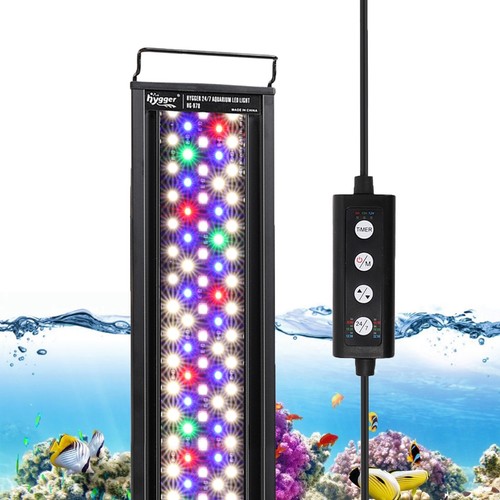
Many “plant” LEDs promise a pink or purple hue, but this isn’t a guarantee of good plant growth or natural color. The real keys are a spectrum that covers blue (around 450nm) and red (around 660nm) peaks, plus a decent CRI (80+). A neutral white (6,500–7,500K) with supplemental red/blue diodes is ideal for most aquascapes, offering both healthy growth and attractive viewing. Avoid “marine” or actinic fixtures designed for reef tanks, which skew too blue for freshwater plants.
For those who want to fine-tune colors for aquascaping competitions, high-end fixtures offer spectrum adjustability. For most hobbyists, a full-spectrum light with a CRI above 80 is more than enough.
Fixture Build Quality and Water Resistance in Home Tanks
Humidity, splashes, and even the occasional dunking are realities of aquarium life. Entry-level lights often lack proper sealing (IP20–IP32), which means corrosion or even electrical failure over time. Mid-range and high-end fixtures usually offer IP54 or higher, with sealed end caps and better heat management—these survive years of daily use, even on open-top tanks. For rimless or high-humidity setups, prioritize fixtures with IP54–IP67 ratings.
Mounting is another overlooked detail. Extendable legs, low-profile brackets, or hanging kits all help you get even coverage. Avoid clip-on lights for tanks over 60cm—they rarely offer enough spread or intensity for healthy plant growth.
Practical Features: Dimming, Timers, and Control
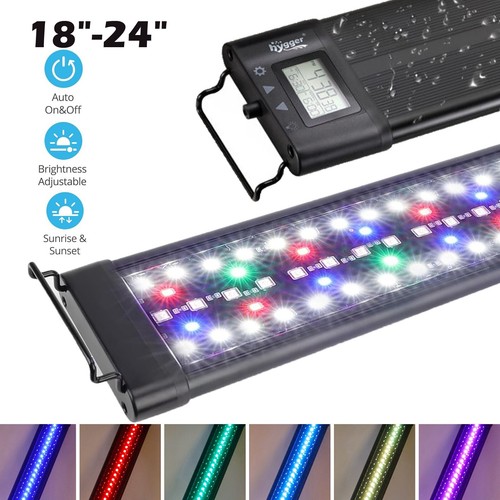
Manual on/off switches are fine for simple setups, but most aquarists quickly outgrow them. Stepped or continuous dimming allows you to find the sweet spot between plant growth and algae control. Built-in timers (or compatibility with plug-in timers) automate your photoperiod—aim for 7–9 hours of light per day for most planted tanks.
Some high-end fixtures offer Bluetooth or app control, letting you set sunrise/sunset ramps, custom color mixes, or even weather effects. These are fun, but not essential. Prioritize reliable dimming and a timer over bells and whistles.
How to Size Your LED Light for Even Coverage
Measure the inside length of your tank and match it to the fixture’s stated coverage. For a standard 60cm tank, choose a fixture that covers at least 55–60cm of the water surface. For deeper tanks (45cm+), consider a fixture with higher PAR output or use two fixtures for even spread. Overhanging lights or modular bars can be linked for custom-sized tanks or peninsula layouts.
Cost vs. Performance: Where to Spend and Save
Budget fixtures can grow hardy plants in shallow tanks, but often lack spectrum quality, reliable waterproofing, and even coverage. Mid-range lights ($60–$120) hit the sweet spot for most home aquascapes—good PAR, proper spectrum, and basic dimming. High-end fixtures ($160+) excel for demanding plants, deep tanks, or serious aquascapers, but are overkill for low-tech setups.
Consider investing in a mid-range fixture with dimming and at least IP54 water resistance—this is where most enthusiasts find the best balance of price, performance, and reliability. Check current prices before making your final decision.
Related Guides
- Root Tabs for Aquarium Plants That Actually Work
- How to Clean Aquarium Plants Before Planting: A Step-by-Step Guide
- Aquarium Cooling Fans That Actually Work: A No-Nonsense Guide
- The Best Aquarium CO2 Regulators, Reviewed for Planted Tanks
- The Best Hang-On-Back Aquarium Filters, Reviewed and Compared
- Browse all Aquarium Lighting →
Common LED Lighting Mistakes and How to Avoid Them
- Overestimating “watts per gallon”: This rule is outdated. Always look for PAR data at the substrate, not just wattage.
- Ignoring tank depth: Deeper tanks (45cm+) need higher PAR fixtures. Shallow tanks can thrive with less.
- Buying too much light: Excess intensity fuels algae and can stress plants. Adjustable dimming is your friend.
- Poor fixture placement: Gaps in coverage create shadowed “dead zones” where plants languish. Use fixtures that match your tank’s full length.
- Neglecting water resistance: Cheap fixtures often fail due to condensation or splashes. Look for at least IP54 for durability.
Double-check specs and real user reviews—many lights are overhyped. When in doubt, choose a reputable mid-range fixture with dimming and proven PAR output. See today’s deals for options that fit your tank size and budget.
FAQ: Choosing and Using LED Lights for Planted Aquariums
How much PAR do I need for a 60cm (24-inch) planted tank?
For low-light plants, aim for 20–40 µmol/m²/s at the substrate. For medium to high-light plants or carpeting species, shoot for 40–80 µmol/m²/s. Always check the manufacturer’s PAR chart for your tank depth—actual output can vary widely between fixtures.
Is spectrum or PAR more important for plant growth?
PAR (intensity) is critical—without enough, plants won’t thrive. Spectrum matters next, but most “full spectrum” LEDs (6,500–7,500K, CRI 80+) provide what plants need. Prioritize PAR for your tank depth, then check that the spectrum covers both blue and red wavelengths.
Can I use a marine/reef light for freshwater plants?
Marine lights usually have too much blue and not enough red for optimal freshwater plant growth. They also often lack the right intensity for deeper planted tanks. Stick to fixtures designed for freshwater or “planted” tanks for best results.
How do I prevent algae when upgrading to a stronger LED?
Increase intensity gradually and reduce photoperiod to 6–7 hours for the first few weeks. Add fast-growing stems to soak up excess nutrients, and monitor for algae. Use dimming to fine-tune light levels—too much light is the most common cause of algae blooms in new setups.
Are built-in timers and app controls worth paying extra for?
Built-in timers are convenient and prevent missed “on/off” cycles, but plug-in timers work just as well for most setups. App controls and spectrum customization are nice extras, but not essential unless you’re fine-tuning for aquascaping competitions or specialized plants.
How long should I run my LED light each day?
Most planted tanks do best with 7–9 hours of light per day. Too long a photoperiod (10+ hours) often leads to algae problems, especially in new tanks. Use a timer for consistency and adjust based on plant growth and algae appearance.
What’s the best way to mount an LED for even coverage?
Use a fixture that spans nearly the full length of your tank. Extendable legs or hanging kits help achieve even spread, especially in rimless or custom tanks. Avoid small clip-on lights for anything larger than a nano tank—they rarely provide adequate coverage for healthy plant growth.
Ready to upgrade your planted aquarium? View what’s available and compare real-world PAR output, spectrum, and build quality to find the best LED light for your plants and aquascape vision.