9 min read
Disclosure: As an Amazon Associate and eBay Partner Network publisher, we earn from qualifying purchases. This doesn’t affect what we recommend or how we describe it.
You’ve dialed in your CO2, your lighting is spot-on, but your aquarium’s pH still swings overnight — threatening your plants or stressing sensitive fish. This is where an aquarium pH controller earns its keep, but picking the right one isn’t as simple as grabbing the first gadget you find online. Here’s how the real contenders stack up, what sets them apart, and which model makes the most sense for your tank and budget.
Top picks at a glance
- American Marine Pinpoint pH Controller — the best-known dedicated aquarium pH controller
- Milwaukee MC122 PRO pH Controller — a robust alternative with simple operation
- CoralVue Hydros Control X4 Pro Pack — the premium multi-parameter aquarium controller
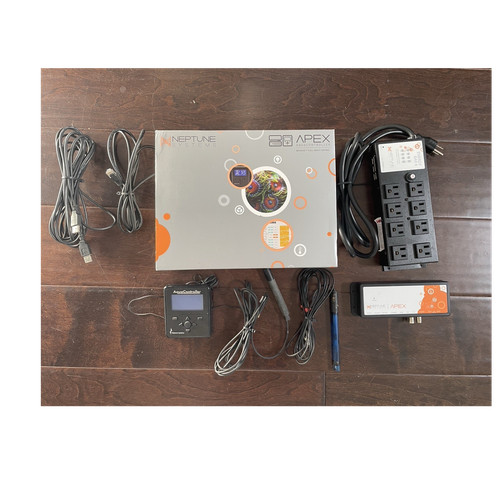
- Neptune Systems Apex Aquarium Controller with Temp & pH, Energy Bar 8 — the most advanced system for automation and monitoring
Why pH controllers matter more than most people think
Consistent pH isn’t just a “nice to have” in planted tanks and sensitive freshwater setups. Even small pH swings can disrupt CO2 availability, impact biofiltration, and stress livestock. Automated pH controllers act as a safeguard, regulating CO2 injection or dosing based on real-time measurements, not guesswork. For tanks with pressurized CO2 or those aiming for stable softwater parameters, a reliable pH controller can mean the difference between thriving plants and constant troubleshooting. Still, not every hobbyist needs a controller — and not every controller is built to the same standard or feature set.
Table: Comparing the best aquarium pH controllers

Pictured: Pinpoint pH Controller
| Product | Condition | Price | Best For | Control Range | Multi-Parameter? |
|---|---|---|---|---|---|
| American Marine Pinpoint pH Controller |
New | $ | Best-known dedicated aquarium pH controller | 4.5–9.5 pH | — |
 Milwaukee MC122 PRO pH Controller Milwaukee MC122 PRO pH Controller |
New | $ | Robust alternative with simple operation | 5.5–9.5 pH | — |
 CoralVue Hydros Control X4 Pro Pack CoralVue Hydros Control X4 Pro Pack |
New | $$$ | Premium multi-parameter aquarium controller | 4.0–9.0 pH (probe-dependent) | Yes |
 Neptune Systems Apex Aquarium Controller with Temp & pH, Energy Bar 8 Neptune Systems Apex Aquarium Controller with Temp & pH, Energy Bar 8 |
Used | $$ | Most advanced system for automation and monitoring | 6.5–9.0 pH (typical probe) | Yes |
Pricing context: $, $$, and $$$ are relative ratings against the other products listed above, not absolute dollar ranges. Live current prices follow below.
What most buying guides get wrong about aquarium pH controllers
Many buying guides lump all pH controllers together, ignoring the real-world differences in how they’re used. For most planted tanks, you want a controller that can reliably trigger a solenoid valve for CO2 — not a lab-grade data logger or a marine reef system with a dozen extra features you’ll never use. The real questions are: How tight is the control range? Is calibration straightforward? And can the unit handle the humidity and splashes of a real aquarium cabinet?
Here’s how the four leading models compare when you look past the spec sheet and consider what actually matters for home aquarists.
Dedicated pH control: Pinpoint pH Controller vs Milwaukee MC122 PRO
The American Marine Pinpoint pH Controller is the classic single-purpose unit. Its main draw is reliability — you get a clear digital readout, relay-controlled power outlet for your solenoid or dosing pump, and a broad control range (4.5–9.5 pH). Calibration is manual via front-panel dials, which avoids accidental button presses but does require you to keep track of your calibration points. The included probe is field-replaceable, and the unit is compact enough to tuck behind a stand.
The Milwaukee MC122 PRO pH Controller is the closest rival. It’s similarly priced, with a slightly narrower control range (5.5–9.5 pH) and a reputation for robust construction. The Milwaukee’s calibration is a touch simpler, with larger dials and clear labeling, making it a strong match for anyone who wants to avoid menu-diving or who calibrates often. Both units run on standard 110–120V AC, and both support direct control of a CO2 solenoid up to 2A — enough for any home system.
For tanks under 500 liters and hobbyists who want set-and-forget pH control, either of these will do the job. The choice comes down to interface preference and which brand’s probe replacements are easier to source locally.
Going beyond pH: Hydros Control X4 and Apex Controller
If your setup is more complex — say you want to monitor temperature, ORP, or automate dosing alongside pH — a multi-parameter controller makes sense. The CoralVue Hydros Control X4 Pro Pack is aimed at demanding aquarists who want everything in one box. It supports up to four probes (including pH, temperature, and more), Wi-Fi control, and advanced alerting. The pH control range is wide (4.0–9.0 pH, depending on probe choice), and the Hydros app lets you set up multiple triggers and schedules. This is serious overkill for a simple CO2-injected planted tank, but for high-value displays or mixed-parameter control, it’s the most future-proof option here.
The Neptune Systems Apex Aquarium Controller with Temp & pH, Energy Bar 8 is a staple in the reef world, but many freshwater aquarists use it for its automation potential. It’s the only model here generally found used, but it’s still the most advanced for integration: you can monitor pH, temperature, and more, automate lighting, and get text/email alerts. The Apex system is modular, so you can expand it with additional probes or outlets later — but expect a steeper learning curve and more setup time compared to the plug-and-play Pinpoint or Milwaukee units.
Common mistakes to avoid
- Assuming all probes are equal. Cheap or old probes drift quickly, leading to false readings and wild pH swings. Always budget for quality probe replacements every 12–18 months.
- Forgetting about calibration. Skipping regular calibration (at least monthly) means your controller is guessing, not controlling. Use fresh 7.0 and 4.0 (or 10.0) calibration solutions for best results.
- Ignoring power ratings. Plugging a high-wattage device (like a heater) into a controller outlet rated for low loads can damage the unit. These controllers are designed for solenoids and small pumps, not heavy loads.
- Overbuying on features. Paying extra for multi-parameter control when you only need pH wastes money and adds unnecessary complexity. Match the controller to your actual needs.
- Neglecting humidity protection. Mounting the controller where it’s exposed to constant splashing or condensation shortens its lifespan. Place the unit above sump level and away from direct spray.
Related Guides
- Our guide to Canister Filter vs Sump Filter: Which Is Better for Your Aquarium?
- Fine Gravel vs Coarse Gravel: Which Is Best for Your Aquarium?
- Our guide to Hang-On-Back Filter vs Canister Filter: Which Is Right for Your Aquarium?
- LED vs Fluorescent Aquarium Lighting: Which Is Better for Your Tank?
- Our guide to Sand vs Gravel Substrate: Which Is Best for Your Aquarium?
- How to Choose an Aquarium Stand With Fish Tank: A Complete Guide
- Browse all CO2 Equipment →
How we selected the best pH controllers for real aquariums
Selection focused on models with a proven track record in aquarium use, not just lab or industrial controllers repurposed for hobbyists. Key criteria included:
- Control range: Units had to offer at least a 4.5–9.5 pH window, covering the demands of both planted and most reef tanks.
- Calibration method: Preference went to models with clear, user-accessible calibration (front-panel or app-driven, not hidden in menus).
- Output compatibility: All shortlisted models can directly control a standard 110–120V solenoid or dosing pump (minimum 2A relay).
- Probe replaceability: Only controllers with replaceable pH probes made the cut, since probe lifespan is limited.
- Multi-parameter support: For aquarists needing more than pH, only well-supported, expandable systems were considered.
We compared the listed specs and market positioning of each controller, referencing manufacturer documentation and user consensus in established aquarist communities. Unbranded models with unclear specs, and bundle deals that made it hard to identify the core controller, were left out. This guide is not for those running ultra-low-budget tanks or for aquarists who only need occasional pH checks (a handheld meter is better there). If you’re not running pressurized CO2 or dosing acids/bases, a full controller may be overkill.
For more on the science behind pH stability in aquariums, see AquariumScience.org’s root domain for deep dives into water chemistry management.
FAQ: Aquarium pH controllers for planted tanks and beyond
How often should you calibrate an aquarium pH controller?
Most manufacturers recommend calibrating your pH controller at least once a month, using fresh calibration solutions at two points (typically pH 7.0 and either 4.0 or 10.0 depending on your target range). Calibration frequency should increase if you notice readings drifting or after changing the probe.
Is the Pinpoint pH Controller or Milwaukee MC122 PRO better for CO2-injected planted tanks?
Both models are designed for direct CO2 solenoid control and provide reliable, straightforward operation. The Pinpoint offers a slightly wider control range, while the Milwaukee MC122 PRO is praised for its simple calibration and build. Your choice should come down to preferred calibration style and which replacement probes are easier to source in your area.
How long do pH probes typically last before needing replacement?
Most aquarium-grade pH probes last 12–18 months with regular maintenance and calibration. Factors like high CO2 levels, temperature swings, and neglecting to keep the probe wet can shorten lifespan. Plan for annual replacement in high-demand setups.
Is the Hydros Control X4 worth the premium over a basic controller?
The Hydros Control X4 is best suited for complex tanks where you want to monitor and automate multiple parameters (pH, temperature, ORP, etc.) and use app-based controls. If you only need pH control for CO2, a dedicated controller like the Pinpoint or Milwaukee MC122 PRO is more cost-effective and easier to set up.
Can you use these controllers with saltwater and freshwater tanks?
Yes, all four options listed can be used in both freshwater and saltwater aquariums. The main considerations are matching the probe type and calibration range to your target pH, and ensuring any connected equipment (like dosing pumps) is compatible with your tank’s needs.
What happens if the controller or probe fails — will it dose too much CO2?
If the probe fails or the controller malfunctions, most units default to “off” (closing the solenoid and stopping CO2 flow), but this depends on how you wire your equipment. Always test your setup before leaving it unattended for long periods, and consider redundancy (like a drop checker) as a backup visual indicator.
Are there any compatibility issues with older Neptune Apex controllers?
Some older Apex systems may require firmware updates or specific probe models for full compatibility with current accessories. Check the module and probe compatibility before purchasing used units, and verify that the included Energy Bar matches your country’s voltage and outlet type.
The bottom line: Matching the right pH controller to your tank
For most planted tanks running CO2, a dedicated controller like the Pinpoint pH Controller or Milwaukee MC122 PRO is the most practical, cost-effective choice — reliable, easy to calibrate, and well-supported for replacement parts. If your setup demands multi-parameter automation or you want app-based control, the Hydros Control X4 and Apex Controller justify their higher cost with expandability and integration features. Always factor in probe replacement and calibration as ongoing maintenance. For basic tanks or those without CO2 injection, a controller may be more complexity than you need — a handheld pH meter could be enough. Choose based on the actual demands of your aquarium, not just on feature lists.
Still comparing options? You can browse more aquarium pH controller choices on Amazon.
Last updated: June 2026 · About our research