8 min read
Disclosure: As an Amazon Associate and eBay Partner Network publisher, we earn from qualifying purchases. This doesn’t affect what we recommend or how we describe it.
Most aquarium guides treat wave makers and circulation pumps as interchangeable, but that oversimplifies the real differences that matter for planted tank hobbyists. The right choice depends not just on moving water, but on how you want to shape flow, distribute nutrients, and keep debris suspended for filtration. With a market full of similar-looking gear, understanding the nuances between wave makers and circulation pumps—and picking a product with the right specs for your tank—can mean the difference between a thriving aquascape and constant frustration with dead spots or uprooted plants.
Top picks at a glance
- hygger Aquarium Wave Maker Circulation Pump Ultra-Silence Magnetic Mount — the best value for most hobbyists
- hygger 4200GPH Double Head Aquarium Wave Maker Circulation Pump Quiet 12W — the high-flow option
- hygger 530-1056GPH Wave Maker Aquarium Circulation Pump 15-100 Gallon Submersible — the adjustable flow pick
- Jebao Wave Maker Pump Marine Aquarium Reef Fish Tank SW-2 SW-4 SW-8 SW-15 — the premium controllable option
Spot the difference between wave makers and circulation pumps
Both wave makers and circulation pumps move water, but they do so in distinct ways. Wave makers are designed to create oscillating, back-and-forth motion that mimics natural waves. This is especially valuable in reef and high-flow aquascapes, where pulsing flow helps prevent detritus buildup and supports gas exchange. Circulation pumps tend to offer steady, directional flow—ideal for keeping water moving in planted tanks without disturbing substrate or delicate stems.
Some models blend both roles, but the internal mechanics and control features can make a big difference. For example, the hygger Aquarium Wave Maker Circulation Pump Ultra-Silence Magnetic Mount offers a basic continuous flow at a wallet-friendly price, while the Jebao Wave Maker Pump Marine Aquarium Reef Fish Tank SW-2 SW-4 SW-8 SW-15 brings programmable, pulsed wave modes and higher output for advanced setups. The trick is matching the right type and control to your tank size, livestock, and aquascaping goals.
Compare the best: wave maker vs circulation pump options for home aquariums
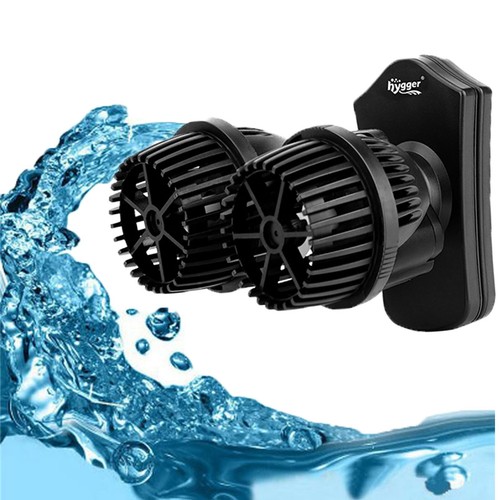
Pictured: hygger Aquarium Wave Maker
| Product | Condition | Price | Best For | Flow Rate | Flow Control |
|---|---|---|---|---|---|
| hygger Aquarium Wave Maker Circulation Pump Ultra-Silence Magnetic Mount |
New | $ | Best value for most hobbyists | — | Fixed |
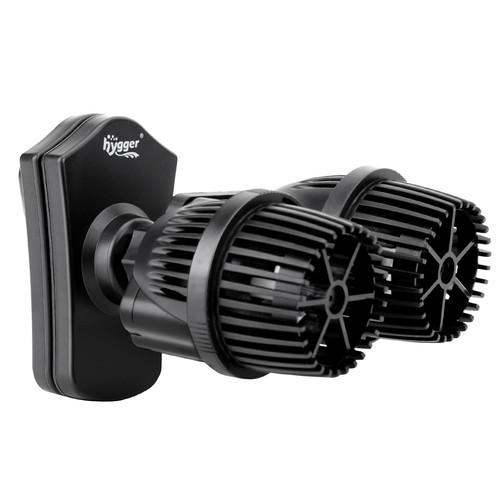 hygger 4200GPH Double Head Aquarium Wave Maker Circulation Pump Quiet 12W hygger 4200GPH Double Head Aquarium Wave Maker Circulation Pump Quiet 12W |
New | $ | High-flow option | 4200 GPH | Fixed |
 hygger 530-1056GPH Wave Maker Aquarium Circulation Pump 15-100 Gallon Submersible hygger 530-1056GPH Wave Maker Aquarium Circulation Pump 15-100 Gallon Submersible |
New | $$ | Adjustable flow pick | 530–1056 GPH | Adjustable |
 Jebao Wave Maker Pump Marine Aquarium Reef Fish Tank SW-2 SW-4 SW-8 SW-15 Jebao Wave Maker Pump Marine Aquarium Reef Fish Tank SW-2 SW-4 SW-8 SW-15 |
New | $$$ | Premium controllable option | 1500–3960 GPH (model-dependent) | Programmable/Controllable |
Price: $ = budget, $$ = mid-range, $$$ = premium — relative to the options compared above. Live prices and current stock are below.
Choose the right pump for your tank goals
For most planted tank keepers wanting to avoid dead spots and improve nutrient circulation, a steady, moderate flow is ideal. The hygger Aquarium Wave Maker is positioned as a cost-effective, ultra-silent solution. Its fixed flow output suits standard community tanks, especially those in the 20-55 gallon range, where you want to keep debris moving without blasting plants loose. The magnetic mount makes repositioning easy, but the lack of adjustable output means you’ll need to size it to your tank—too much flow in a nano tank can uproot carpeting plants or stress smaller fish.
If you’re running a larger tank or want to tackle more stubborn dead spots, the hygger 4200GPH Double Head brings serious power. At 4200 gallons per hour, this double-head model is best suited to tanks over 55 gallons or high-flow biotope setups. It’s not adjustable, so you’ll need to angle the heads or use them in a larger system to avoid overwhelming livestock or aquascapes. The double-head design helps spread out the flow, making it easier to cover long tanks or odd-shaped layouts.
Want more control? The hygger 530-1056GPH stands out for its adjustable output—ranging from 530 to 1056 GPH—making it a fit for a wide spectrum of tank sizes (15 to 100 gallons). This flexibility is a boon if you keep delicate plants or want to fine-tune flow for specific aquascape layouts. It’s a step up in cost, but the ability to dial in the exact flow rate can prevent common headaches like sand dunes or floating stem plants.
For advanced users, the Jebao SW series offers the most sophisticated control. Models range from 1500 to 3960 GPH, with full programmability (including wave, pulse, and random modes) and wireless controllers on some variants. This is the go-to for aquarists running high-tech planted tanks or mixed reef systems who want to mimic natural water movement and tailor flow patterns throughout the day. It’s a premium-priced option, but the feature set justifies the investment for those who want maximum control and flexibility.
Related Guides
- Our guide to Aquarium Circulation Pumps That Are Actually Worth Buying
- Aquarium Wave Makers Reviewed: What’s Worth Buying for Your Tank?
- How to Prime a Canister Filter: A Step-by-Step Guide for Aquarium Owners
- Best Digital Water Quality Testers: A No-Nonsense Guide for Aquariums
- Digital Water Hardness Testers for Aquariums, Reviewed
- Our guide to CO2 Bubble Counters That Actually Work: A Practical Buyer’s Guide
- Browse all Filtration Systems →
Beginner’s pre-purchase checklist
- Measure your tank’s length and width in inches—placement and flow coverage depend on footprint, not just gallon size.
- Check the minimum and maximum recommended tank size for each pump—oversizing can stress fish and uproot plants.
- Confirm your tank’s glass thickness matches the magnetic mount strength, especially for rimless or thick-walled aquariums.
- Calculate total desired turnover rate (target 5–10x tank volume per hour for planted tanks).
- Plan cable management—ensure the included cord length reaches your power outlet with a drip loop for safety.
- Assess livestock needs—avoid high-flow models for Betta, Gourami, or slow-swimming species.
How we selected these wave makers and circulation pumps
This shortlist is based on a review of manufacturer specs, listed features, and real-world market positioning for each product. We prioritized options with clear flow rate specifications (in gallons per hour), tank size compatibility, and meaningful control features (from fixed to full programmability). Magnetic mounts were a must for secure, easy installation. We included only models with transparent, brand-backed listings and omitted generic or unbranded pumps, as well as multi-product bundles that hide core specs.
For this guide, we focused on options suitable for home aquariums from 15 up to 100+ gallons, with a range of budgets from entry-level to premium. We excluded models that lack stated flow rates, have unclear compatibility, or are not suitable for freshwater use. If you’re running a nano tank under 10 gallons, or a specialized low-flow biotope for delicate species, these pumps may be overkill—an air-driven sponge filter or a lower-output powerhead could be a better fit.
FAQ: Real-world questions about wave makers and circulation pumps
Do wave makers and circulation pumps use a lot of power?
Most home aquarium models are energy efficient, with listed power draws ranging from 6W to 12W for the products featured here. For example, the hygger 4200GPH Double Head is rated at 12W. Over a month, this adds only a few dollars to your electricity bill—less than a typical aquarium heater.
Will a wave maker uproot my plants or disturb sand?
It depends on flow rate and placement. High-output models like the hygger 4200GPH Double Head can shift substrate or float stem plants if not aimed correctly. Adjustable models or those with lower GPH are safer for planted tanks, especially with fine sand or carpeting plants. Always start with the lowest setting and monitor plant stability.
How do I know which model is right for my tank size?
Calculate your tank’s volume and aim for a turnover rate of 5–10 times per hour for planted tanks. For example, a 40-gallon tank typically benefits from a pump in the 200–400 GPH range. Oversized pumps like the Jebao SW-8 (up to 3960 GPH) are best reserved for tanks over 75 gallons or for setups needing intense flow.
Is the price difference between the Jebao SW series and hygger models justified?
The Jebao SW series commands a higher price due to its full programmability and wireless controls, which are valuable for advanced aquarists wanting to simulate natural wave patterns or automate flow changes. For basic planted tanks, a less expensive model is often sufficient, but the Jebao is worth the investment if you demand top-tier control and flexibility.
Are these pumps suitable for freshwater and saltwater tanks?
Yes, all products listed here are marketed as suitable for both freshwater and marine setups. However, high-output models are especially popular in reef tanks, where wave action is critical for coral health. For planted freshwater aquariums, focus on models with adjustable flow to avoid stressing plants and fish.
What should I do if the magnetic mount doesn’t hold?
Check your glass thickness—magnets are rated for specific thickness ranges (often up to 12mm). For thicker tanks or acrylic, a stronger magnet or a suction-cup-based pump may be needed. Always install pumps on clean, algae-free glass for the best hold, and consult the manufacturer’s guidance if unsure.
Verdict: Which pump is best for your tank?
If you want reliable, no-fuss flow for most standard planted tanks, the hygger Aquarium Wave Maker is the best value. For larger tanks or high-flow needs, the hygger 4200GPH Double Head covers the most ground, but requires careful placement. The hygger 530-1056GPH is the most versatile, letting you fine-tune output for sensitive plants or variable layouts. For aquascapers demanding programmable flow and advanced control, the Jebao SW series is the only pick here that delivers true wave simulation and wireless convenience.
Ultimately, the “wave maker vs circulation pump” debate comes down to matching flow pattern, control, and output to your specific tank and livestock. For further reading on the importance of water movement in aquarium ecology, check out this resource from Seriously Fish.
Ready to upgrade your tank’s flow? Browse more aquarium circulation pumps and wave makers on Amazon.
Last updated: July 2026 · How we put guides together