9 min read
Disclosure: As an Amazon Associate and eBay Partner Network publisher, we earn from qualifying purchases. This doesn’t affect what we recommend or how we describe it.
Most home aquarium pH probes drift out of calibration within 2–8 weeks, even in stable setups. If your planted tank relies on precise CO₂ dosing, just a 0.2 pH error can mean the difference between healthy growth and algae trouble. That’s why knowing how to calibrate pH probes—properly, with the right steps and solutions—is non-negotiable for any aquarist serious about plant health and water stability.
Why regular calibration matters for planted aquariums
pH probes are not set-and-forget instruments. Even new probes can drift after a month of use, especially in tanks with organic-rich substrates or heavy fertilization. Most aquarium-grade pH probes are accurate to ±0.1–0.2 pH units when fresh and calibrated, but this accuracy quickly fades without maintenance. For a planted tank with CO₂ injection, a 0.2 difference can mean either under-dosing (stunted growth) or over-dosing (stressed livestock).
Manufacturers usually recommend calibrating every 2–4 weeks, but in practice, frequency depends on your tank’s bio-load, probe quality, and how critical pH stability is for your setup. If you’re using automated pH controllers for CO₂, weekly checks are wise. In low-tech tanks, monthly may suffice. Either way, calibration is not optional—it’s the only way to trust your readings.
Comparing pH probe calibration setups: home aquarist options
| Approach | Calibration Points | Accuracy Range | Setup Complexity | Typical Lifespan |
|---|---|---|---|---|
| Single-Point Manual | 1 (pH 7.0) | ±0.2–0.3 pH | Low | 1–2 years |
| Two-Point Manual | 2 (pH 4.0 & 7.0 or 7.0 & 10.0) | ±0.1–0.2 pH | Medium | 1–2 years |
| Automatic Digital Calibration | 2–3 (Auto-recognition) | ±0.05–0.1 pH | Low | 6–18 months |
| Controller-Integrated Calibration | 2–3 (Controller menu) | ±0.05–0.1 pH | Medium-High | 12–24 months |
How to calibrate pH probes: step-by-step for home aquariums
- Gather your calibration solutions and supplies.
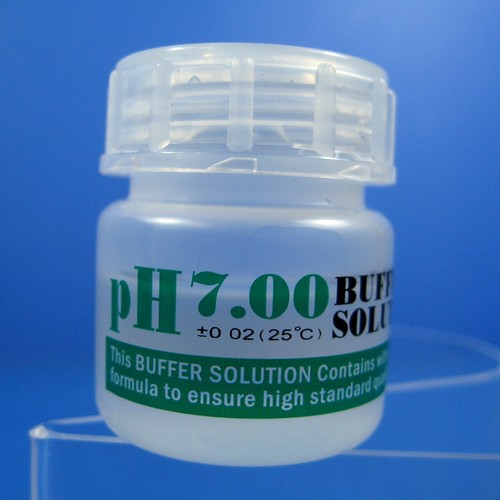
Use fresh pH calibration solutions—at minimum, pH 7.0 and either pH 4.0 or 10.0, depending on your tank’s range. Grab a clean beaker or glass for each solution, distilled water for rinsing, and a lint-free tissue or paper towel. - Rinse and inspect the pH probe.
Rinse the probe tip with distilled water to remove any residue. Check for cracks, salt buildup, or cloudy glass; any damage or heavy fouling means the probe may need replacement rather than calibration. - Start with pH 7.0 buffer solution.
Immerse the probe in pH 7.0 solution. Wait until the reading stabilizes—usually 30–90 seconds. Adjust the calibration dial or press the calibration button on your meter/controller until the display reads 7.0. - Rinse and repeat with second buffer.
Rinse the probe with distilled water. Place it in the second buffer (pH 4.0 for acidic tanks, pH 10.0 for alkaline). Again, wait for stability, then adjust the secondary calibration (slope) so the display matches the buffer value. - Confirm calibration and store the probe.
After two-point calibration, rinse and test the probe in a third buffer (optional but recommended for high accuracy). Store the probe in probe storage solution—not plain water—to prolong lifespan.
For most home aquarists, two-point calibration is the sweet spot: it provides enough accuracy for both CO₂-planted and community tanks. See today’s deals on calibration kits and storage solutions that include everything you need for this process.
Choosing the right calibration method for your setup
Manual calibration is common in entry-level and mid-range meters. It’s reliable if you use fresh calibration solutions and follow the steps precisely. Single-point calibration (just pH 7.0) is fast but not ideal for tanks running outside the neutral range—CO₂-injected tanks often drop to 6.5 or lower, so a pH 4.0 buffer is better for accuracy.
Automatic digital meters often recognize calibration solutions and prompt you through the process, reducing user error. These are pricier but save time and frustration, especially if you calibrate often. Controller-integrated systems combine pH sensing and calibration with CO₂ dosing control—great for advanced setups, but more complex to program and maintain.
Always check that your chosen meter or controller supports two-point calibration and that replacement probes are available. Some cheap meters only allow single-point or have non-replaceable probes, making them a poor long-term investment. Check current prices on upgrade-compatible meters and controllers before committing.
Related Guides
- Our guide to How to Calibrate pH Probes: A Step-by-Step Guide for Aquarium Owners
- How to Repair an Aquarium Heater: A Step-by-Step Guide
- Our guide to Plant Grow Light Strips That Are Actually Worth It
- How to Install an Aquarium Heater: Step-by-Step Guide for Beginners
- Our guide to How to Set Up a Double Sponge Filter: Step-by-Step Guide
- How to Replace Filter Media in Your Aquarium: A Step-by-Step Guide
Red flags in listings to walk past
- No mention of calibration method: If a probe or meter listing doesn’t state single-point, two-point, or auto calibration, assume it’s single-point only—accuracy will suffer.
- Missing probe dimensions: Sellers omitting probe length or diameter often use generic stock photos. You risk buying a probe that won’t fit your controller or mounting bracket.
- No replacement probe info: Probes wear out. If the listing doesn’t mention replaceable probes or compatible models, you may be forced to buy a whole new unit when the probe fails.
- Vague accuracy claims: Watch out for “high accuracy” with no numbers. Look for ±0.1 pH or better for planted tanks; anything vaguer is a red flag.
- No included calibration solutions: Some budget meters ship dry—no buffer solutions, no storage fluid. That’s a hassle and a hidden cost right out of the box.
How often should you calibrate a pH probe?
For most planted tanks, calibrate every 2–4 weeks. If you use a pH controller for CO₂, check weekly. Probes in tanks with heavy organic load or frequent fertilization may need calibration even more often. Neglecting calibration for longer than a month increases error risk significantly.
Do you need both pH 4.0 and pH 7.0 solutions?
For tanks running below pH 7.0 (like most CO₂-injected planted aquariums), calibrate with pH 4.0 and 7.0 solutions. For alkaline tanks (like African cichlid setups), use pH 7.0 and 10.0. Using two points that bracket your tank’s pH gives the most accurate readings.
How long does a home-use pH probe last?
Most aquarium-grade pH probes last 12–24 months with proper care and regular calibration. Storing probes in storage solution and avoiding dry-out extends lifespan. Cheap probes may fail in as little as 6 months, while premium lab-grade models can last 2 years or more.
Manual vs. automatic calibration: which is better for planted tanks?
Automatic calibration is faster and reduces user error, which is great if you calibrate often or have multiple tanks. Manual two-point calibration is just as accurate if performed carefully. For beginners, automatic is more user-friendly, but manual methods are more cost-effective and reliable in the long run.
Are all pH probes compatible with all meters and controllers?
No—probe connectors and calibration protocols vary. Check that the probe’s connector (BNC, DIN, proprietary) matches your meter or controller. Also, ensure your device supports two-point calibration if that’s your goal. Buying a meter/controller with a replaceable probe is a wise move for future compatibility.
What are common signs a pH probe needs replacing?
If calibration becomes impossible (the reading won’t stabilize or can’t match the buffer), or if the probe takes more than 2–3 minutes to settle in buffer solution, it’s likely worn out. Visible clouding, cracks, or salt buildup are also strong indicators. Always replace old probes promptly to avoid false readings that could harm your tank.
Where to find reliable calibration solutions and replacement probes
Shop at aquarium specialty retailers or laboratory supply stores for calibration solutions and replacement probes. Look for solutions with unopened shelf lives of at least 12 months and probes with clear specs on accuracy and connector type. View what’s available for bundled kits that include fresh buffers and compatible probes for your gear.
For a deep dive into pH measurement standards and probe care, see the ASTM International and NSF International for industry guidelines and best practices.
How do you know if your calibration solutions are still good?
Calibration solutions should be clear and free from cloudiness or sediment. Most have a shelf life of 6–12 months unopened and 1–3 months after opening if stored tightly capped. Always check for expiration dates and avoid using buffer solutions that have changed color or clarity, as this can lead to inaccurate calibration.
Can you reuse calibration solutions for multiple probes?
It’s best to use fresh calibration solution for each session. Reusing buffer solutions may introduce contamination from the probe or environment, skewing your results. For the most accurate readings, pour only what you need into a clean container and discard after use.
What’s the difference between a “budget-friendly pick” and a “premium option” pH probe?
A budget-friendly pick usually offers single-point calibration, lower accuracy (±0.2–0.3 pH), and a typical lifespan of 6–12 months. A premium option supports two- or three-point calibration, accuracy to ±0.05–0.1 pH, and often features a replaceable probe with a 1–2 year lifespan. The premium choice is better for tanks with CO₂ injection or sensitive species.
Is it safe to clean a pH probe with tap water?
Tap water can contain minerals and chlorine that may leave residue on the probe. For rinsing between calibration steps, distilled or deionized water is strongly recommended. Only use tap water in emergencies, and follow up with a distilled water rinse to avoid contaminating your pH probe or calibration solutions.
Does temperature matter when calibrating pH probes?
Yes, pH readings are temperature-dependent. Many meters have automatic temperature compensation (ATC), but if yours does not, calibrate and measure at the same temperature—ideally room temperature (20–25°C or 68–77°F). Using buffers and calibrating at a consistent temperature improves reliability.
What’s the best way to store a pH probe between uses?
Always keep the probe tip moist in a dedicated probe storage solution. Never store in plain water or let the tip dry out, as this can permanently damage the sensitive glass membrane. If your meter comes with a storage cap, fill it with storage solution after each use to maximize probe lifespan.
Related Guides
- Our guide to How to Calibrate pH Probes: A Step-by-Step Guide for Aquarium Owners
- How to Repair an Aquarium Heater: A Step-by-Step Guide
- Our guide to Plant Grow Light Strips That Are Actually Worth It
- How to Install an Aquarium Heater: Step-by-Step Guide for Beginners
- Our guide to How to Set Up a Double Sponge Filter: Step-by-Step Guide
- How to Replace Filter Media in Your Aquarium: A Step-by-Step Guide


Last updated: June 2026 · About our research