9 min read
Disclosure: As an Amazon Associate and eBay Partner Network publisher, we earn from qualifying purchases. This doesn’t affect what we recommend or how we describe it.
Canister filters give most home aquascapers the best balance of filtration power, ease of maintenance, and flexibility for planted tanks under 125 gallons. Sump filters excel for larger aquariums, advanced setups, or when you need more equipment hidden and maximum water stability. This guide breaks down the real-world pros and cons of each, with numbers, specs, and practical advice based on in-depth research—so you can choose the right filter for your aquarium and avoid costly mistakes.
Everyday filtration needs in home planted tanks
Most planted tank owners want clear water, stable parameters, and minimal visible equipment. Filtration is central to this. The two most effective options for medium to large freshwater tanks are pressurized canister filters and under-tank sump filters. Both offer strong biological and mechanical filtration, but their setup, maintenance, and suitability differ in ways that matter for the home aquarist.
Beginner and intermediate hobbyists often face a dilemma: a canister filter promises plug-and-play simplicity, but sumps offer unmatched customization. Advanced aquascapers might lean toward sumps, but they require more planning and sometimes drilling. The right choice depends on your tank size, aquascape style, livestock, and how much work you want to put in—both up front and over the long term.
Canister filter vs sump filter: practical comparison
| Configuration | Typical Flow Rate | Tank Size Supported | Setup Complexity | Maintenance Frequency | Price |
|---|---|---|---|---|---|
| The best pick for beginners | 800–1400 LPH | 100–350 L | Low | Monthly | $$ |
| The premium option | 1500–2200 LPH | 350–600 L | Low | Monthly | $$$ |
| The budget-friendly pick | 1000–2000 LPH | 200–1000 L | High | 2–3 months | $ |
| The most feature-rich choice | 2000–4000 LPH | 500–2000 L | Very High | 2–3 months | $$$ |
Pricing context: $, $$, and $$$ are relative ratings against the other products listed above, not absolute dollar ranges. Live current prices follow below.
Pricing context: $, $$, and $$$ are relative ratings against the other products listed above, not absolute dollar ranges. Live current prices follow below.
Equipment footprint and visibility
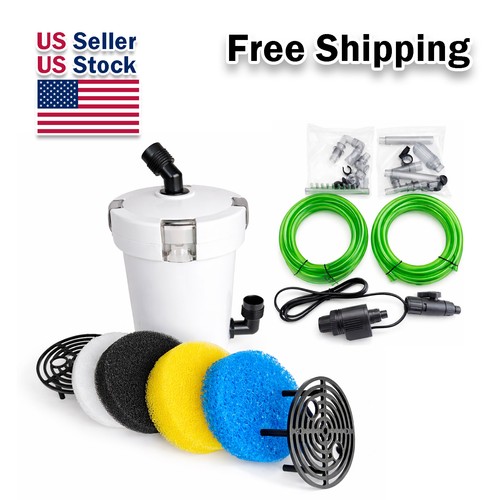
Canister filters sit below or beside your aquarium, with only slim intake and output pipes visible in the tank. Most models under 30 liters in volume, so they easily fit inside standard cabinets. For a 240-liter planted tank, expect a canister about 25x25x45 cm. Sump filters, by contrast, require a separate tank—often 60–120 cm long—under your display aquarium. All filter media and equipment (heaters, CO2 reactors, auto-top-off systems) can be hidden in the sump, leaving the main tank clutter-free.
One tradeoff: sumps need drilled overflows or a reliable hang-on overflow box. This means more plumbing, and a risk of leaks if not set up carefully. Canisters use quick-connect hoses and are far less intrusive to install, especially in rented homes or pre-built aquarium stands.
Noise and energy use in practice
Modern canister filters are nearly silent, often running at 25–40 dB. You’ll hear more water splash from the outflow than from the motor itself. Sump systems depend on the return pump and overflow design. A well-plumbed sump with a DC pump and submerged drain can be as quiet as a canister, but air-entraining overflows or cheap pumps may generate 50 dB or more—noticeable in a living room.
Canisters for a 200-liter tank typically draw 15–30 watts. Sump return pumps for similar flow are often 20–50 watts, plus any extra devices in the sump (heaters, UV, etc.). Over a year, this can add up, especially if you’re running multiple tanks or using older, less efficient pumps.
Maintenance routines and downtime
Canister filters need monthly cleaning for planted tanks with moderate fish load. Plan for 30–45 minutes: unplug, disconnect hoses, carry the unit to a sink, open, rinse media, reassemble, and re-prime. Sump filters, once set up, can be serviced in place. Most sumps need major cleaning every 2–3 months, with prefilter or sock changes every 1–2 weeks. Cleaning a sump is messier, but you rarely have to move the whole unit.
For high-tech aquascapes with CO2 injection, both filter types can be used for inline diffusers, but sumps allow more room for gear and experimentation. Canisters, however, are easier to swap out if something goes wrong.
See today’s dealsFlexibility for future upgrades
Sump systems shine when you want to expand: add reactors, auto-top-off, or integrate with other tanks. The open design lets you swap media, increase volume, or add equipment without replacing the entire filter. Canisters are more limited—media baskets and flow rates are fixed by the manufacturer. Upgrading usually means buying a whole new unit.
For most home aquascapers with tanks under 400 liters, a good canister filter provides all the flexibility needed. Sumps pay off at larger scales or for those who want a “fish room” setup with multiple tanks plumbed together.
Compare optionsRelated Guides
- Canister Filter vs Sump Filter: Which Is Better for Your Aquarium?
- Our guide to Hang-On-Back Filter vs Canister Filter: Which Is Right for Your Aquarium?
- Aquarium Canister Filters That Actually Work: Top Picks for 2026
- Pre-Filter Sponges: What to Look For and What to Avoid
- Our guide to How to Deep Clean a Sponge Filter: Step-by-Step Guide for Aquarists
- Our guide to How to Replace Filter Media in Your Aquarium: A Step-by-Step Guide
Specifications that actually matter
Flow Rate (L/h)
For planted tanks, aim for 5–10 times your tank volume per hour in filter flow. A 180-liter tank should get 900–1800 L/h. Too little flow leaves dead spots and poor filtration; too much can uproot plants or stress fish. Check the “actual” (not just rated) flow—some filters lose 20–40% once media is loaded.
Media Volume
Higher media volume means more room for beneficial bacteria. Canisters in the 8–15 liter media range suit tanks up to 400 liters. Sumps can be sized with almost unlimited media, which is why they’re preferred in large, heavily stocked setups.
Footprint and Cabinet Space
Measure your stand or cabinet before buying. Canisters for 240-liter tanks typically need a 30×30 cm floor area. Sumps require the full length of the stand, and extra height for plumbing. Don’t forget space for maintenance access.
Head Height (Pump Power)
For sumps, check pump “head height”—the vertical distance it can push water. You want at least 1 meter of head for most home setups; underpowered pumps mean weak flow in tall tanks.
Noise Level
Manufacturers may not list decibel ratings, but user reviews and practical experience matter. Look for models consistently described as “silent” or “whisper quiet,” and avoid any with persistent hum or vibration complaints, especially for living spaces.
When canister filters outperform sumps
Canister filters are the clear winner for most planted tanks under 400 liters, especially where:
- You want minimal setup hassle—no drilling, no plumbing, just connect hoses and go.
- Cabinet space is tight, or you want to avoid modifying furniture.
- Noise must be minimal, such as in bedrooms or offices.
- Maintenance time is limited—canisters can be cleaned in under an hour once a month.
Canisters are also easier to move if you upgrade or rearrange your tank later. Their modular design means you can swap media or add inline heaters without major rework.
View what’s availableWhere sump filters make sense
Sumps become the better choice as tank size and equipment needs grow, or if you’re building a showcase aquascape with zero visible tech. They’re ideal for:
- Aquariums over 400 liters, where canisters struggle to keep up with biological load.
- Complex setups needing reactors, auto-top-off, or hidden heaters/CO2 systems.
- Multiple tanks plumbed together (fish rooms, breeding setups).
- Users comfortable with plumbing, or who want maximum control and expandability.
The downside: sumps require more planning, a higher initial time investment, and a willingness to handle occasional leaks or plumbing tweaks. For many aquascapers, the visual reward—no equipment in the display tank—justifies the challenge.
FAQ: Canister vs Sump for Planted Home Aquariums
How often do you need to clean a canister filter vs a sump?
Canister filters in planted tanks usually need monthly cleaning, especially if you run fine filter pads that clog with plant debris. Sumps can go 2–3 months between deep cleans if you use a prefilter or filter socks, but those socks or sponges should be rinsed weekly for best results.
Which filter type is better for a 250-liter aquascape with CO2 injection?
For a 250-liter high-tech planted tank, a mid-to-large canister filter (with 1000–1500 L/h actual flow) is usually more than adequate and easier to install. Sumps can work, but unless you need extra gear hidden or plan to expand, a canister is simpler and quieter for this size.
Is it hard to install a sump on an existing aquarium?
Retrofitting a sump to an existing tank often requires drilling for an overflow or using a hang-on overflow box, which can be risky and fiddly. It’s much easier to add a sump during the initial setup. If you’re not comfortable with glass drilling or plumbing, stick with a canister.
How much space does a sump require under the tank?
Most sumps need a tank at least 60–90 cm long and 30–40 cm wide under your display aquarium, plus room for plumbing and access. Check your cabinet dimensions carefully—many “aquarium stands” are too small for a proper sump without modification.
What’s the main failure mode for canister and sump filters?
Canister filters most often fail due to leaky O-rings, blocked impellers, or hose disconnects. Sumps are vulnerable to overflow issues from clogged drains or pump failures. Both types need regular inspection of seals and moving parts to avoid water on your floor.
Can you switch from a canister to a sump later without disrupting your tank?
It’s possible, but you’ll need to run both filters in parallel for several weeks to allow beneficial bacteria to establish in the new sump media. This minimizes the risk of ammonia spikes or cloudy water. Plan any transition carefully, especially in established planted tanks.
Is there a risk of CO2 loss when using a sump in a planted tank?
Yes, sumps can increase CO2 loss due to surface agitation and air contact in the overflow and sump chamber. This means you may need to increase CO2 injection rates to maintain stable levels in the display tank. Using tight-fitting lids and minimizing splash in the sump can help reduce loss.
Which filter is easier to move to a new home or tank?
Canister filters are generally much easier to move because they are self-contained and require minimal plumbing. Sumps involve more plumbing connections and are harder to relocate without significant disassembly. For aquarists who expect to move tanks, canister filters offer more flexibility.
Further reading and trusted resources
For more on freshwater filtration, see the Fishkeeping World filtration section, or review the fundamentals of aquarium filter design at Wikipedia. These sources offer unbiased breakdowns of filter types and setup tips for hobbyists.
Related Guides
- Canister Filter vs Sump Filter: Which Is Better for Your Aquarium?
- Our guide to Hang-On-Back Filter vs Canister Filter: Which Is Right for Your Aquarium?
- Aquarium Canister Filters That Actually Work: Top Picks for 2026
- Pre-Filter Sponges: What to Look For and What to Avoid
- Our guide to How to Deep Clean a Sponge Filter: Step-by-Step Guide for Aquarists
- Our guide to How to Replace Filter Media in Your Aquarium: A Step-by-Step Guide



Last updated: July 2026 · About our research