8 min read
Disclosure: As an Amazon Associate and eBay Partner Network publisher, we earn from qualifying purchases. This doesn’t affect what we recommend or how we describe it.
Liquid test kits are typically the most accurate way to check aquarium water parameters at home, but only if you use them correctly and understand their limits. For planted tanks, precision in your water testing routine is crucial—small differences in nitrate, phosphate, or pH can make the difference between thriving plants and frustrating algae outbreaks. This guide breaks down what actually affects water test kit accuracy, how to choose the right type for your setup, and how to avoid the pitfalls that lead to misleading results.
Choose the right test kit format for reliable readings
For home freshwater aquariums, the main test kit formats are liquid reagent kits, test strips, and digital meters. Each has strengths and weaknesses in terms of both accuracy and practicality. The differences matter most when you’re dialing in parameters like CO2 for aquascaping, or troubleshooting algae and plant health issues. Here’s how the main types stack up for real-world use in planted tanks:
| Type | Typical Accuracy | Parameters Measured | Ease of Use | Time per Test | Price |
|---|---|---|---|---|---|
| Liquid Reagent Kit | ±0.25–1.0 mg/L (NO3), ±0.2 pH units | 6–8 (ammonia, nitrite, nitrate, pH, GH, KH, phosphate, iron) | Moderate (requires mixing, timing) | 3–5 min per test | $$ |
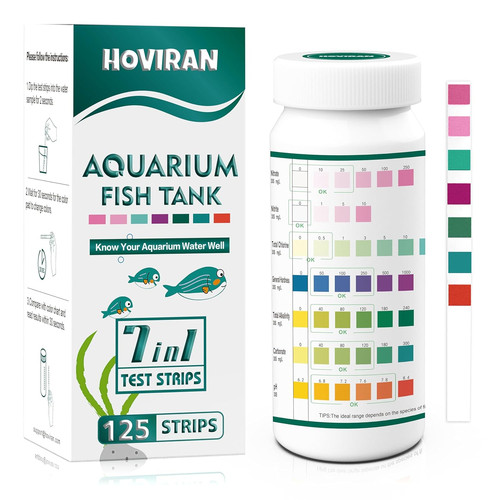
| Test Strips | ±1–5 mg/L (NO3), ±0.5 pH units | 5–7 (ammonia, nitrite, nitrate, pH, GH, KH, chlorine) | Very easy (dip and compare colors) | 1 min per test | $ |
| Digital Meter (pH, TDS, etc.) | ±0.01–0.1 pH units, ±2 ppm (TDS) | 1–3 (pH, TDS, temp) | Easy (calibration needed) | 10–30 sec per test | $$$ |
| Professional Lab Mail-in | ±0.01 mg/L (NO3), ±0.01 pH units | 10+ (full chemistry panel) | Easy (collect sample, ship) | 3–7 days turnaround | $$$ |
Spot the difference between “good enough” and “precise enough”
Most planted tank keepers do not need lab-grade precision, but some kits are far more reliable than others. Liquid reagent kits, when fresh and used carefully, are typically accurate enough for aquascaping—measuring nitrate to within 0.5–1 mg/L, for example, is plenty for dosing fertilizers. Test strips are fast, but the color matching is subjective and the accuracy is often off by a factor of two or more, especially for nitrate and pH. Digital meters for pH or TDS (total dissolved solids) can be very precise, but only if you calibrate them with proper solutions every few weeks.
For day-to-day monitoring, most hobbyists use liquid kits for ammonia, nitrite, nitrate, and pH, supplementing with a digital pH meter if they are injecting CO2. Test strips are best reserved for quick checks or cycling tanks, not for fine-tuning a mature aquascape. Mail-in lab tests are overkill except for troubleshooting mysterious plant or fish problems after ruling out the basics.
See today’s dealsUnderstand the sources of error in home test kits
Even the best home test kits have limits. The biggest sources of error are:
- Expired reagents: Most liquid kits last 12–36 months. Old chemicals give false readings, especially for nitrate and phosphate.
- Improper technique: Not rinsing tubes, using dirty pipettes, or reading colors under poor lighting can skew results by a full color band (often 1–2 mg/L for nitrate).
- Water sample contamination: Taking a sample near the filter outlet or after feeding can spike readings. Always sample mid-tank, away from equipment.
- Test strip storage: Humidity and air exposure break down strip reagents. Strips stored in humid rooms or with loose lids degrade faster.
- Color perception: Everyone sees colors differently. Use a daylight lamp or window light to match colors, not room lighting.
By controlling these variables, you can get repeatable results. If your kit is over two years old, or you start seeing wildly different numbers from week to week, it’s time to replace reagents or strips.
Compare kit types for planted tank scenarios
For a typical 60-liter (15-gallon) planted aquarium with moderate lighting and CO2 injection, here’s how different kit types perform in real-world use:
- Liquid reagent kit: Measures nitrate, phosphate, and iron within a range suitable for dosing (e.g., 0–50 mg/L for nitrate). Accurate enough to keep nitrate in the 5–20 mg/L range, which is ideal for most stem plants.
- Test strips: Good for detecting the presence or absence of ammonia and nitrite during cycling, but unreliable for fine-tuning nutrient dosing. A strip might show nitrate as “20–40 mg/L” when it’s actually 10 mg/L.
- Digital pH meter: Essential if you inject CO2 and target a specific pH drop (e.g., from 7.4 to 6.6). A meter with ±0.01 accuracy lets you fine-tune CO2 safely.
For tanks with sensitive shrimp or rare plants, invest in a liquid kit rated for low-level detection (e.g., 0–1 mg/L for ammonia or phosphate). For hard water, a GH/KH liquid kit is more accurate than strips, which tend to overestimate hardness by 1–2 degrees.
Compare optionsRelated Guides
- How Accurate Are Aquarium Water Test Kits? What Fishkeepers Should Know
- Best Digital Water Quality Testers: A No-Nonsense Guide for Aquariums
- Our guide to Liquid Aquarium Test Kits: What to Know Before You Buy
- Digital Water Hardness Testers for Aquariums, Reviewed
- Water Change Systems for Aquariums That Actually Work
- Our guide to Why Water Circulation Matters in a Healthy Planted Aquarium
Specifications that actually matter
Detection Range
Make sure the kit’s range matches your needs. For nitrate, look for kits that read at least 0–50 mg/L, with color changes every 2–5 mg/L for planted tanks. For pH, a range of 6.0–7.5 is ideal for most aquascapes—avoid kits that only read 6.5–8.5 if you inject CO2.
Resolution
This is the smallest change the kit can detect. For nitrate, a resolution of 1 mg/L helps you adjust dosing precisely. For pH, a digital meter with 0.01 increments is far more useful than one that only reads to 0.1 or 0.2 units.
Shelf Life
Check the expiration date—liquid reagents typically last 1–3 years, test strips 12–18 months unopened. Using expired kits can throw off results by 50% or more. Always write the opening date on your kit and replace regularly.
Calibration/Control Standards
Digital meters must be calibrated with standard solutions (e.g., pH 4.0, 7.0, 10.0) at least monthly. Some liquid kits include a control solution to check accuracy—use it every few months for peace of mind.
User Error Tolerance
Look for kits with clear instructions and color cards that are easy to read. Some have built-in comparators that reduce color-matching mistakes, which is especially helpful for beginners or those with color vision issues.
View what’s availableHow do you know your readings are accurate?
Consistency is the best sign: readings should not jump wildly from week to week unless something changes in your tank. If you’re unsure, check a sample with two different methods (e.g., liquid kit and strip, or compare with a friend’s kit). For pH and TDS meters, calibrate monthly and rinse probes with distilled water after every use. If you suspect your numbers are off, test your tap water—if it reads way outside your local water report, your kit may be compromised.
For deeper reading on test kit methodology, see the ASTM International standards for water analysis, which set the baseline for professional accuracy in environmental testing.
FAQ: Aquarium water test kit accuracy
How long do liquid test kits stay accurate after opening?
Most liquid reagents deliver reliable results for 12–24 months after opening, provided they’re stored in a cool, dark place with the caps tightly closed. Past the expiration date, chemical reactions slow down or stop, leading to false low or high readings—especially for nitrate and ammonia tests.
Are digital meters more accurate than liquid test kits for pH?
Digital pH meters can be more precise (±0.01 pH units) than liquid kits (±0.2 pH units), but only if you calibrate them regularly with fresh buffer solutions. Without calibration, digital meters can drift and end up less accurate than a well-maintained liquid kit.
Which is better for testing nitrate: liquid kits or test strips?
For nitrate, liquid kits are more accurate and have finer resolution (color changes every 1–5 mg/L). Test strips may be off by up to 10 mg/L, which is too coarse for adjusting fertilizer dosing in planted tanks. Use strips for quick checks, but rely on liquid kits for routine monitoring.
What can cause a sudden jump in test results from week to week?
Big swings usually point to either a real tank issue (overfeeding, filter problems, livestock death) or test kit errors. Common kit-related causes include expired reagents, dirty test tubes, or reading color cards under poor lighting. Always check kit freshness and technique before assuming a tank emergency.
Can I trust test strips for CO2 or iron levels?
No—test strips are not sensitive enough for accurate CO2 or iron readings in most planted tanks. For CO2, use a drop checker or calculate from pH/KH. For iron, use a liquid reagent kit designed for low-level detection (down to 0.05 mg/L).
What should I do if my test kit readings don’t match my local water report?
First, confirm you’re testing properly and using fresh reagents. If you still see a big discrepancy (e.g., your tap pH reads 6.0 when the report says 7.5), try a second kit or method. If results still differ, your kit may be expired or contaminated—replace it before making tank changes.
How often should I replace my water test kit?
Replace liquid kits every 1–2 years, or at the expiration date on the bottle—whichever comes first. Test strips should be replaced every 12–18 months, even if unopened. Digital meters last several years but require regular calibration and occasional probe replacement for best accuracy.
For a deeper dive into water quality testing standards in aquariums, see the Nature journal’s section on environmental monitoring for aquatic systems.



Last updated: July 2026 · How we put guides together