8 min read
Disclosure: As an Amazon Associate and eBay Partner Network publisher, we earn from qualifying purchases. This doesn’t affect what we recommend or how we describe it.
Most aquarium guides treat chemical dosing pumps as specialty equipment for big public tanks or commercial hydroponics. In reality, precise dosing is a game-changer for home aquarists too—especially if you run planted tanks, dose fertilizers, or automate liquid additives. The real challenge isn’t overkill specs; it’s matching the pump’s flow range, programmability, and chemical compatibility to your tank’s needs without paying for industrial features you’ll never use.
Top picks at a glance
- AC Infinity Peristaltic Dosing Pump, 10-Level Control, 21 to 210 ml/min — the best option for aquarium and hobbyist use
- Dosatron D14MZ2 Chemical Metering Pump (Viton Seals, 0.2–2%) — the premium, high-capacity choice
- LMI Milton Roy PD041-823NI Chemical Dosing Pump — the heavy-duty, industrial-grade pick
- Advantage MicroTron B115X1-KFCV Digital Chemical Dosing Pump — the best value for digital control
Direct comparison: which dosing pump fits what kind of aquarium?

Pictured: AC Infinity Peristaltic
| Product | Condition | Price | Best For | Flow Rate / Capacity | Control Type |
|---|---|---|---|---|---|
| AC Infinity Peristaltic Dosing Pump, 10-Level Control, 21 to 210 ml/min |
New | $ | Aquarium and hobbyist use | 21–210 ml/min | 10-level digital |
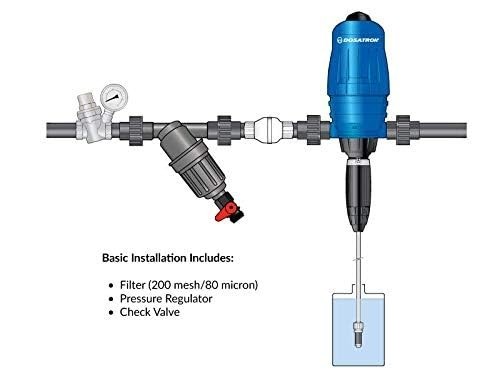 Dosatron D14MZ2 Chemical Metering Pump (Viton Seals, 0.2–2%) Dosatron D14MZ2 Chemical Metering Pump (Viton Seals, 0.2–2%) |
New | $$ | Premium, high-capacity | 0.2–2% injection | Proportional/mechanical |
 LMI Milton Roy PD041-823NI Chemical Dosing Pump LMI Milton Roy PD041-823NI Chemical Dosing Pump |
New | $$$ | Heavy-duty, industrial | — | Digital |
 Advantage MicroTron B115X1-KFCV Digital Chemical Dosing Pump Advantage MicroTron B115X1-KFCV Digital Chemical Dosing Pump |
New | $ | Best value for digital control | — | Digital |
The price column compares within this guide: $ is the budget end, $$ mid, $$$ premium. For exact, up-to-date prices, see the live listings lower in the article.
Matching pump flow to your tank size
Flow rate is the first spec to check. Most planted tanks need dosing in the 1–10 ml range per cycle, but the pump must be capable of both fine increments and enough capacity for larger tanks if needed. The AC Infinity Peristaltic Dosing Pump covers 21 to 210 ml/min, which is more than enough for most home aquariums and allows you to fine-tune dosing for nano up to large tanks. This range is especially useful if you run multiple tanks or want to automate both macro and micro fertilizer dosing.
The Dosatron D14MZ2 operates on a proportional basis, dosing 0.2–2% of the water flow. This is overkill for most home setups unless you have a high-flow system or are integrating dosing into a large-scale water change or recirculating system. It’s more at home in commercial greenhouses or very large fish rooms.
Both the LMI PD041-823NI and MicroTron B115X1-KFCV are built for continuous operation and high chemical resistance, but lack the sub-20 ml/min fine adjustability that planted tank keepers often need. For strictly aquarium fertilizer dosing, you’ll get more practical control from the AC Infinity Peristaltic.
Control options: digital, proportional, or mechanical?
The MicroTron B115X1-KFCV and LMI PD041-823NI both offer digital control, but their interfaces are designed for industrial chemical dosing—think pool chlorination or commercial water treatment. They can be set for precise intervals and volumes, but the programming isn’t as user-friendly for aquarium routines.
The AC Infinity Peristaltic stands out with its 10-level digital interface. This allows you to dial in dosing speed and frequency with the kind of granularity you need for aquarium fertilizers, liquid carbon, or even trace elements. For hobbyists, this is the only pump on the list that feels purpose-built for our use-case.
The Dosatron D14MZ2’s proportional metering works by injecting a set percentage of chemical per unit of water flow. While extremely reliable for large automated systems, it’s not practical for daily, small-volume dosing in a home tank—unless you’re running a central system or a very large-scale setup.
Chemical compatibility and build quality
Chemical resistance matters if you’re dosing anything beyond basic fertilizers—such as acid buffers, liquid CO2 systems, or medications (where safe and appropriate). The Dosatron D14MZ2 uses Viton seals, which are known for broad chemical compatibility, including acids and aggressive solutions. The LMI PD041-823NI and MicroTron B115X1-KFCV are both designed for continuous industrial dosing, so their wetted parts are highly resistant to corrosion and chemical attack.
For most aquarium use, the AC Infinity Peristaltic’s tubing and pump head are rated for standard liquid fertilizers and water conditioners. If you plan to dose highly acidic or caustic solutions, double-check the manufacturer’s chemical compatibility chart or consult an expert before purchase. For reference, the National Association of Chemical Distributors offers guidance on chemical handling and compatibility standards.
Reliability and maintenance
Peristaltic pumps like the AC Infinity model have the advantage of easy tube replacement and minimal backflow risk, which is valuable for dosing tiny, consistent amounts. Industrial pumps such as the LMI PD041-823NI and MicroTron B115X1-KFCV are designed for long-term, continuous duty but may require more periodic maintenance (seal checks, calibration) due to their higher output and complexity.
The Dosatron D14MZ2 is built for low-maintenance operation in commercial environments but requires a steady water flow to operate. For most home aquariums, the simplicity and low maintenance needs of a peristaltic design are preferable unless you’re managing a facility or a large-scale breeding operation.
Related Guides
Beginner’s pre-purchase checklist
- Measure your aquarium’s daily dosing needs in milliliters (ml) for each additive—overestimating can lead to costly overspecification.
- Check available space near your tank for mounting—the AC Infinity Peristaltic is compact, but industrial units require more clearance.
- Verify your additives’ chemical compatibility with the pump’s tubing and seals—some fertilizers or acids can degrade standard materials.
- Confirm that your power supply matches the pump’s requirements (voltage and plug type)—most hobby pumps are plug-and-play, but industrial models may differ.
- Assess how many separate solutions you want to dose—single-head pumps handle one solution, multi-head units or multiple pumps are needed for complex regimens.
- Read the programming instructions in advance—digital pumps vary in ease of setup, and not all are designed for aquarium routines.
- Plan for regular cleaning or tube replacement—especially if dosing organic solutions that can clog or degrade tubing over time.
How we selected these dosing pumps
For this guide, the shortlist was built by comparing manufacturer specs and stated features across key criteria: flow rate (minimum and maximum in ml/min or %), control interface (digital, mechanical, proportional), chemical compatibility (materials of construction, such as Viton seals), and intended use (home aquarium vs. industrial or commercial). Ease of integration with aquarium routines, maintenance requirements, and value for money were also considered, based on the manufacturer’s positioning and published documentation.
We excluded unbranded dosing pumps, units lacking a clearly stated flow range, and bundled packages that obscure the core product specs. Only models with established reputations in the aquarium or chemical dosing space, and with clear documentation, were considered. This approach ensures you see only options with transparent specs and real-world applications.
This guide is not for those looking for ultra-basic manual dosing systems (like syringes or simple gravity drippers), nor for buyers needing medical-grade precision or laboratory automation. If you only dose once a week or have a nano tank, a dosing pump may be unnecessary complexity and cost.
FAQ: chemical dosing pumps for aquariums
Can I use an industrial dosing pump like the LMI PD041-823NI on a small home aquarium?
While technically possible, the LMI PD041-823NI is designed for high-output, continuous dosing in industrial settings. Its flow rate and programming may be excessive for most home aquariums, making it difficult to achieve the low, precise doses needed for planted tanks.
How do I calculate the right flow rate for my dosing pump?
Start by determining the daily or weekly dose in milliliters required for your aquarium additives. Choose a pump with a minimum flow rate at or below your required dose. For most planted tanks, a pump capable of dosing 1–10 ml per cycle is ideal. The AC Infinity Peristaltic’s 21 ml/min minimum is suitable for most fertilizer regimens if run for short intervals.
Is the Dosatron D14MZ2 worth the price over the AC Infinity Peristaltic for a home tank?
The Dosatron D14MZ2 is built for large-scale, high-flow systems and offers proportional dosing, but this level of capacity and complexity isn’t needed for most home tanks. For typical home aquariums, the AC Infinity Peristaltic offers a better match of price, size, and control.
How often do I need to replace the tubing or parts in a peristaltic pump?
For aquarium use, expect to replace peristaltic pump tubing every 6–12 months depending on usage and the type of chemicals dosed. Tubing carrying acidic solutions or organic fertilizers may need more frequent replacement to prevent leaks or clogs.
Are these pumps compatible with all aquarium fertilizers and additives?
Most pumps on this list are designed to handle common aquarium fertilizers, but always check the chemical compatibility of the tubing and seals with your specific additives. Some aggressive chemicals can degrade standard materials, so consult the manufacturer’s chart for your chosen pump.
What should I do if the pump stops dosing accurately?
First, check for clogged tubing, worn-out pump heads, or air bubbles in the line. Many dosing issues are caused by maintenance lapses. If the problem persists, consult the troubleshooting section of the pump’s manual or reach out to the manufacturer’s support team for guidance.
The bottom line: which dosing pump suits your setup?
For nearly all home aquariums, the AC Infinity Peristaltic Dosing Pump offers the best mix of flow control, ease of use, and value. If you’re running a fish room, commercial grow system, or high-throughput application, the Dosatron D14MZ2 or LMI PD041-823NI bring industrial reliability—but at a higher price and complexity. The MicroTron B115X1-KFCV is a strong value play for those wanting digital control on a budget, but its programming and capacity are better suited to larger or multi-tank installations. Always match the pump’s dosing range and programmability to your tank—not just the price tag or feature list. For more details on safe chemical handling and dosing in aquatic systems, see the Water Quality Association.
Last updated: June 2026 · How we put guides together