8 min read
Disclosure: As an Amazon Associate and eBay Partner Network publisher, we earn from qualifying purchases. This doesn’t affect what we recommend or how we describe it.
Inline CO2 atomizers for planted aquariums typically range from under $20 to over $50, and the price difference isn’t just about materials or brand names. The real gap comes down to durability, compatibility with your filter setup, and how fine the CO2 mist actually is—a detail that can make or break plant growth in high-tech tanks. With only a handful of truly reliable options on the market, picking the right inline atomizer means weighing more than just upfront cost.
Top picks at a glance
- Qanvee Inline CO2 Atomizer Diffuser — the best-known budget pick
- Jardli Glass Inline CO2 Atomizer Diffuser System — the premium glass option
Qanvee vs Jardli: Why these two dominate the inline CO2 atomizer market
Most hobbyists searching for the best inline CO2 atomizer quickly narrow their choices to two models: the Qanvee Inline CO2 Atomizer Diffuser and the Jardli Glass Inline CO2 Atomizer Diffuser System. These aren’t just the most visible names—they represent the two main approaches: robust, affordable engineering versus premium glassware meant to blend invisibly into high-end aquascapes.
Understanding the differences between them—and what you actually get for the price—can prevent wasted money and avoid common frustrations, like persistent leaks, poor mist quality, or breakage during cleaning.
Comparison table: Inline CO2 atomizers side-by-side
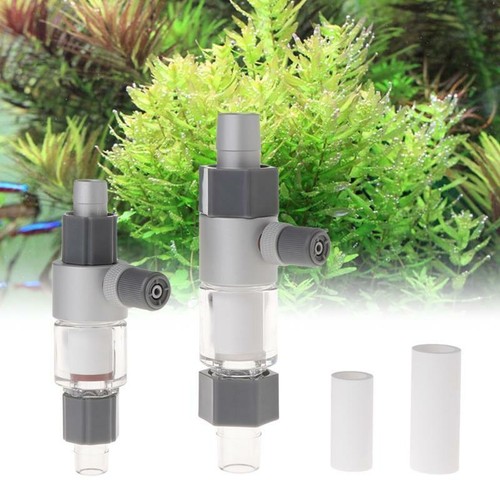
Pictured: Qanvee Inline Atomizer
| Product | Condition | Price | Best For | Main Material | Compatible Hose Sizes |
|---|---|---|---|---|---|
| Qanvee Inline CO2 Atomizer Diffuser |
New | $ | Budget, easy fit | Plastic/metal | 12/16mm, 16/22mm |
 Jardli Glass Inline CO2 Atomizer Diffuser System Jardli Glass Inline CO2 Atomizer Diffuser System |
New | $$$ | Premium, aesthetics | Borosilicate glass | 12/16mm, 16/22mm |
Price: $ = budget, $$ = mid-range, $$$ = premium — relative to the options compared above. Live prices and current stock are below.
Related Guides
- Inline Aquarium Heaters That Are Worth It: Our Honest Reviews
- Our guide to Liquid Fertilizer vs Root Tabs: Which Should You Use for Your Planted Tank?
- Our guide to Choosing the Right Aquarium Cabinet Stand: What to Look For
- Our guide to Our Favorite Corner Fish Tanks for Stylish, Space-Saving Aquariums
- High Tech vs Low Tech Planted Tanks: Which Setup Is Right for You?
- Submersible Aquarium Pumps: A No-Nonsense Buyer’s Guide
- Browse all CO2 Equipment →
The overlooked spec: Hose compatibility and filter fit
Most home aquariums use canister filters with 12/16mm or 16/22mm hoses. Both the Qanvee Inline Atomizer and Jardli Glass Atomizer list these as supported sizes. This matters: a mismatch means leaks, poor CO2 dissolution, or even needing to return the atomizer. Always double-check your filter’s hose diameter before buying—most Eheim, Fluval, and OASE canisters for tanks from 20 to 75 gallons use one of these two hose standards. If your setup uses different tubing (like proprietary hoses on some all-in-one tanks), neither of these will fit without adapters, which are prone to leaking.
What most buying guides miss: Atomization quality and maintenance
Diffuser quality isn’t just about how small the bubbles are—though finer mist means better CO2 absorption and less waste. The Qanvee Inline Atomizer uses a ceramic disc for atomization, with replaceable parts available. This design tends to be more forgiving if you run CO2 at moderate pressures (30–40 psi). The Jardli Glass Atomizer, built from borosilicate glass, is prized for producing an ultra-fine mist when run at similar pressures, but glass is more fragile and can crack if overtightened or dropped during cleaning.
Cleaning frequency is another hidden cost: both atomizers need a bleach soak every 2–4 weeks in tanks with high light or heavy fertilization, as algae will clog the ceramic or glass surface. The Qanvee’s metal and plastic body is much less likely to break during cleaning, while the Jardli’s glass construction calls for extra care—but rewards you with a nearly invisible look in the tank cabinet.
Which atomizer for which setup?
- Small- to mid-size tanks (20–55 gallons): Both atomizers are rated for typical canister filter flows (up to about 350–400 GPH). For tanks below 20 gallons, an inline atomizer is often overkill—consider an in-tank diffuser instead.
- High-tech or show tanks: The Jardli Glass Atomizer is the clear choice for aquascapers who prioritize aesthetics and ultra-fine mist. Its borosilicate glass construction blends seamlessly with high-end setups.
- Budget-conscious or utility setups: The Qanvee Inline Atomizer delivers reliable performance at a much lower price point, with less risk of accidental breakage and easier sourcing of replacement discs.
How we selected these inline atomizers
For this guide, only models with a clear track record in planted-tank communities, stated hose compatibility (12/16mm or 16/22mm), and a replaceable or cleanable diffusion element made the cut. Material quality—especially the difference between borosilicate glass and plastic/metal—was a key differentiator, as was the availability of replacement parts. We compared the listed specs, manufacturer details, and market positioning for each product, focusing on durability, mist quality, and ease of installation.
Unbranded or generic atomizers with no stated hose size, no clear material description, or no replaceable parts were excluded. Bundles that obscure the core product (e.g., “CO2 kit” listings with no details about the atomizer itself) were also left out. If you don’t have a canister filter or you run a tank under 15 gallons, inline atomizers generally aren’t the best solution—an in-tank diffuser or passive system is a better match for those setups.
For more on CO2 delivery methods and the science behind effective plant growth, see the Aquatic Gardeners Association.
Red flags in listings to walk past
- No stated hose size: If a listing doesn’t mention 12/16mm or 16/22mm compatibility, you’re likely looking at a generic or misfit product. This almost always leads to leaks or the atomizer simply not fitting your filter tubing.
- Vague material description: Watch for listings that just say “glass” or “plastic” without specifying borosilicate glass or high-grade plastic. Low-quality glass is prone to shattering during cleaning; cheap plastics can crack or degrade when exposed to CO2.
- No mention of replaceable or cleanable diffusion element: Atomizers clog over time—if you can’t clean or swap the disc, you’ll be forced to replace the entire unit sooner than you’d like.
- Stock photos only, no real product images: Sellers who don’t show actual photos are often drop-shipping unbranded goods. This is a red flag for inconsistent quality and poor after-sales support.
- No brand or manufacturer info: If a listing omits any brand or manufacturer, it’s almost always a generic import with uncertain specs and little recourse if something goes wrong.
FAQ: Inline CO2 atomizers for planted tanks
How often do you need to clean an inline CO2 atomizer?
Most users find that cleaning every 2–4 weeks keeps the atomizer working efficiently, especially in tanks with strong lighting and heavy fertilization. Algae and biofilm can clog the ceramic or glass disc, reducing CO2 diffusion. A regular bleach soak (followed by thorough rinsing) is the standard method.
Will either of these atomizers fit my OASE, Fluval, or Eheim canister filter?
Both the Qanvee Inline Atomizer and Jardli Glass Atomizer list compatibility with 12/16mm and 16/22mm hoses, which covers most mainstream canister filters for tanks 20–75 gallons. Always double-check your specific model’s hose size before buying to ensure a snug, leak-free fit.
Is the price difference between Jardli and Qanvee worth it?
The Jardli Glass Atomizer commands a premium for its borosilicate glass construction and aesthetic appeal, making it a strong match for show tanks or aquascapes where looks matter. For utility setups or those on a budget, the Qanvee Inline Atomizer delivers nearly the same function at a much lower price. The extra spend is worth it only if you value the glassware look and are comfortable handling delicate equipment.
How fine is the CO2 mist compared to in-tank diffusers?
Both inline atomizers deliver a much finer mist than most basic in-tank diffusers, provided your CO2 system can supply at least 30 psi of pressure. The Jardli Glass Atomizer is favored for producing the finest bubbles, which improves CO2 absorption and reduces visible bubbles in the tank.
Can I use these atomizers on a tank under 20 gallons?
Inline atomizers are designed for canister filter setups, which are uncommon on tanks below 20 gallons. For small tanks, an in-tank diffuser is usually simpler and more efficient. Using an inline atomizer on a low-flow filter may result in poor CO2 distribution or clogging.
What should I do if the atomizer starts leaking?
First, check that the hose size matches and that all fittings are secure. Leaks are most often caused by mismatched tubing or overtightening, especially with glass models. If the leak persists, inspect for cracks or damage around the connections—replacement O-rings or careful re-seating usually solves minor issues, but cracked glass or plastic means replacement is needed.
The bottom line: Which inline CO2 atomizer is right for you?
For most home aquarists running a canister filter on a planted tank, the Qanvee Inline Atomizer is the most practical and cost-effective choice: it’s durable, widely compatible, and easy to maintain. If you’re building a high-end aquascape or want the cleanest look in your cabinet, the Jardli Glass Atomizer justifies its higher price with premium materials and ultra-fine mist. Both options are a major upgrade over cheap generics—and both avoid the pitfalls of unbranded imports. For more gear recommendations, browse the latest inline CO2 atomizer listings here.


Last updated: June 2026 · How we put guides together