9 min read
Disclosure: As an Amazon Associate and eBay Partner Network publisher, we earn from qualifying purchases. This doesn’t affect what we recommend or how we describe it.
Dialing in CO2 for a planted aquarium transforms plant growth, but unless you can reliably measure your tank’s CO2 levels, you’re left guessing—and risking algae outbreaks or fish stress. A CO2 drop checker gives you a visual, real-time readout of dissolved CO2, but not all models are equally accurate, readable, or easy to maintain. Choosing the best aquarium CO2 drop checker means understanding the subtle differences in design, indicator fluid, and usability that make or break your setup.
What Aquarists Actually Want From a Drop Checker
Most people searching for the best aquarium CO2 drop checker are home hobbyists—usually beginners to intermediate aquascapers—who want reliable, low-fuss CO2 monitoring. They’re running pressurized CO2 (or considering it) and need a way to avoid both under-dosing (poor plant growth) and overdosing (fish harm). They want to know:
- Which drop checker designs are easiest to read and maintain?
- How fast can they detect changes in CO2 levels?
- What indicator fluid is most reliable for color accuracy?
- Will it fit their tank size and style?
- What are the pitfalls—leaks, unreadable colors, fluid evaporation?
- Is it worth spending more for premium glass, or will acrylic do?
Let’s break down the real-world differences, so you can avoid the common mistakes and get the most out of your CO2 setup.
How a Drop Checker Works (and What Actually Matters)
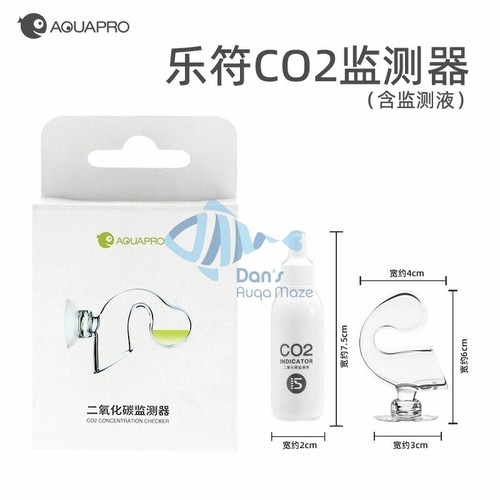
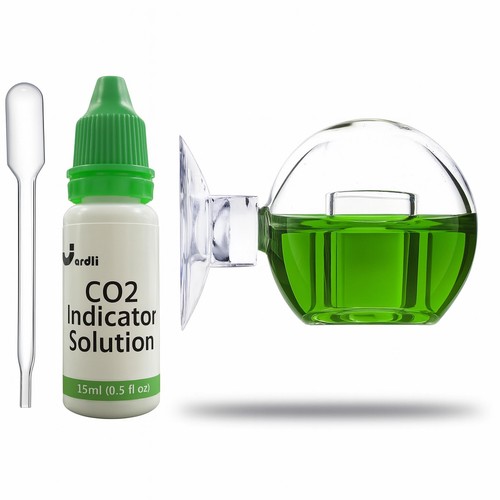
A CO2 drop checker is a small, usually glass or acrylic, U-shaped vessel that sits inside the aquarium. It contains a reference solution—typically a 4 dKH (carbonate hardness) water mixed with a pH indicator like bromothymol blue. As CO2 from your tank water diffuses into the drop checker, it changes the pH of the solution, shifting its color from blue (low CO2) to green (ideal 30 ppm) to yellow (high CO2). The color gives you a ballpark CO2 level, but only if your setup is correct.
The three factors that actually matter:
- Chamber size and shape: Affects how quickly the solution equilibrates with tank water CO2 (response time), and how easy it is to read the color.
- Indicator fluid quality: Pre-mixed 4 dKH reference solutions are far more reliable than tap water or DIY mixes. Color accuracy depends on this.
- Mounting and visibility: Suction cups, hang-on designs, or magnetic mounts each have trade-offs for cleaning, readability, and risk of falling off.
Drop Checker Types Compared for Planted Home Aquariums
| Type | Material | Chamber Volume (ml) | Response Time (hrs) | Mounting Style | Price |
|---|---|---|---|---|---|
| Classic Glass U-bend | Borosilicate Glass | 3–5 | 1–2 | Suction Cup | $$ |
| Compact Acrylic Dome | Acrylic | 2–3 | 1–2 | Suction Cup | $ |
| Hang-on Rim Style | Glass | 4–6 | 2–3 | Hang-on | $$$ |
| Mini Drop Checker | Glass or Acrylic | 1–2 | 0.5–1 | Suction Cup | $ |
| Magnetic Mount Checker | Glass | 3–5 | 1–2 | Magnetic | $$$ |
The price column compares within this guide: $ is the budget end, $$ mid, $$$ premium. For exact, up-to-date prices, see the live listings lower in the article.
Classic Glass U-bend: Why It’s the Standard
The classic U-shaped glass drop checker remains the reference point for most aquascapers. Borosilicate glass is both inert (no chemical leaching) and easy to clean, and the 3–5 ml chamber size gives a clear color signal without being bulky. Expect a response time of 1–2 hours for CO2 changes to register—fast enough for daily monitoring, but not for minute-to-minute adjustments.
Glass is fragile, but with careful handling, these checkers last years. The main drawback is that suction cups degrade over time, occasionally letting the checker fall into the substrate. Always check the cup’s condition at water changes. For most 10–75 gallon tanks, this format is a safe, reliable choice. Check current prices
Compact Acrylic Domes: Cheap and Cheerful, But Less Precise
Acrylic dome-style drop checkers are budget-friendly and shatter-resistant, making them attractive for those worried about breakage. However, the smaller 2–3 ml chamber can make color differentiation harder, especially in low-light tanks. Acrylic can also cloud or scratch over time, reducing visibility. Response time is similar to glass, but the main limitation is color accuracy and longevity—acrylic sometimes develops micro-leaks at glue seams.
For smaller tanks (under 20 gallons) or those with rambunctious fish that might bump the checker, acrylic is a practical pick. Just be prepared to replace it every year or two. See today’s deals
Hang-on Rim Styles: Premium, Visible, and Secure
Hang-on rim drop checkers eliminate suction cup failures, using a bent glass arm to hook securely over the tank’s rim. With a larger 4–6 ml chamber, color transitions are easy to see even across the room. The trade-off is price—these are typically premium options—and compatibility: they only fit tanks with exposed rims, not rimless or braced tanks. Expect a slightly slower response (2–3 hours), but the visibility and stability are unmatched for display tanks.
If you want a checker that doubles as a design feature, or need something tamper-proof for high-traffic rooms, hang-on styles are worth the investment. Compare options
Related Guides
- Our guide to Aquarium Canister Filters That Actually Work: Top Picks for 2026
- Aquarium Circulation Pumps That Are Actually Worth Buying
- Our guide to Liquid Aquarium Test Kits: What to Know Before You Buy
- How to Choose an Aquarium Stand With Fish Tank: A Complete Guide
- Aquarium Cooling Fans That Actually Work: A No-Nonsense Guide
- The Best Aquarium CO2 Regulators, Reviewed for Planted Tanks
- Browse all CO2 Equipment →
Mini Drop Checkers: Faster Feedback, More Frequent Refills
For nano tanks (under 10 gallons), a mini drop checker with a 1–2 ml chamber can respond to CO2 changes in as little as 30 minutes. This speed comes with a trade-off: the indicator fluid evaporates faster, so you’ll need to top it up weekly—sometimes more in low-humidity rooms. Visibility can also be a challenge, so place it where you can easily see the color at a glance. These are best for shrimp tanks, small desktops, or anyone who wants rapid feedback and doesn’t mind a little extra maintenance.
Magnetic Mount Checkers: No More Suction Cup Hassles
Magnetic-mount drop checkers use a two-piece magnet system to hold the chamber in place. These are typically glass and in the 3–5 ml range. The big advantage is reliability—no suction cup failures, and you can reposition the checker easily during tank maintenance. Just be sure to check the magnet’s coating for rust over time, especially if you have high humidity under a closed lid. These are a premium choice for larger tanks or aquascapes where suction cups just won’t stay put.
Why Indicator Fluid Quality Is Non-Negotiable
The drop checker’s accuracy depends almost entirely on the indicator fluid. The gold standard is a pre-mixed 4 dKH (degree carbonate hardness) solution with bromothymol blue. This ensures that a green color truly means ~30 ppm CO2, which is the sweet spot for most planted tanks. Avoid using tank water or tap water in the checker—these have variable KH and will give false readings, sometimes by a wide margin.
Look for indicator fluids that explicitly state “4 dKH” or “reference solution” and use bromothymol blue as the dye. Most bottles last 6–12 months if kept sealed and out of sunlight. When in doubt, swap the solution every 2–3 months, or if the color seems off even with stable CO2 injection. For more on CO2 and water chemistry, see the Wikipedia entry on CO2 in water.
Placement Tips for Accurate, Readable Results
Where you position your drop checker matters. Place it on the opposite side of the tank from your CO2 diffuser, at mid-water height. This ensures you’re measuring the average CO2 concentration, not a local hotspot near the bubbles. Avoid placing it right in the flow of your filter outflow, as this can skew readings by stripping CO2 from the indicator fluid too quickly. In tanks with strong surface agitation, you may notice a slightly slower response—this is normal.
If your tank has a lot of hardscape or dense planting, reposition the checker every few days to spot-check different zones. This is especially useful in larger tanks (over 40 gallons) where CO2 distribution can be uneven. For more on CO2 distribution and aquascaping, the UK Aquatic Plant Society has excellent guides and community discussions.
Common Drop Checker Mistakes to Avoid
- Using tank water in the checker—always use 4 dKH reference solution, not tap or tank water.
- Placing the checker right next to the CO2 diffuser—measure the average, not the peak.
- Letting indicator fluid evaporate below the fill line—top up at water changes.
- Ignoring old or cloudy indicator fluid—replace every 2–3 months for reliable color.
- Trusting the color under colored or dim lighting—use a white card behind the checker for true color reading.
FAQ: Real-World Drop Checker Concerns Answered
How often should I replace the indicator fluid in my drop checker?
For most setups, replace the indicator fluid every 2–3 months, or sooner if you notice evaporation or color fading. In nano checkers (under 2 ml), check weekly and top up as needed. Old fluid can give inaccurate readings.
Glass vs acrylic drop checkers—what’s better for a planted tank?
Glass offers superior clarity, chemical resistance, and is easier to clean, making it the best choice for most planted tanks. Acrylic is less fragile and cheaper but scratches easily and can develop leaks over time. For display tanks, glass is worth the investment; for small or rowdy tanks, acrylic is more practical.
Can I use tap water or tank water as the drop checker solution?
No. Tap or tank water has variable KH, which throws off the color-to-CO2 relationship. Always use a 4 dKH reference solution with bromothymol blue. This is critical for accurate, actionable readings.
How long does it take for a drop checker to show changes in CO2?
Most standard drop checkers (3–5 ml chamber) take 1–2 hours to equilibrate and reflect a change in tank CO2. Mini checkers can respond in as little as 30 minutes, but may require more frequent fluid top-offs.
What’s the best way to read the color accurately?
Check your drop checker under white light, ideally with a white card or paper held behind the chamber. Aquarium lighting with a blue or red cast can distort the perceived color, leading to misinterpretation. Never rely on memory—always compare to a fresh color chart.
Are there any warranty or compatibility issues with drop checkers?
Most drop checkers don’t come with formal warranties, but premium glass models sometimes offer limited coverage against breakage on arrival. Always check the diameter or mounting method—hang-on styles may not fit rimless tanks, and some magnetic models are only rated for glass up to a certain thickness (typically 10–12 mm).
What’s the risk of a drop checker leaking or breaking in the tank?
Glass checkers are fragile and can break if dropped or knocked by large fish. Suction cups can fail over time, causing the checker to fall. Acrylic models are less likely to shatter but can develop slow leaks at seams. Always inspect at water changes and never overfill past the recommended line.
Summary: Choosing the Right Drop Checker for Your Setup
The best aquarium CO2 drop checker balances clarity, durability, and accuracy for your specific tank. For most hobbyists, a classic glass U-bend with pre-mixed 4 dKH solution is the sweet spot—reliable, easy to read, and low-maintenance. If you want bulletproof mounting or have a nano tank, consider magnetic or mini checkers. Always prioritize indicator fluid quality over fancy design, and remember: placement and regular maintenance matter as much as the checker itself. View what’s available
Last updated: July 2026 · About our research